Quick answer
Most dogs slip out because the harness is too loose at the chest or neck, not because the harness is defective. Tighten the girth strap first, then the chest straps, until you can fit only two fingers under each. If your dog still backs out after a proper adjustment, switch to a Y-style harness with a snug chest plate, such as the Casual Y-harness ECO.
Check the girth strap before anything else
The girth strap wraps behind the front legs and is the main anchor point. If it slides down toward the belly or twists sideways when your dog pulls, it is too loose. Tighten it until the strap sits flat against the body and you can slide two fingers underneath with light resistance. A girth strap that hangs low gives your dog a gap to pull a leg through.
Adjust the neck and chest straps in the right order
Work from the girth forward. Tighten the girth first, then the chest strap that runs across the front of the chest, then the neck strap if your harness has one. If you tighten the neck first, the chest panel shifts and you will have to start over. After each adjustment, ask your dog to walk a few steps, then check whether the chest panel still sits centered on the breastbone.
Watch for the three common escape triggers
Dogs usually back out of a harness when they are startled, when they pull hard against the leash, or when they twist sideways to reach something. A harness that fits well during a calm walk can still fail during a sudden lunge if the straps are not snug. Test the fit by gently pulling the harness upward and backward while your dog stands still. If the harness slides more than a finger's width, tighten it another notch.
When to stop adjusting and change harness style
If your dog has a narrow chest, a deep chest, or a sloping shoulder shape, a standard harness may never sit securely no matter how much you tighten it. In that case, stop adjusting and look for a harness with a Y-shaped front that cups the chest and distributes pressure away from the throat. A no-pull design can also help because it reduces the forward surge that causes many escapes.
Diagnosis: why your dog slips out
- Girth strap slides down or twists: The strap behind the front legs is too loose. Tighten it until it sits flat and you can fit two fingers underneath. If it still slides after tightening, the harness size is wrong.
- Chest panel shifts to one side: The chest strap is uneven. Loosen both sides, center the panel on the breastbone, then tighten each side equally. A centered panel stays put during walks.
- Dog backs out during a sudden lunge: The harness fits for calm walks but not for quick movements. Test by gently pulling the harness upward and backward while your dog stands. If it moves more than a finger's width, tighten another notch or switch to a Y-front design.
Harness options that help with escape problems
- Casual Y-valjas ECO: The Casual Y-harness ECO has a Y-shaped front that sits around the chest and is adjustable at the girth. The Y-front cups the chest instead of cutting across the throat, which makes it harder for a dog to back out during a sudden pull.
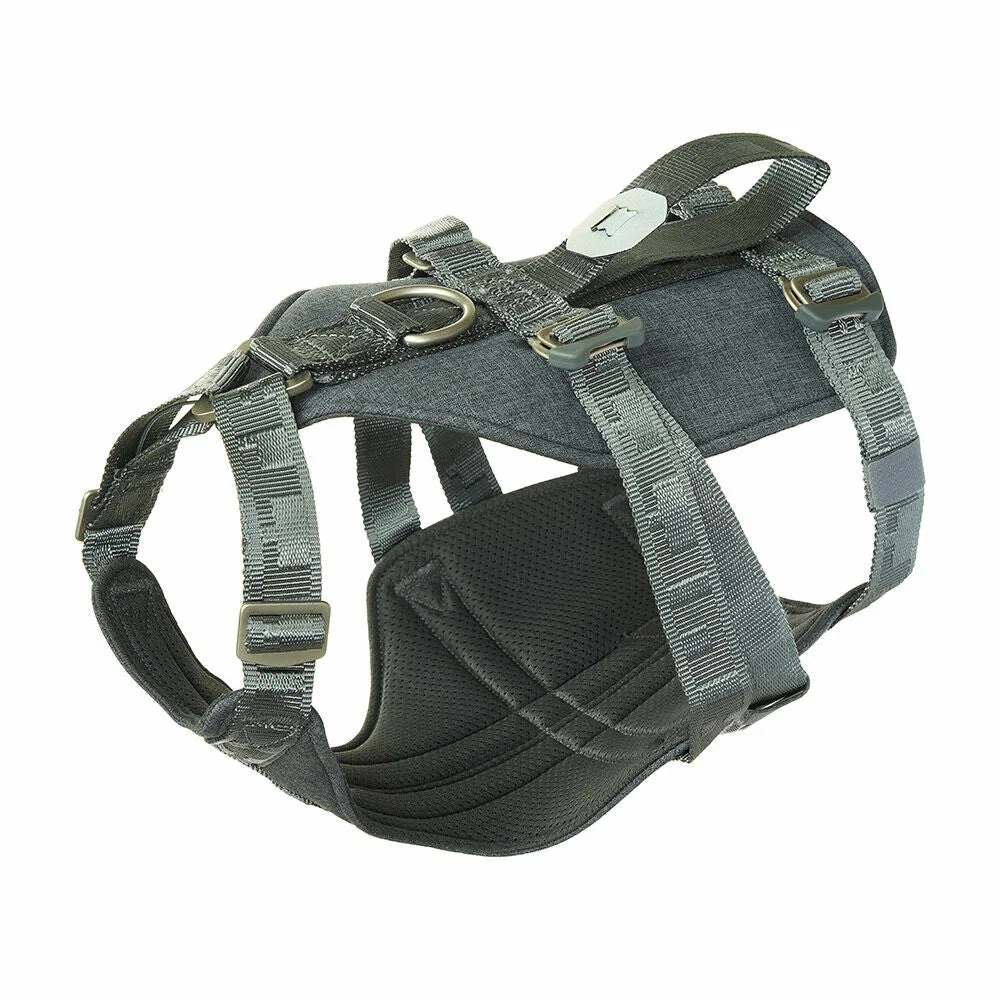
- Venture vedonestovaljas: The Venture no-pull harness has generous adjustment at the neck and chest. More adjustment points let you fine-tune the fit for dogs with narrow or deep chests that slip out of standard harnesses.