Quick answer
Most litter-robot litter tracking comes from three fixable things: the wrong mat, a litter that clings to paws, or a short exit path with no transition zone. Start by placing a textured mat directly at the entry, switch to a low-tracking litter, and give cats two or three steps of mat space before they hit bare floor. If tracking continues after those changes, the issue is usually your cat's litter habits or the room layout, not the robot.
You bought a self-cleaning litter box to stop scooping, not to sweep a trail of granules across the hallway. If you are finding litter in the same spots every day, the fix is usually simpler than you think, and it rarely involves the robot itself.
This guide separates the symptom from the cause, gives you one corrective action at a time, and tells you when to stop troubleshooting and change your setup instead. Work through it in order, because changing three things at once makes it impossible to know what worked.
Symptom: Litter is scattered right at the entry
If the mess starts immediately at the opening and thins out within a foot or two, your cat is exiting with litter still stuck to its paws. That is normal feline behavior, not a malfunction. The robot cannot shake paws clean, so the job belongs to whatever surface your cat lands on.
The corrective action is a mat with a deep texture, not a flat rug. A flat mat lets granules roll; a textured one traps them below paw level. Place it flush against the entry so there is no bare-floor gap where your cat can launch forward and scatter litter further.
- Put the mat directly against the entry, with no gap.
- Choose a mat with raised nubs or a honeycomb pattern rather than a flat weave.
- Shake or vacuum the mat every few days so it keeps trapping instead of overflowing.
Symptom: Litter travels several feet into the room
When the trail extends well past the box, the problem is usually the exit path, not the mat. Cats pick up speed as they leave, and a long, clear runway gives them room to sprint. A shorter, more textured path slows them down and drops more litter before they reach carpet.
Try adding a second mat or repositioning the box so your cat has to make a turn or step onto a textured surface right after exiting. If the box sits in an open corner with a straight shot into the room, that layout is working against you.
- Two mats in a row beat one oversized mat.
- A slight turn in the exit path reduces scatter distance.
- Keep the path clear of toys your cat can bat litter toward.
Symptom: Fine dust and crumbs, not full granules
If what you are sweeping looks more like sand than pellets, the litter itself is breaking down. Clay litters and some lightweight formulas crumble under paw pressure, and the fragments cling harder than whole granules. This is a litter problem, and no mat will fully solve it.
Switch to a low-tracking litter with larger, firmer granules and give it a week. Cats are sensitive to litter changes, so mix the new litter with the old for a few days rather than swapping it overnight. If your cat refuses the new litter, go back and try a different low-tracking option instead of forcing it.
- Larger granules track less than fine, sandy litters.
- Transition gradually over several days.
- If your cat avoids the box after a switch, revert and try another type.
Symptom: Tracking started suddenly after months of no issues
A sudden change usually points to something new: a different litter brand, a mat that has worn flat, a moved box, or a change in your cat's routine. Before you buy anything, retrace what changed in the last two weeks. Most owners find the answer there.
Check the mat first, since textured mats flatten and lose their grip over time. Then check the litter. If neither changed, watch your cat exit the box a few times. You will often see whether it is jumping out, sprinting, or lingering, and each of those tells you which fix to try.
- Replace a mat once its texture has flattened.
- Note any recent litter brand or box-location change.
- Watch two or three exits before deciding on a fix.
When to stop troubleshooting and change your setup
If you have tried a proper mat, a low-tracking litter, and a shorter exit path, and litter still spreads across the room, the remaining cause is usually the room itself. Small bathrooms, long hallways, and carpeted rooms amplify tracking no matter what you put down. At that point, containment beats correction.
A cabinet or enclosure that surrounds the box limits how far litter can travel and hides the setup at the same time. This is also the right move if the box sits in a visible living space and the constant sweeping is becoming a daily chore you resent. Stop adding mats and solve the layout instead.
- Carpet holds litter; hard flooring makes it easier to sweep.
- An enclosure contains scatter instead of chasing it.
- If tracking is a daily frustration, change the environment, not the accessories.
Tracking diagnosis: match the symptom to the fix
- Litter only at the entry: Your cat is exiting with granules still on its paws. Add a deeply textured mat flush against the opening and empty it every few days. If this fixes it within a week, stop here.
- Trail extends across the room: The exit path is too long and too open. Use two mats in sequence or reposition the box so your cat has to turn or step onto texture immediately. Recheck after one week before buying more gear.
- Fine dust instead of granules: The litter is breaking down. Transition gradually to a larger-granule, low-tracking litter over several days. If your cat rejects the new litter, revert and try a different type.
- Tracking started suddenly: Something changed: a flattened mat, a new litter, or a moved box. Identify the change before spending money. Replace a worn mat first; it is the cheapest fix.
- Still tracking after all fixes: The room layout is the cause. Carpet, long hallways, and open corners amplify scatter no matter what you put down. Choose containment, such as an enclosure, instead of more mats.
Products that help with tracking and containment
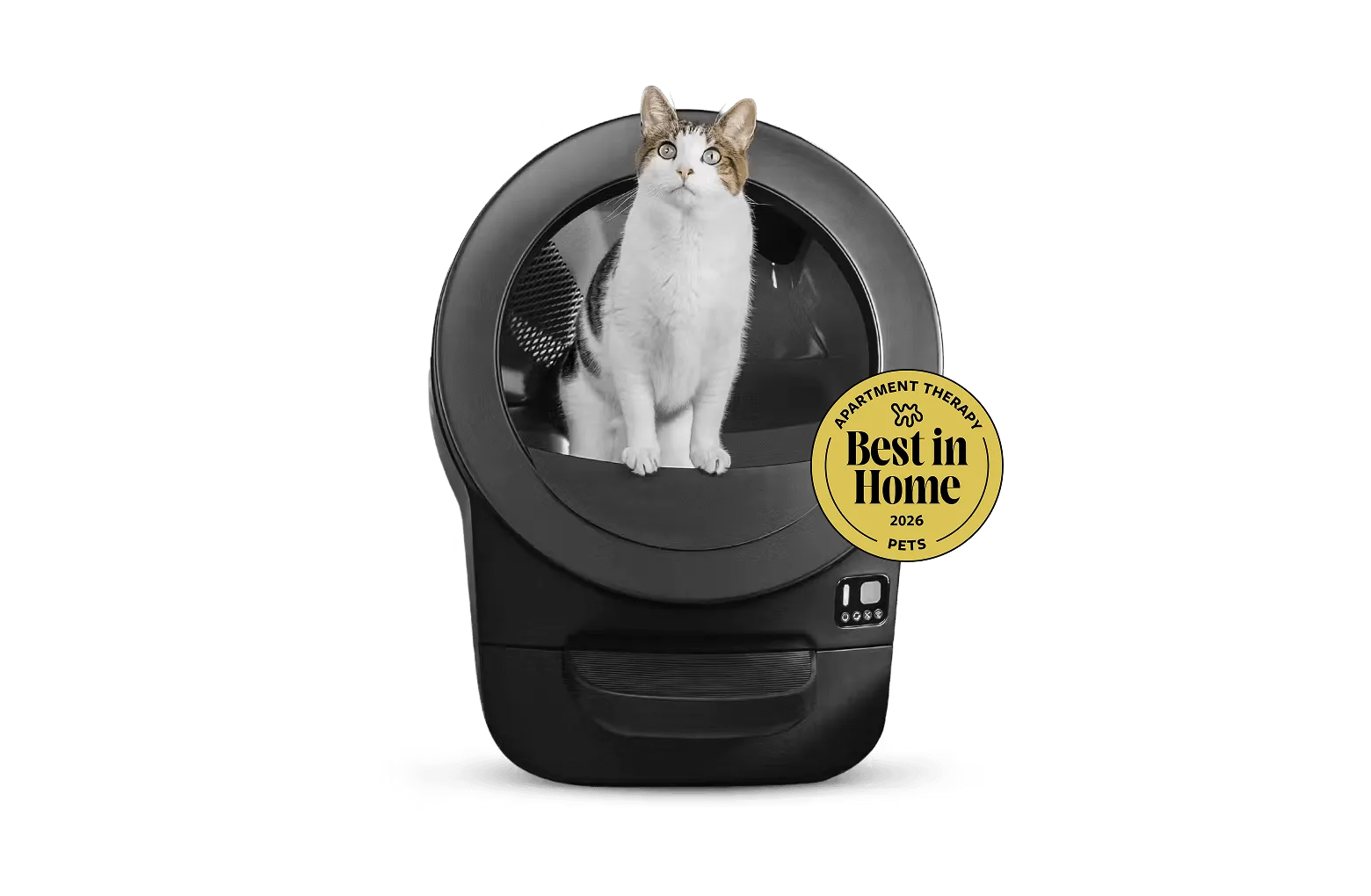
- Litter-Robot® EVO: The new Litter-Robot EVO is the simple, streamlined, and compact self-cleaning litter box designed to fit seamlessly into almost any space. A compact footprint gives you more room to place a proper tracking mat and a short, controlled exit path, which is exactly what reduces scatter.
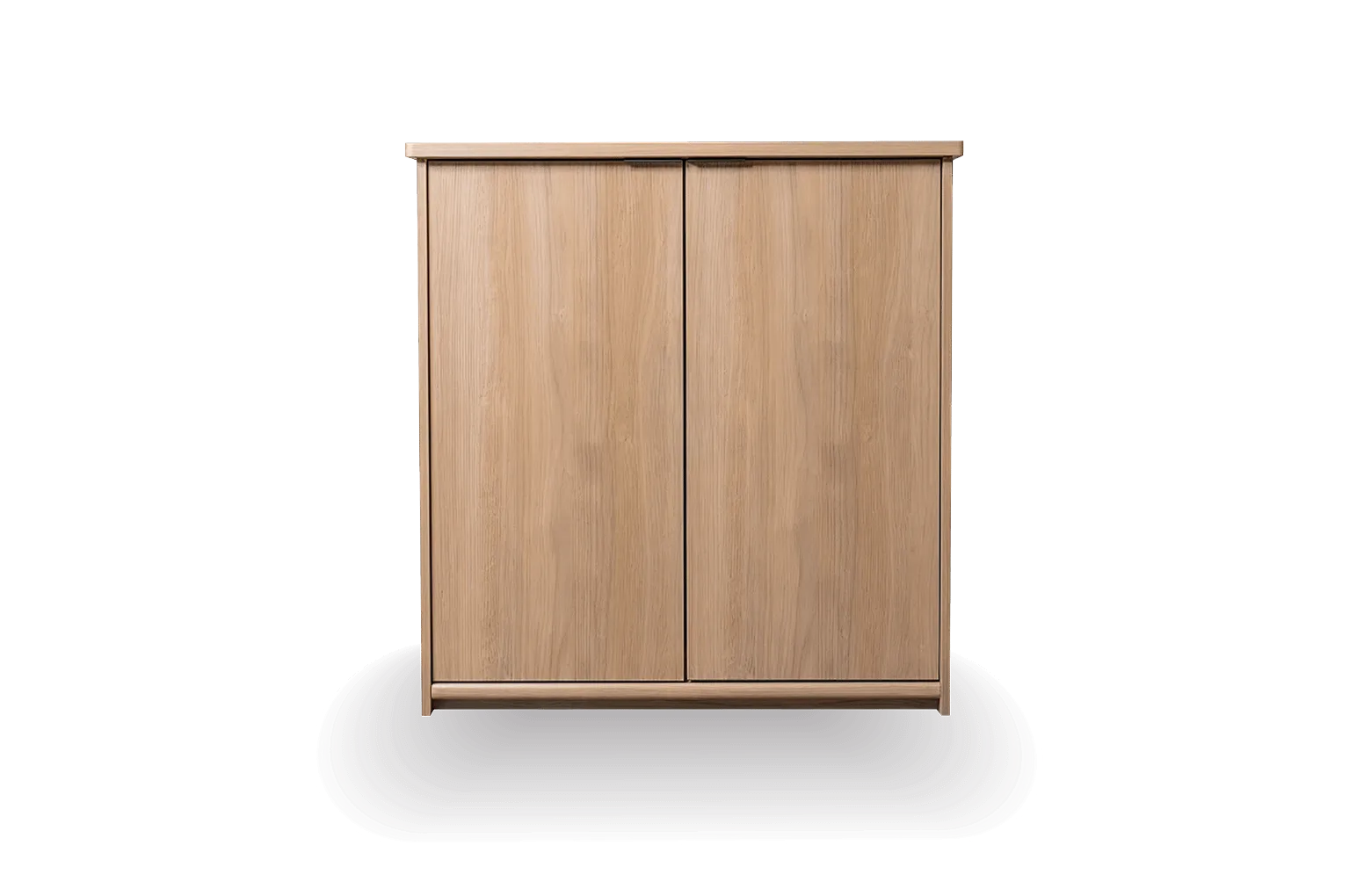
- Litter-Robot Cabinet: Crafted with a modern furniture design, the Litter-Robot Cabinet discreetly conceals your Litter-Robot while bringing style and smart space-saving design to your home. If mats and litter changes have not contained the mess, an enclosure limits how far litter can travel and keeps the box out of sight.
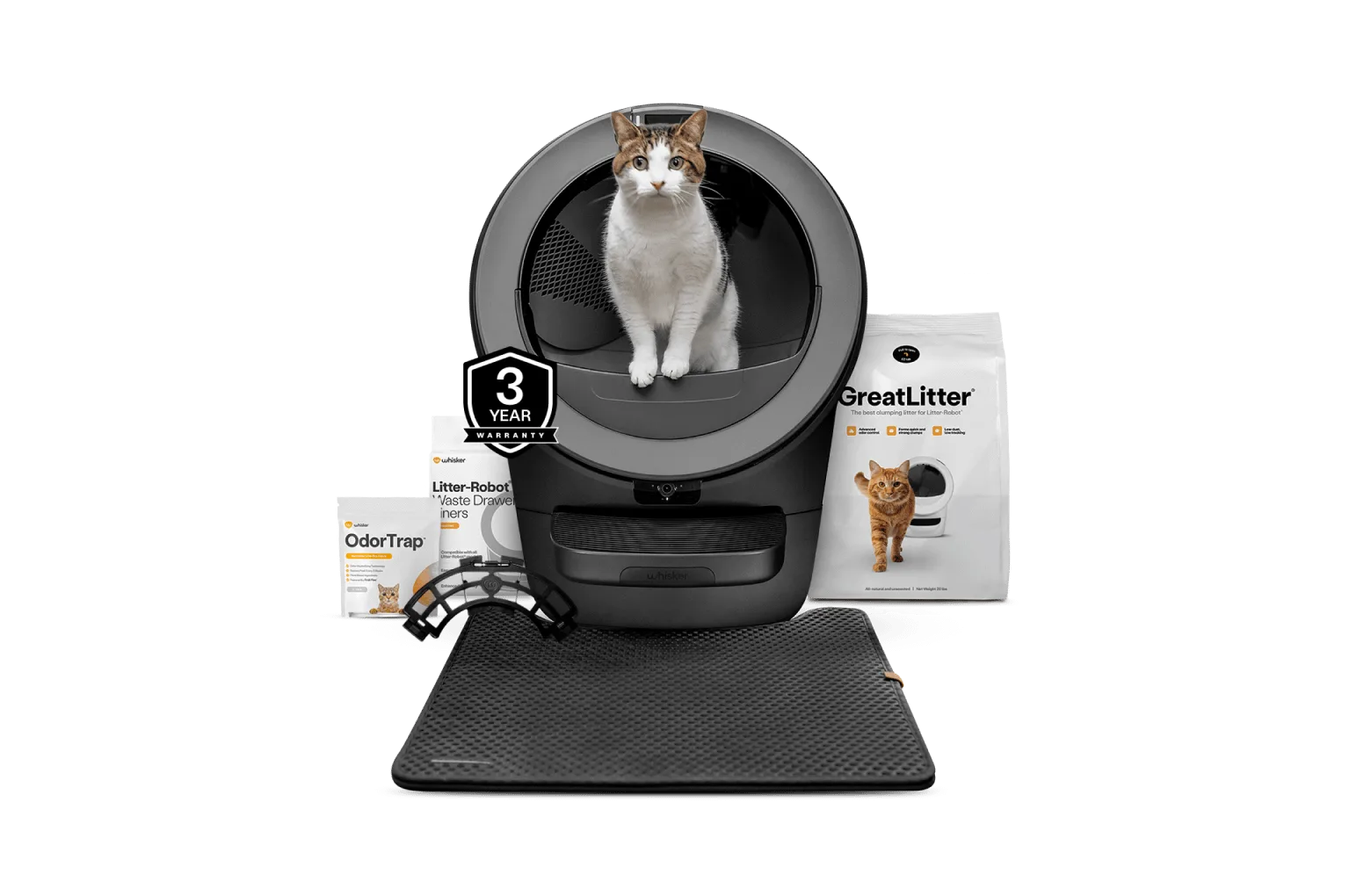
- Litter-Robot® 5 Starter Bundle: Litter-Robot 5 is the most advanced self-cleaning litter box for cats, and the bundle includes the highly-rated accessories needed to make the most of your automatic litter box. Starting with the bundled accessories means you are not improvising a mat and setup separately, which is where most tracking problems begin.
Work through the diagnosis in order and change one thing at a time. Most litter-robot litter tracking disappears with a better mat, a firmer litter, and a shorter exit path. If it does not, stop chasing granules and change the space around the box instead.