Quick Answer
Treat bed chewing as a symptom first: rule out boredom, teething, anxiety, and leftover food smells before you punish anything. Give your dog a legal chew outlet, make the bed less rewarding to bite, and redirect every time you catch it starting. If your dog has already destroyed multiple beds, stop replacing fabric beds and switch to a chew proof dog bed with a replacement cover instead.
A shredded bed is rarely about the bed. Dogs chew bedding for a short list of reasons, and until you know which one you are dealing with, every replacement you buy is just the next chew toy. The good news is that most bed chewing is solvable once you separate the symptom from the cause.
This guide walks through that diagnosis in order, from the cheapest fixes to the point where you should stop buying soft beds altogether. It also covers when a chew proof dog bed and its replacement covers are the practical answer rather than another round of training.
Start With the Symptom, Not the Punishment
Look at what your dog actually destroys. Zipper pulls, seams, and corners usually mean the dog is targeting a texture or a weak point. Whole-bed shredding with stuffing pulled out often points to a full-body outlet need, like teething or anxiety chewing. A bed chewed only when you are gone tells a different story than one chewed while you are in the room.
Timing matters as much as the damage. Chewing that happens right after meals, during alone time, or at night points to different causes. Write down when it happens for three days before you change anything, because that pattern is the diagnosis.
- Photograph the damage before you throw the bed away; the pattern is evidence.
- Note whether the chewing happens when you are present, absent, or both.
Likely Cause 1: Boredom and Missing Chew Outlets
If your dog chews the bed in the evening or after long stretches alone, boredom is the first suspect. Dogs need to work their jaws on something appropriate, and a soft bed is often the easiest target in the room. Add structured chew time with durable toys and rotate them so they stay interesting.
Increase physical exercise and add a few minutes of sniffing or puzzle work. A tired dog with a legal chew outlet is far less likely to redecorate its bed. If the chewing drops sharply within a week of these changes, boredom was the cause.
- Rotate two or three chew toys instead of leaving all of them out at once.
- Add one sniff-based activity per day; mental work tires dogs faster than many owners expect.
Likely Cause 2: Teething or Mouth Discomfort
Puppies and adolescent dogs chew to relieve gum pressure, and bed fabric has a satisfying give. If your dog is under about eighteen months, expect some of this and manage it rather than fight it. Cold chew items and short, frequent chew sessions help more than corrections.
Adult dogs can also chew from dental pain or mouth irritation. If chewing started suddenly in an adult dog with no history of it, a vet check is the right first move, not a new bed.
- Sudden onset in an adult dog is a vet question, not a training question.
- Supervise teething dogs around soft bedding until the phase passes.
Likely Cause 3: Anxiety and Alone-Time Chewing
Chewing that happens only when you leave, often with drooling, pacing, or damage near doors, is usually anxiety rather than mischief. Punishing it after the fact does not work because the dog is not chewing to disobey you. It is self-soothing.
Address the alone-time routine: practice short absences, leave a high-value chew that only appears when you go, and consider a crate or pen if your dog is safer contained. If your dog injures itself or the behavior escalates, involve a vet or certified behavior professional.
- A chew that only appears at departure is more effective than a pile of toys.
- Do not use a bed as the containment area for a dog with separation anxiety.
Make the Bed Less Rewarding to Chew
Whatever the cause, you can lower the bed's appeal while you work on it. Bitter sprays make fabric taste unpleasant, and a water-based formula is the safer choice around bedding and skin. The All Natural No Chew Spray For Dogs uses a water-based formula with a bittering agent, and the catalog states it will not sting or stain, so it can be applied to furniture and fabrics.
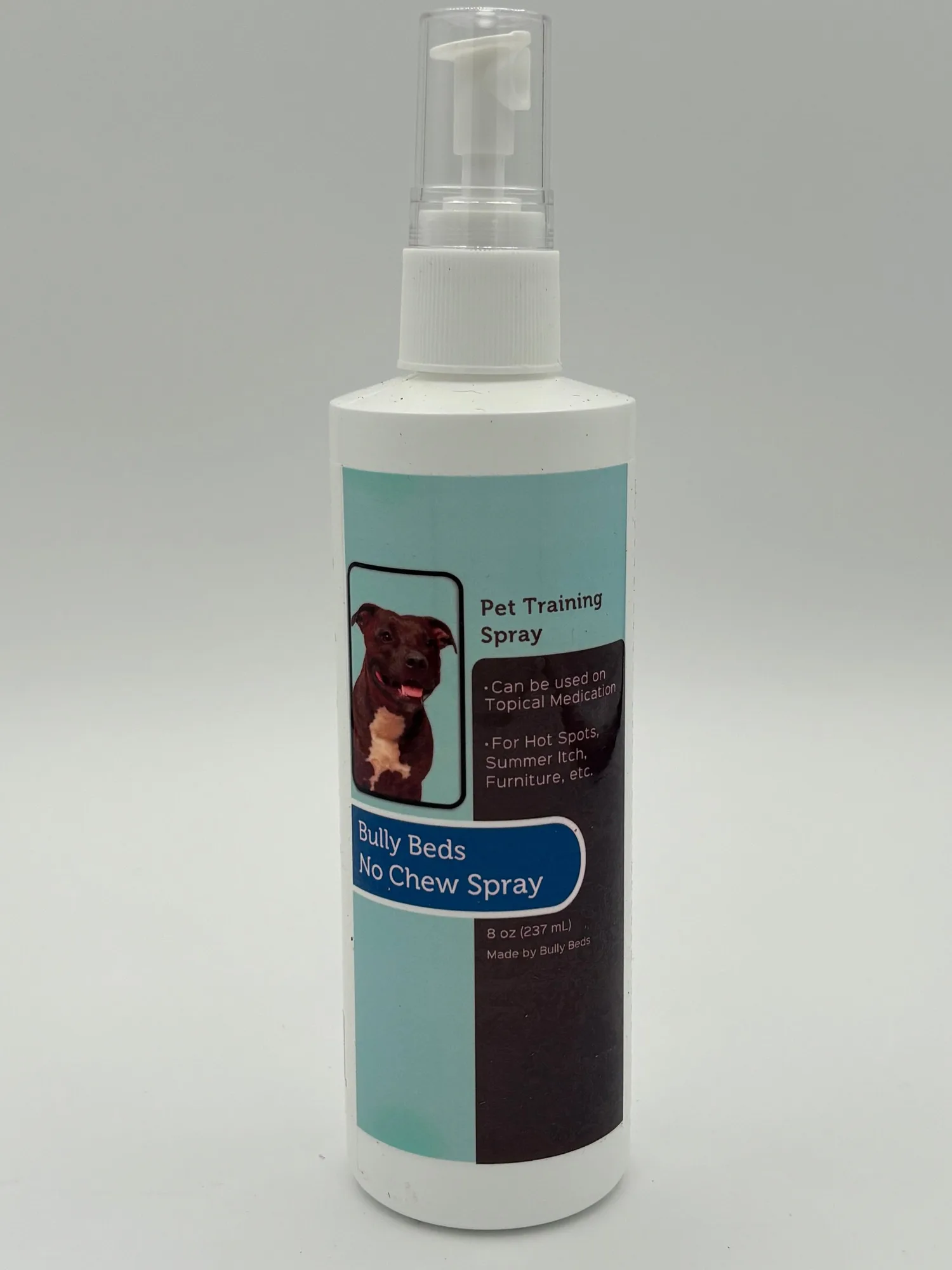
All Natural No Chew Spray For Dogs
Test any spray on a hidden corner first and let it dry completely. Reapply after washing, since the bittering agent does not survive a wash cycle. Spraying alone will not fix a bored or anxious dog, but it buys you time while the real fix takes hold.
- Reapply after every wash; the taste deterrent washes out.
- Pair the spray with a redirect to a legal chew, not with punishment.
When to Stop Replacing Beds and Switch Materials
If you have lost two or more beds in a few months, stop buying soft fabric beds. At that point the honest answer is a chew-resistant bed with a replaceable cover, because you are managing a determined chewer rather than a phase. Replacement covers cost far less than a new bed and keep the same sleep surface your dog already knows.
The Chew Proof Dog Bed Replacement Cover is a replacement cover only, not a complete bed, and it fits the chew-resistant beds rather than the original Bully Beds. It comes in tan or gray and is available in multiple sizes and colors. Note that it does not carry the damage replacement warranty that the chew-resistant beds themselves have.
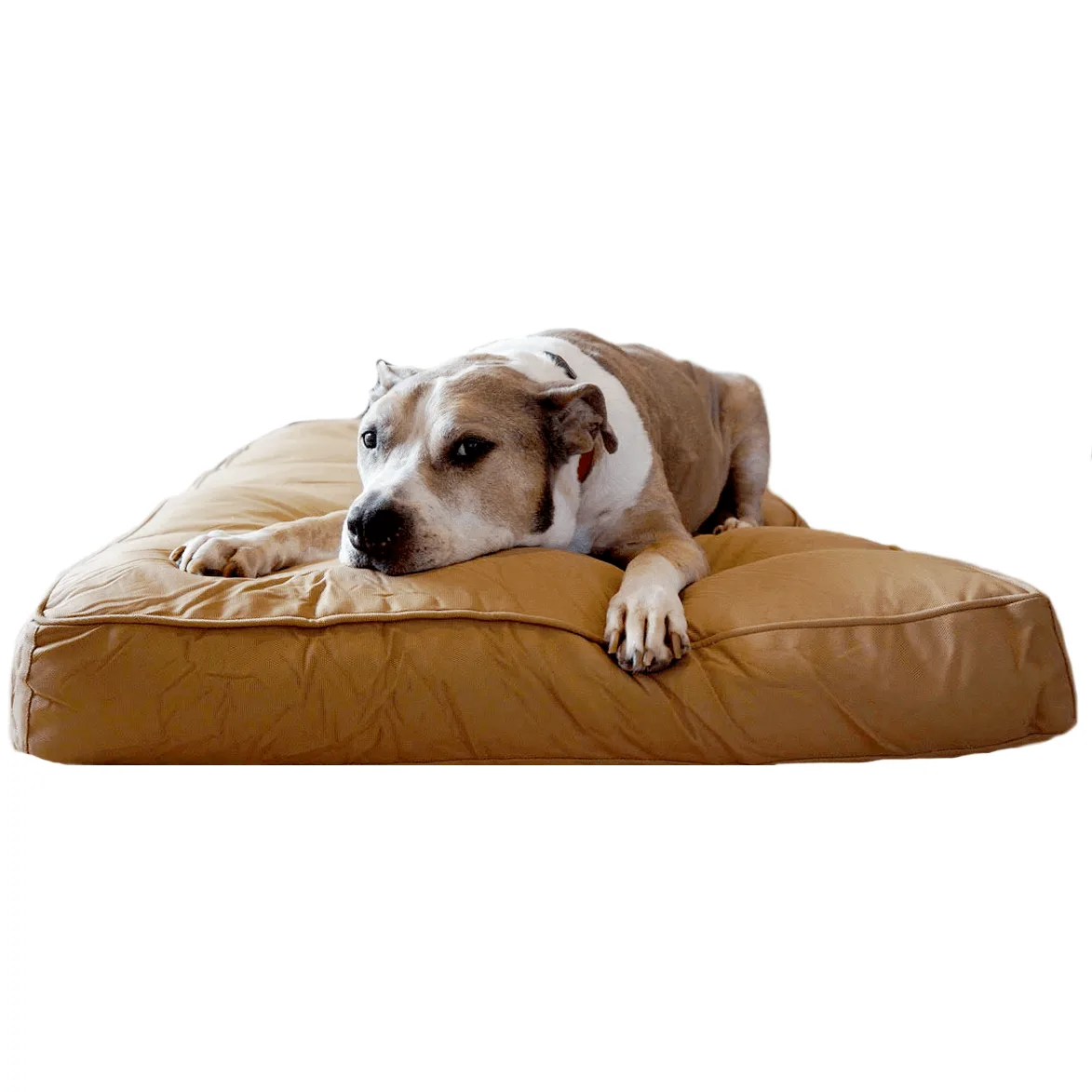
Chew Proof Dog Bed Replacement Cover
- Two destroyed beds in a season is your signal to change materials, not brands.
- Check the fit note before ordering: chew-resistant covers do not fit original beds.
Protect the Bed You Already Own
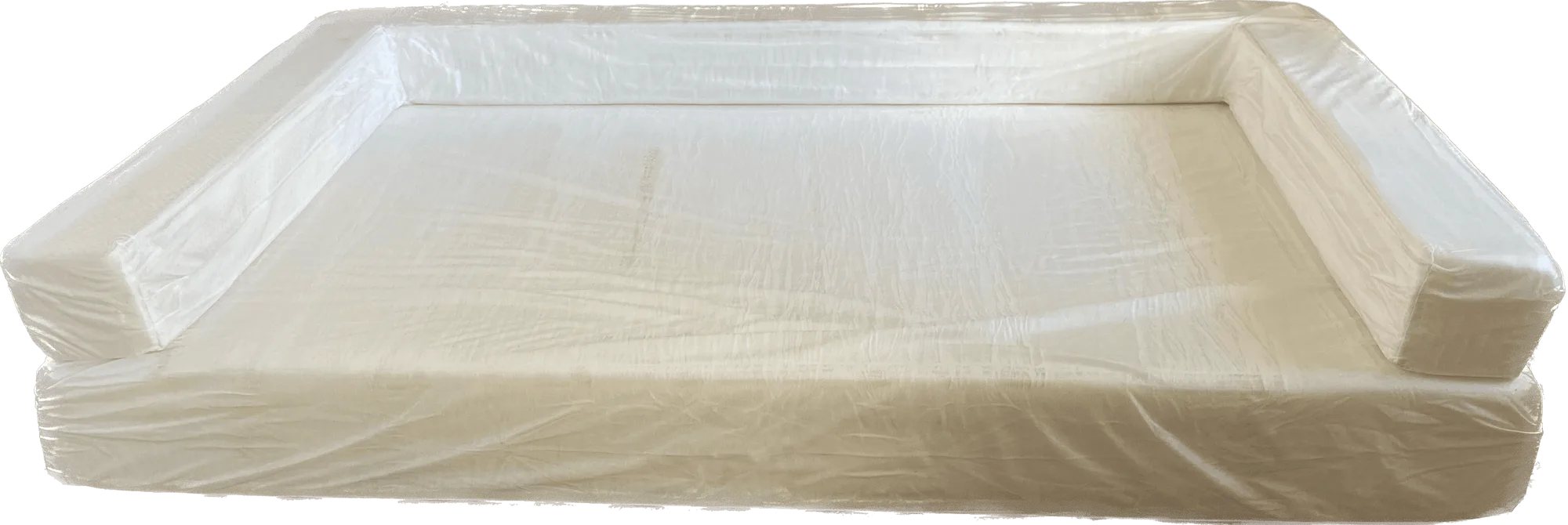
If your dog is a licker, drooler, or occasional accident chewer rather than a destroyer, a waterproof liner extends the life of the bed you have. The 3 Sided Bed Waterproof Liner is made to fit the 3 sided bed and comes in four sizes: Medium 34x22x4, Large 48x30x5, XL 52x34x7, and XXL 60x48x7.
Match the liner size to your bed size rather than guessing, and keep the bed cover washed and dry. A clean bed with no food residue is simply less interesting to a dog that chews for taste or smell.
- Choose the liner size that corresponds to your 3 sided bed.
- Keep food and treats off the bed to reduce scent-driven chewing.
Bed Chewing Diagnosis
- Symptom: corners and seams chewed: Your dog is targeting texture and weak points rather than the whole bed. Treat as an outlet problem: add durable chews and supervise the bed for a week.
- Symptom: chewing only when alone: This pattern points to anxiety or boredom during isolation, not defiance. Change the alone-time routine first; do not punish after the fact.
- Symptom: sudden onset in an adult dog: A dog with no chewing history that starts destroying bedding may have mouth or dental pain. Book a vet check before spending money on a new bed.
- Symptom: two or more beds destroyed: You are past the training-only stage and into material management. Switch to a chew-resistant bed with a replacement cover instead of buying another soft bed.
Products That Help With Bed Chewing
- All Natural No Chew Spray For Dogs: Water-based formula with a bittering agent that the catalog states will not sting or stain, and can be used on furniture, plants, wood, couches, hot spots, fur, and bandages. It is a low-risk way to make the bed taste unpleasant while you work on the underlying cause, and it is safe enough to use on fabrics you cannot easily replace.
- Chew Proof Dog Bed Replacement Cover: Replacement covers that fit the chew-resistant beds, available in tan or gray, and they do not fit the original Bully Beds. They do not carry the damage replacement warranty that the chew-resistant beds have. For a repeat chewer, replacing the cover is much cheaper than replacing the whole bed, but you must confirm which bed model you own before ordering.
- 3 Sided Bed Waterproof Liner: Made to fit the 3 sided bed in four sizes: Medium 34x22x4, Large 48x30x5, XL 52x34x7, and XXL 60x48x7. A liner protects the bed from drool, accidents, and moisture, which keeps the cover cleaner and less appealing to a dog that chews for scent or texture reasons.
Diagnose the cause before you buy anything, because boredom, teething, and anxiety each need a different fix. If your dog has already proven it will destroy soft bedding, stop replacing it and move to a chew-resistant bed with a replacement cover, then keep a bitter spray and a clean, liner-protected bed in the rotation.