Quick answer
Keep three to five chew toys available at a time, store the rest out of reach in a dry, ventilated container, and swap the active set every few days. Wash rubber toys with warm water and mild soap, inspect for cracks or missing pieces before every rotation, and retire any toy that fails. This simple cycle protects your dog, stretches chew toy lifespan, and makes old toys feel new again.
A pile of chew toys on the floor looks like plenty, but most dogs ignore the same three toys after a week. The rest sit in a corner collecting hair and dust, or worse, get chewed past the point of safety. Storing and rotating chew toys is not about being tidy for its own sake. It is a maintenance routine that keeps toys interesting, makes wear easier to spot, and helps you get more use out of every purchase.
This guide walks through a repeatable process you can set up in an afternoon. It covers what to keep in the active rotation, how to store dog chew toys so rubber does not degrade, how to keep chew toys clean without harsh chemicals, and the checkpoints that tell you when a toy is done. The same routine works whether you have one power chewer or a multi-dog household with different chewing styles.
Start with a toy audit before you buy anything new
Pull every chew toy out of the toy bin, under the couch, and from the backyard. Sort them into three piles: safe and intact, questionable, and done. A toy belongs in the done pile if it has deep cracks, a chunk missing, a worn-through surface, or a squeaker or treat compartment that is exposed. Rubber toys that have gone sticky, chalky, or brittle are also done, because the material has broken down even if the shape looks fine.
The questionable pile is where most people get stuck. Set a rule now: if you would not feel comfortable leaving the toy with your dog while you step out of the room, it does not go back in the rotation. This audit also tells you what you actually own, which prevents buying a fourth treat-dispensing ball when you already have three.
- Checkpoint: if a toy fails the squeeze test or has any loose piece, retire it immediately rather than saving it for 'light play.'
Build an active set of three to five toys
Dogs stay interested in toys that feel new, and novelty comes from contrast, not quantity. Build an active set of three to five toys that do different jobs: one chew toy for solo work, one treat dispenser for enrichment, one fetch or tug toy for interactive play, and one comfort or quiet-time toy. Rotating by function keeps your dog from fixating on a single favorite and gives each toy a rest period.
Match the active set to your dog's chewing style. A power chewer who destroys plush toys in minutes needs durable rubber in the mix, while a gentle chewer can handle a wider range. If you are unsure where your dog falls, the guide on choosing the right chew toy for your dog's chewing style is a useful companion to this routine.
- Common mistake: leaving every toy out at once. That flattens novelty and makes it harder to notice which toy is wearing out.
Choose storage that lets rubber breathe
The best dog toy storage is dry, ventilated, and out of direct sunlight. A breathable canvas bin, a wire basket, or a crate with the door open works well. Sealed plastic containers trap moisture, which is a problem if a toy goes into storage damp after washing or a slobbery play session. Sunlight and heat also speed up the breakdown of rubber, so keep the bin away from radiators, sunny windows, and the back of a hot car.
Store the inactive toys somewhere your dog cannot reach. A high shelf, a closed closet, or a bin with a lid in another room all work. If your dog can see and smell the stash, some dogs will work at the container until it opens. Out of sight is also out of mind, which is what makes the next rotation feel like a new delivery.
- Practical tip: keep a small mesh bag for dirty toys so used ones do not sit against clean ones.
Wash toys on a schedule, not just when they look bad
Rubber chew toys collect saliva, food residue, and bacteria, and a treat dispenser can grow unpleasant inside the cavity long before the outside looks dirty. Wash the active set every one to two weeks, and wash any toy immediately after it has been in the yard, at the park, or shared with another dog. Warm water with a mild dish soap is enough for most solid rubber toys. Use a bottle brush or a small scrub brush to reach inside treat compartments.
Rinse thoroughly, because soap residue can upset a dog's stomach. For hollow toys, shake out excess water and let them air dry completely before they go back in the bin. If a toy has a squeaker hole or a fabric component, check the manufacturer's care instructions first. When in doubt, hand wash and air dry rather than risking a dishwasher cycle that could warp or degrade the material.
- Checkpoint: if a toy still smells sour after washing and drying, the material is holding odor. Retire it.
Rotate on a fixed schedule and rotate smart
Swap the active set every three to seven days. Pick a day that is easy to remember, such as trash day or laundry day, so the routine sticks. When you rotate, take the current toys out, inspect and wash them as needed, and put them in the storage bin. Then choose the next set from storage. The rest period is what restores novelty, and it also gives each toy time to dry and off-gas after cleaning.
Rotate by function rather than swapping like for like. If the outgoing set had a fetch ball and a treat dispenser, bring in a tug toy and a different chew shape. Changing the type of play keeps your dog mentally engaged and spreads wear across your whole collection instead of concentrating it on one favorite.
- Common mistake: rotating only the toys your dog already loves. Include one less-favored toy each cycle to see if it gets a second chance.
Track wear so you replace before something breaks
Inspection is the point of the whole routine. Every time a toy comes out of rotation, run your hands over it. Look for cracks, punctures, missing chunks, exposed cores, and loose strings or squeakers. Pay extra attention to toys used by heavy chewers, since damage can go from minor to dangerous in a single session. A toy that is losing pieces is a choking and blockage risk, not a bargain.
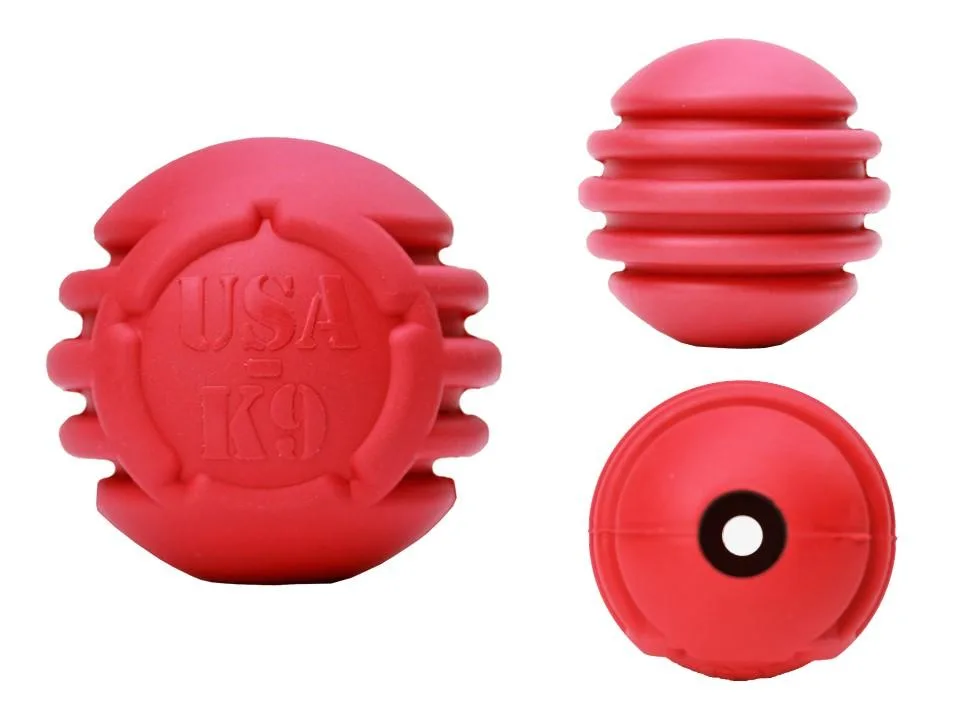
If you notice one toy wearing out much faster than the rest, that tells you something useful about your dog's chewing style. You can adjust the rotation to give that toy more rest, or replace it with a tougher option built for power chewers. Durable rubber toys such as the K9 Power Chewer Tough Rubber Ball are designed for exactly this kind of heavy use, which makes them a sensible anchor for a rotation in a strong-chewing household.
- Checkpoint: photograph new toys when you first put them into rotation. Comparing photos makes slow wear obvious.
Keep the routine realistic for multi-dog homes
In a home with more than one dog, storage and rotation get more complicated because toys can become resources. Keep separate active sets if your dogs guard toys, and store each set where the other dog cannot reach it. If your dogs share peacefully, you can still rotate a common set, but inspect more often because shared toys wear faster and can spread chewed debris.
A simple rule for multi-dog homes: one toy per dog in the active set, plus one shared interactive toy used only with you present. That prevents a quiet chew session from turning into a disagreement and makes it easier to see which dog is damaging which toy.
- Practical tip: label bins by dog if you keep separate sets. It removes guesswork during a busy rotation day.
Your toy rotation routine, step by step
- Step 1: Audit every toy: Gather all chew toys and sort them into safe, questionable, and done. Retire anything cracked, missing pieces, sticky, or brittle. Checkpoint: if you would not leave it with your dog unsupervised, it does not go back in the rotation.
- Step 2: Build a three-to-five toy active set: Choose toys that cover different jobs: solo chewing, treat enrichment, interactive fetch or tug, and quiet comfort. Match toughness to your dog's chewing style. Common mistake: leaving the entire toy collection on the floor, which kills novelty and hides wear.
- Step 3: Set up breathable storage: Use a canvas bin, wire basket, or open crate in a dry spot away from sunlight and heat. Store inactive toys out of your dog's reach. Checkpoint: never store a damp toy in a sealed container.
- Step 4: Wash the active set every one to two weeks: Use warm water and mild dish soap, scrub inside treat cavities with a brush, rinse thoroughly, and air dry completely before storage. Checkpoint: if a toy still smells sour after washing and drying, retire it.
- Step 5: Rotate every three to seven days: Swap the active set for stored toys on a fixed day. Rotate by function so the incoming set offers a different kind of play than the outgoing one. Common mistake: rotating only the favorites. Include one less-used toy each cycle.
- Step 6: Inspect at every swap: Run your hands over each toy as it leaves the active set. Look for cracks, punctures, missing chunks, and exposed squeakers or cores. Next step: replace worn toys with a tougher option if one toy keeps failing first.
Toy options that fit a rotation
- NEW! K9 Power Chewer Tough Rubber Ball: K9 Power products deliver ultra durability made to withstand aggressive, powerful chewers, and this chew-proof ball is described as strong, wear-resistant, and fortified. A durable rubber ball is a good anchor toy for the active set in a power-chewing household, and its solid shape makes wear easy to inspect during rotation.
- NEW! Golf Ball Treat Dispenser & Toy: The Golf Ball Rubber Treat Dispenser & Enrichment Toy dispenses treats like kibble and is described as a must-have chew toy for fetch, power chewing, or a long-lasting enrichment challenge. Treat dispensers belong in the enrichment slot of your rotation. Because they have an internal cavity, they need more careful washing and drying than a solid rubber toy.
- New! Penguin Durable Rubber Chew Toy & Treat Dispenser: This penguin toy is designed and built to withstand the abuse of most chewers, is made in the USA, and is described as veterinarian approved with a fresh-breath benefit. A shaped dispenser adds variety to the rotation and gives you a second enrichment option so you are not relying on one treat toy.
- NEW!! Jack O’Lantern Durable Rubber Chew Toy & Dispenser: The Jack O’ Lantern toy is designed to withstand the abuse of most power chewer dogs, has a square shape described as tough and hard to destroy, and dispenses treats like kibble. Its square shape makes it a useful contrast toy in a rotation built around round balls, and the treat cavity means it should be washed and fully dried between uses.
Storing and rotating chew toys takes about ten minutes a week, and it pays you back in safer play, less boredom, and toys that last longer. Start with an audit today, set up one breathable bin, and pick a rotation day you will actually remember. Your dog gets a fresh toy every week, and you get a clear answer to the question of when a toy should be replaced.