Quick answer
Thaw frozen dog food in the refrigerator overnight, never on the counter. Keep it frozen until you're ready, then move it to the fridge 12–24 hours before feeding. Once thawed, use it within 2–3 days and never refreeze.
Why safe thawing protects your dog
Frozen dog food is perishable once it leaves the freezer. Bacteria like Salmonella and Listeria can multiply quickly at room temperature, and dogs are just as susceptible to foodborne illness as humans. Thawing in the fridge keeps the food below 40°F, slowing bacterial growth while the food defrosts evenly.
The way you store the food before thawing also matters. Freezer burn and temperature fluctuations degrade quality and taste. Keep frozen food in its original packaging or an airtight container, and place it in the coldest part of the freezer, not the door.
Safe thawing methods compared
The refrigerator is the safest method. It takes longer—plan on 12–24 hours for a small pouch or roll, depending on size—but it keeps the food out of the temperature danger zone. The microwave is faster but can cook edges and create hot spots; if you use it, choose the defrost setting and serve immediately. Cold water thawing works in a pinch: seal the food in a leak-proof bag, submerge in cold water, and change the water every 30 minutes. Never use hot water or leave food on the counter.
How long can thawed food stay in the fridge?
Once thawed, use refrigerated dog food within 2–3 days. If your dog doesn't finish a portion, you can store leftovers in a sealed container in the fridge for up to 2 days. Reheating is not necessary, but if you do warm it, keep it below 100°F to avoid cooking the food and destroying nutrients. Never refreeze thawed food—refreezing increases bacterial risk and ruins texture.
Step-by-step: safe storage and thawing
- Freeze immediately: Place the frozen dog food in the coldest part of your freezer as soon as you get home. Keep it in its original packaging or transfer to an airtight, freezer-safe container. Label with the date. Checkpoint: freezer temperature should be 0°F or below.
- Plan ahead for fridge thawing: Move the portion you plan to feed from the freezer to the refrigerator 12–24 hours before mealtime. Place it on a plate or in a container to catch drips. Mistake to avoid: thawing on the counter or in hot water.
- Thaw in cold water (if needed): If you forgot to plan ahead, seal the food in a leak-proof bag and submerge it in cold water. Change the water every 30 minutes until thawed. Cook or serve immediately. Checkpoint: water must stay cold, not warm.
- Portion and serve: Once thawed, slice or scoop the portion your dog needs. Serve at room temperature or slightly chilled. Return any unused portion to the fridge within 30 minutes. Mistake to avoid: leaving thawed food out for more than 2 hours.
- Store leftovers safely: Keep thawed food in a sealed container in the refrigerator for up to 2–3 days. Discard any food that smells off or has been out too long. Checkpoint: never refreeze thawed food.
Products that fit this routine
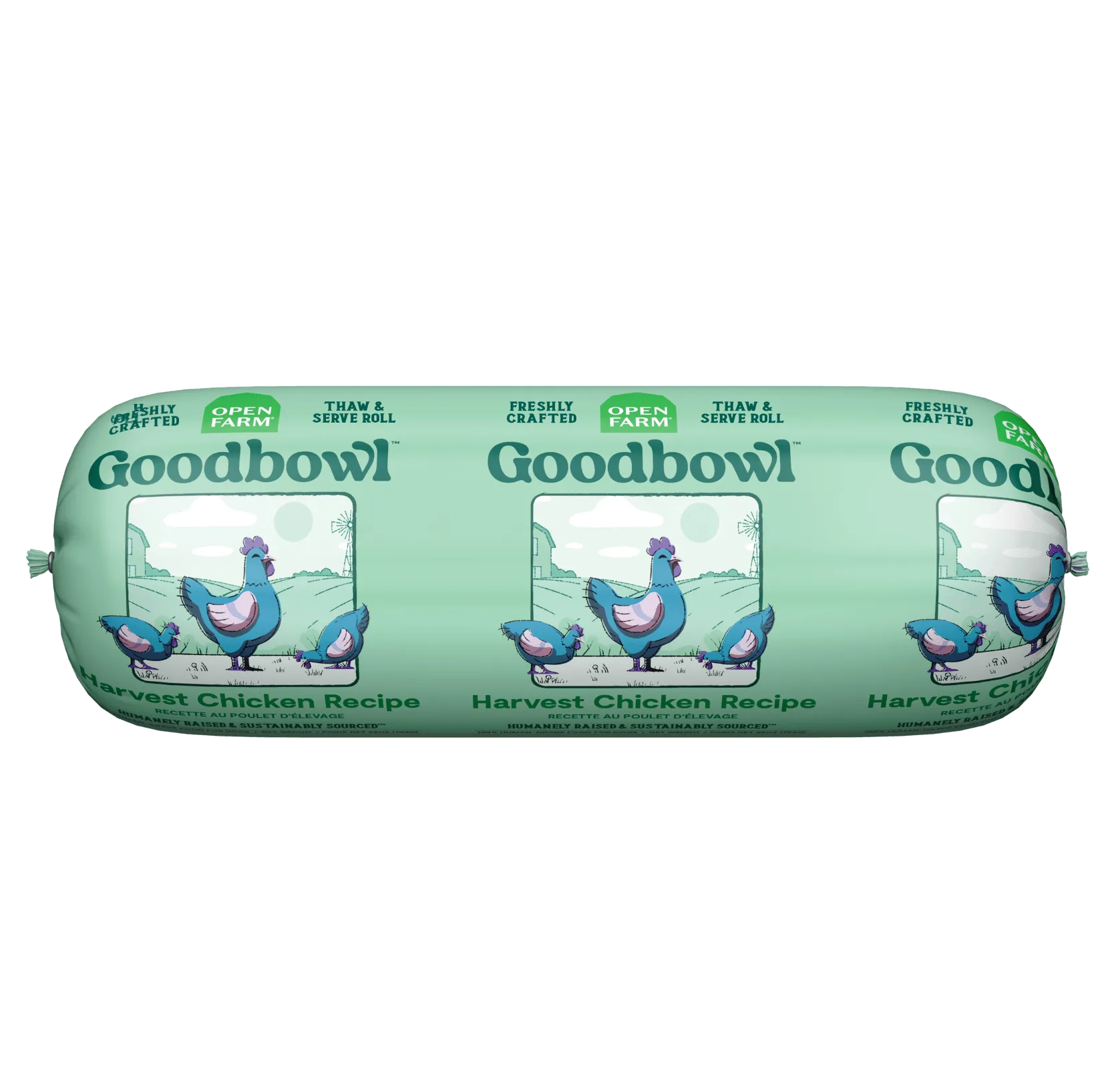
- Goodbowl Harvest Chicken Freshly Crafted Roll for Dogs: This fresh slice and serve recipe is packed with protein and nutrients featuring a mix of humanely raised chicken and non-GMO veggies and grains– all human-grade ingredients. This recipe ships frozen in rolls to preserve freshness and flavor for longer! Just thaw and serve when you're ready to feed. The roll format thaws evenly in the fridge and can be sliced while still partially frozen, making portioning easier.
- Tummy Rescue Freshly Crafted Dog Food: This limited ingredient, fresh & gently cooked recipe is easy to digest, and thanks to a mix of humanely raised turkey and non-GMO veggies and grains – all human-grade ingredients. This fresh recipe ships frozen in pouches to preserve freshness and flavor for longer! Just thaw and serve when you're ready to feed. Pouches thaw faster than large rolls, so they're a good option if you're short on fridge space or need a quicker defrost.