Quick answer
Wash your camping blanket only when it actually needs it, dry it completely, and store it loose and dry rather than compressed in a stuff sack. A clean, fully dry blanket kept in a breathable container away from damp floors and direct sun will be ready to use next season without odors, mildew or flattened loft.
Why off-season storage decides next season's comfort
Most blanket damage happens while it sits unused, not while you sleep under it. Dirt and body oils left in the fabric attract moisture, and moisture trapped in a compressed bundle is what produces that musty smell you notice on the first cold night of the next trip. Loft behaves the same way: a blanket crushed into a tight sack for months loses some of the airy thickness that makes it warm.
The fix is a short routine you run once at the end of the season. It takes an afternoon, needs no special equipment, and protects both the insulation and the exterior fabric.
Match the routine to the blanket you own
Not every camping blanket should be treated the same way. A plush, high-loft fleece comforter with a canvas exterior has different needs than a thin synthetic throw or a quilted down blanket. Check the care label first, then decide how aggressive your cleaning should be.
If your blanket has a durable canvas shell over synthetic high-loft insulation, it can usually handle a gentle machine wash, but the drying step matters more than the washing step. If the label says dry clean only, or you cannot find a label at all, spot clean instead and air the blanket thoroughly before storage.
What you need before you start
Gather everything first so you are not hunting for supplies mid-process: a gentle detergent without bleach or fabric softener, a front-loading washer or a bathtub, a drying rack or a clean line, and a breathable storage bag or cotton duvet cover. Skip plastic bins and vacuum bags for long-term storage.
Set aside a dry, shaded spot for drying. Direct sun fades fabric over time, and a damp garage or basement floor will undo your work.
Off-season blanket care, step by step
- Shake out and inspect before washing: Take the blanket outside, shake it well, and check seams, corners and the lining for sand, pine needles, tears or stains. Spot treat stains with a little gentle detergent and a soft cloth before the full wash. Common mistake: washing a sandy blanket straight away, which grinds grit into the fabric and can clog your machine.
- Wash only when it is genuinely dirty: Use a gentle, bleach-free detergent on a delicate or hand-wash cycle with cold or lukewarm water. If the blanket only smells of campfire, airing it outdoors for a day may be enough and saves wear on the fabric. Checkpoint: if the care label is missing or says dry clean only, spot clean and air instead of machine washing.
- Dry it completely, then dry it a little longer: Lay the blanket flat on a rack or drape it over two lines so air moves through both sides. Flip it once or twice. If you use a dryer, choose low heat and check the blanket every 15 minutes. Common mistake: storing a blanket that feels dry on the outside but is still damp inside the insulation, which is how mildew starts.
- Store loose, not compressed: Fold the blanket and place it in a breathable cotton bag, pillowcase or duvet cover. Keep it on a shelf or in a ventilated tote rather than a sealed plastic bin, and avoid vacuum bags for anything with loft. Checkpoint: if you can see condensation inside the container, the blanket or the space is too damp.
- Choose a dry, stable spot and check it mid-season: Store the blanket away from concrete floors, exterior walls, direct sunlight and rodent-prone corners. Pull it out once or twice during the off-season, refold along different lines and let it air for a few hours. Next step: refolding on new creases prevents permanent compression marks and gives you a chance to catch any damp smell early.
Product facts
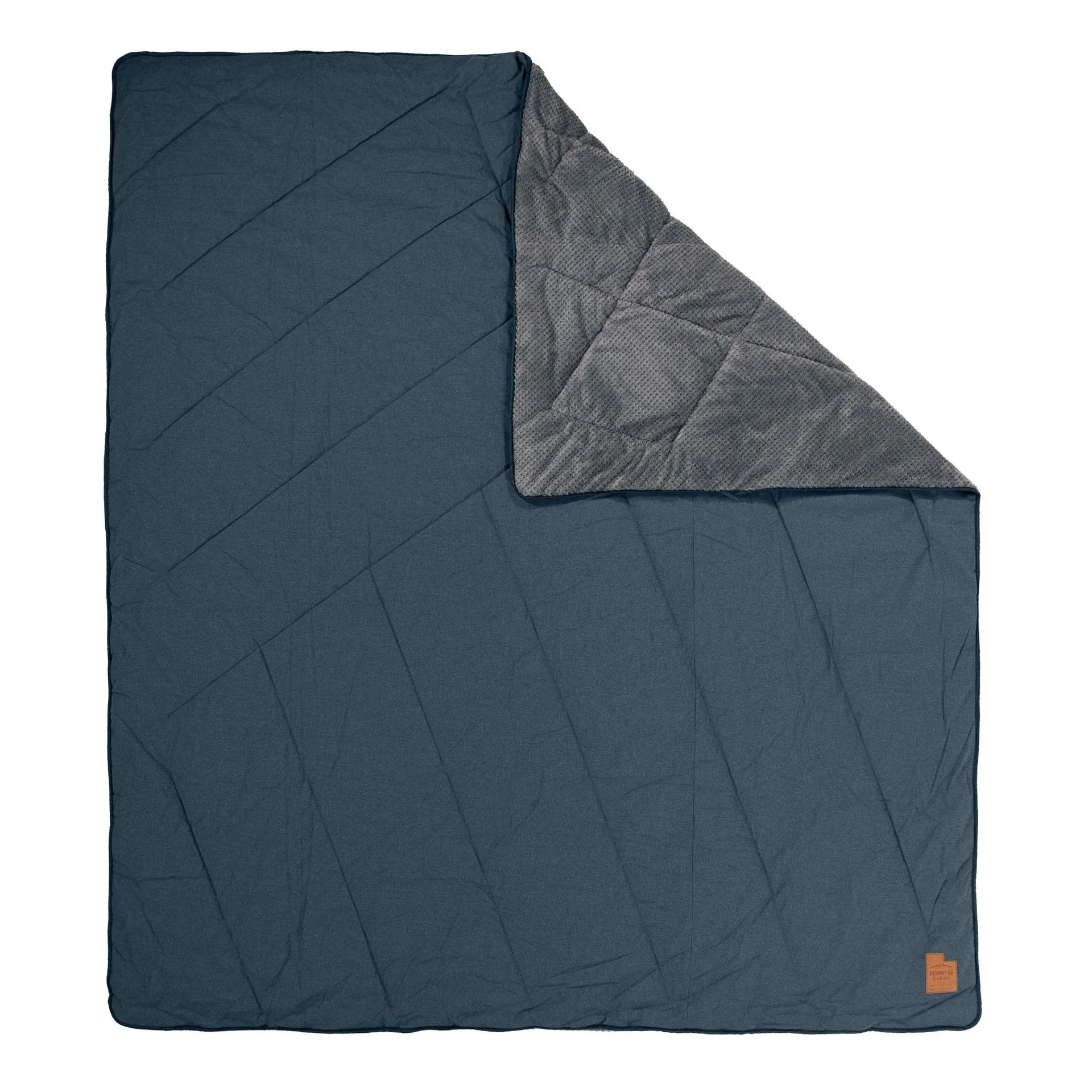
- Homestead™ Cabin Comforter Blanket: The Homestead Cabin Fleece Comforter is a plush, high-loft fleece-lined blanket with a durable canvas exterior and thick synthetic high-loft insulation. The canvas shell resists abrasion while the fleece lining holds warmth, so washing gently and drying fully protects both layers instead of matting the fleece.