Quick answer
Refrigerate pies and tarts that contain eggs, dairy, or cream, and store fruit pies at room temperature for up to two days if you want the crust to stay crisp. Freeze fully baked pies for up to four months, but thaw them in the refrigerator overnight. When in doubt, refrigerate—food safety always comes first.
You baked or bought a beautiful pie. Now you need to know where it should live until serving time. The right spot depends on the filling: a fruit pie can often sit on the counter, while a custard or cream pie needs the fridge. Tarts follow similar rules but their thinner crusts and delicate toppings make them a little more sensitive.
This guide walks through the exact steps to store pies and tarts so they stay safe and taste good. You will also see when freezing makes sense and which mistakes to avoid. For a real-world example, we will look at a Key Lime Pie 9” from Kneads • Bakery • Café • Mill, which has a custard filling and vanilla chantilly—two clues that it belongs in the refrigerator.
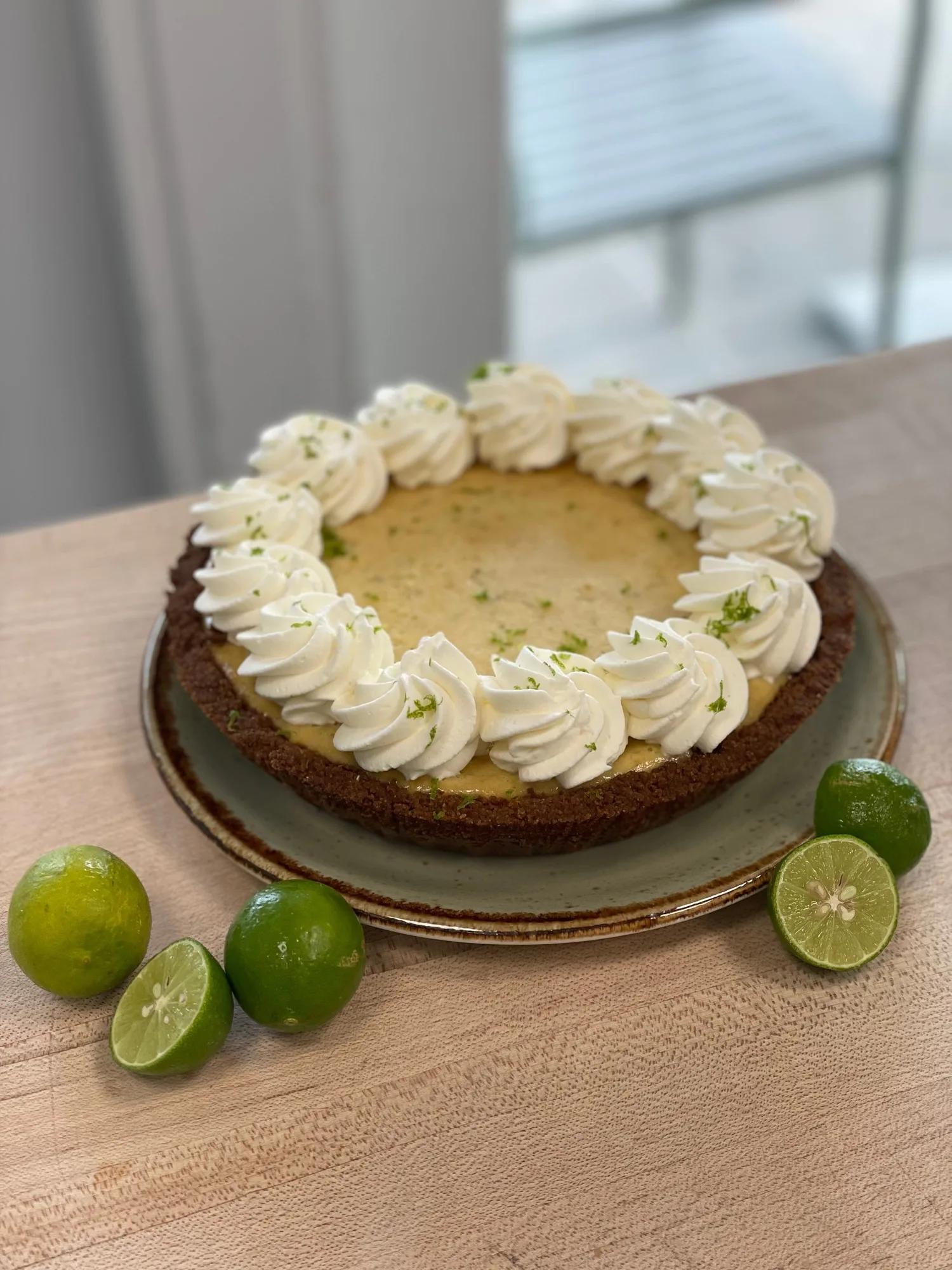
Key Lime Pie 9”
Why fillings decide where your pie goes
The filling is the main factor. Fruit pies with a high sugar and acid content are generally safe at room temperature for a day or two because sugar binds water and acid slows bacterial growth. Custard, cream, mousse, and chiffon pies contain eggs or dairy, which are perishable and require refrigeration within two hours of baking or buying. Tarts with pastry cream or fresh fruit also need cold storage.
The crust matters too. A flaky, buttery crust stays crisp on the counter but softens in the fridge as it absorbs moisture. If you refrigerate a fruit pie, expect the bottom crust to lose some crunch. You can bring back some texture by reheating a slice in a 300°F oven for 5–10 minutes, but only if the filling is heat-stable.
- Custard, cream, or egg-based pies: refrigerate within 2 hours.
- Fruit pies with no dairy: counter for up to 2 days, then refrigerate.
- Tarts with fresh fruit or pastry cream: refrigerate immediately.
How to store pie on the counter
Counter storage works only for fruit pies, nut pies, and some tarts that contain no perishable ingredients. The goal is to protect the crust from moisture loss and the filling from dust or insects without trapping steam. A loose tent of aluminum foil is better than tight plastic wrap because it lets a little air circulate. If the pie is still warm, cool it completely first—about 2 hours—before covering.
Place the pie on a stable shelf away from direct sun and heat. A cool corner of the kitchen is fine. Do not stack anything on top. After 2 days, move the pie to the refrigerator or freeze it. If you see any mold, smell fermentation, or notice a sticky, cloudy filling, discard it.
- Cool completely before covering, or condensation will make the crust soggy.
- Use foil or a loose cover, not tight plastic wrap.
- Label the storage time so you do not lose track.
How to refrigerate pie and tart safely
For custard, cream, or fruit pies that need cold storage, refrigeration slows spoilage but does not stop it. Cover the pie tightly with plastic wrap pressed against the cut surfaces if it is already sliced, or invert a large bowl over the whole pie. A cake carrier with a lid also works. Keep it on a middle shelf where the temperature is most consistent, not in the door.
Most refrigerated pies stay good for 3 to 4 days. Tarts with a thin pastry shell may soften faster; eat them within 2 to 3 days for the best texture. If the pie has a meringue topping, keep it away from the freezer and eat it within 2 days—meringue weeps in the fridge. Always use a clean knife and cover the cut area again after serving.
- Refrigerate within 2 hours of baking or purchasing.
- Press plastic wrap directly onto cut surfaces to prevent drying.
- Eat cream pies within 3–4 days; tarts within 2–3 days.
How to freeze pie for longer storage
Freezing works best for fully baked fruit pies, nut pies, and unbaked fruit pies that you plan to bake later. Custard and cream pies do not freeze well because the filling separates and the crust becomes mushy. To freeze a baked pie, cool it completely, then wrap it tightly in plastic wrap and a layer of heavy-duty foil. Place it in a freezer bag, squeeze out air, and label with the date and filling type.
Freeze for up to 4 months. To thaw, move the pie to the refrigerator overnight—do not thaw at room temperature, which can cause uneven defrosting and bacterial growth. For a crisp crust, reheat the thawed pie in a 350°F oven for 10–15 minutes. If you freeze an unbaked fruit pie, do not thaw before baking; bake from frozen at 425°F for 20 minutes, then reduce to 375°F until the filling bubbles.
- Wrap tightly to prevent freezer burn; label with date and filling.
- Thaw baked pies in the refrigerator, never on the counter.
- Do not freeze meringue, custard, or cream pies.
Tart storage: a few extra cautions
Tarts often have a thinner crust and a more delicate topping than pies. A fruit tart with a glaze can be kept at room temperature for a few hours for serving, but refrigerate it if it has pastry cream, whipped cream, or fresh berries. The crust will soften over time, so a tart is best eaten the day it is made or within 2 days if refrigerated.
If you need to store a tart with a crisp shell, keep the components separate: store the baked shell at room temperature and the filling in the fridge, then assemble just before serving. This is especially useful for chocolate ganache tarts or lemon curd tarts. For a fruit tart, add the fruit and glaze right before serving to prevent sogginess.
- Store tart shells and fillings separately for the crispiest result.
- Refrigerate tarts with dairy or egg-based fillings.
- Add fresh fruit and glaze just before serving.
Step-by-step pie and tart storage plan
- 1. Identify the filling: Check if the pie or tart contains eggs, dairy, cream, or custard. If yes, it must be refrigerated. If it is a fruit or nut pie with no perishable ingredients, it can stay on the counter for up to 2 days. Checkpoint: When unsure, refrigerate. Food safety beats crust crispness.
- 2. Cool completely before covering: Let the pie cool at room temperature for no more than 2 hours. Covering a warm pie traps steam and makes the crust soggy. Mistake to avoid: Wrapping a warm pie in plastic wrap.
- 3. Choose the right cover: For counter storage, tent with foil. For fridge storage, press plastic wrap against cut surfaces or use a cake carrier. For freezing, wrap in plastic wrap then heavy-duty foil, then a freezer bag. Checkpoint: The cover should be airtight for the freezer, loose for the counter.
- 4. Set the storage time: Counter: up to 2 days for fruit pies. Fridge: 3–4 days for custard or cream pies, 2–3 days for tarts. Freezer: up to 4 months for baked fruit pies. Mistake to avoid: Keeping a cream pie in the fridge for a week.
- 5. Thaw and reheat correctly: Thaw frozen pies in the refrigerator overnight. Reheat in a 350°F oven for 10–15 minutes to crisp the crust. Never thaw at room temperature. Checkpoint: The pie is ready when the center is soft and the crust is dry to the touch.
- 6. Know when to discard: Throw away any pie with mold, a sour smell, or a slimy texture. Custard pies left out over 2 hours should be discarded. Mistake to avoid: Cutting off mold—it can spread unseen.
Product facts that guide storage
- Key Lime Pie 9”: Key Lime Pie 9” from Kneads • Bakery • Café • Mill is described with a key lime custard, vanilla chantilly, and a whole grain graham cracker crust. The custard and chantilly mean this pie must be refrigerated within two hours and eaten within 3–4 days. Do not leave it on the counter.
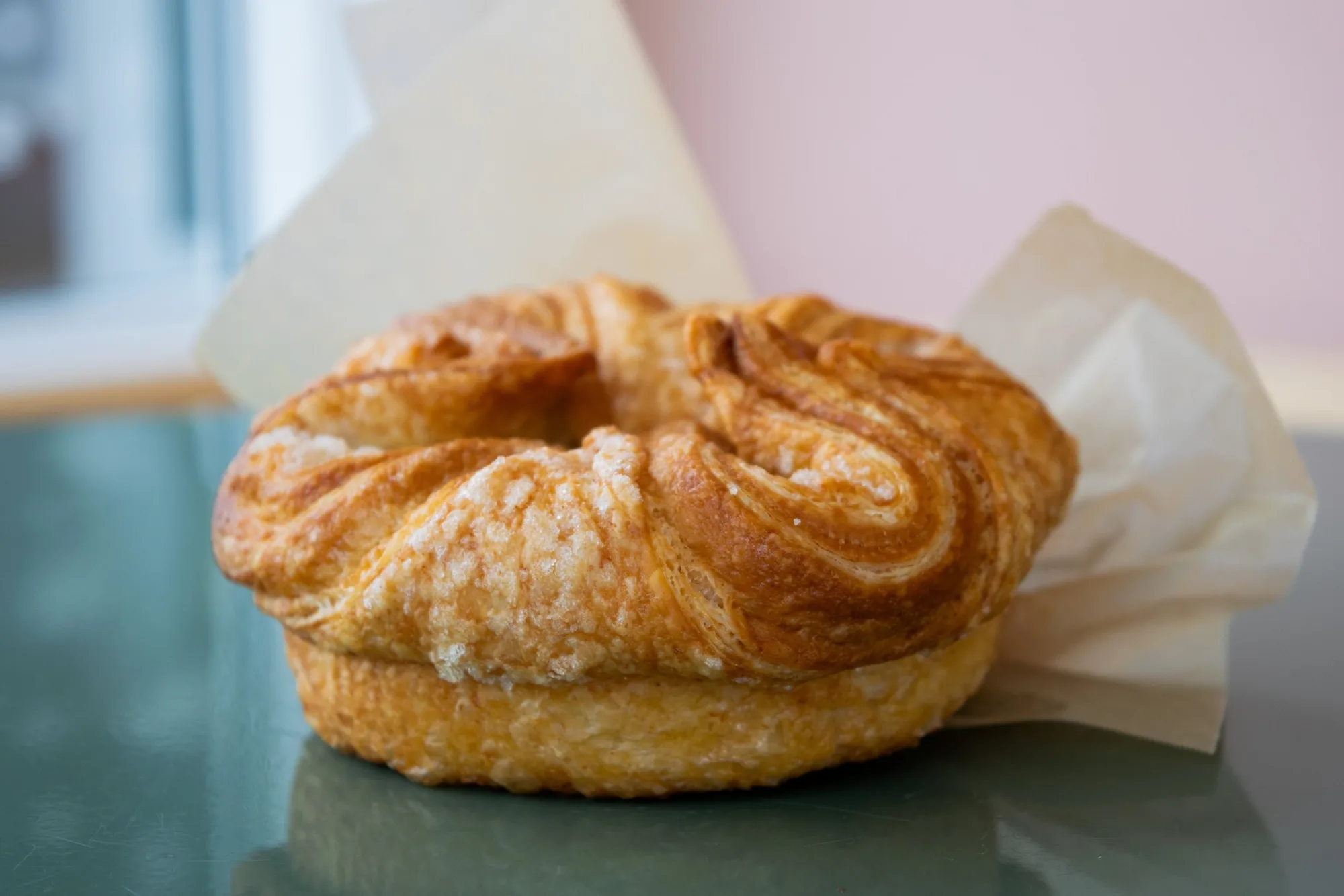
- Kouign Amann: Kouign Amann from KNEADS is a bakery-style pastry listed among items suited to Easter and Mother's Day occasions. While not a pie, this caramelized pastry shows how Kneads handles laminated dough. Store it at room temperature the same day; refrigeration makes it tough.
Storing pies and tarts comes down to the filling. Refrigerate anything with eggs or dairy, keep fruit pies on the counter for a day or two, and freeze only fully baked fruit pies. With these steps, your pie stays safe and tastes as close to fresh as possible.