Quick answer
The most reliable way to stop losing wooden puzzle pieces is to give every puzzle a single, labeled home and to contain blocks in one open bin rather than scattering them across rooms. Start by sorting pieces by toy, then use clear containers or a puzzle storage rack, label each spot, and return pieces immediately after play. This simple routine prevents the slow drift of pieces into drawers, sofas, and toy bins.
Why wooden puzzle pieces disappear (and why blocks are different)
Wooden puzzle pieces vanish for three predictable reasons: they are small, they get separated from their board during play, and they have no assigned home when cleanup happens. Blocks are different. They are meant to be mixed, so the goal is not to keep a specific block with a specific set but to keep the whole collection in one accessible place.
That difference shapes your storage plan. Puzzles need containment by set, while blocks need a single, generous bin that makes building easy. Treating them the same way is why so many families end up with orphaned puzzle pieces and blocks under the couch.
Choose containers that match how your child actually plays
Clear, shallow containers work best for puzzles because your child can see the pieces without dumping everything out. For blocks, an open bin or a low tray lets kids grab and build without asking for help. Avoid deep, opaque bins for puzzles; they encourage digging and scattering.
If you have wall space, a puzzle storage rack keeps boards vertical and visible, which makes cleanup faster. If not, stackable clear bins with latches are a solid alternative. The key is that the container is easy for your child to use independently.
Set up a labeled home for every puzzle and block set
Label each container with a picture or the puzzle name, not just a word. A photo of the completed puzzle taped to the bin helps pre-readers match pieces to the right home. For blocks, one large label like "Blocks" is enough because they all live together.
Keep the labeled homes in the same spot every day. Consistency is what turns cleanup into a habit rather than a chore. If the storage spot changes, pieces will start to drift again.
Make cleanup part of the play routine, not a separate event
The single most effective habit is a two-minute cleanup before moving to a new activity. When your child finishes a puzzle, the pieces go back in the labeled bin before another toy comes out. This prevents pieces from migrating to other rooms.
For blocks, cleanup can be a game: sort by color or shape into the same bin. It takes the same amount of time but keeps the collection together and makes the next play session easier to start.
Do a monthly piece check and rotate toys
Once a month, open each puzzle bin and count the pieces against the puzzle's total. If a piece is missing, check the usual spots: under furniture, in couch cushions, and in other toy bins. This five-minute check catches losses before they become permanent.
Rotate puzzles and blocks in and out of storage every few weeks. Fewer toys available at once means less mixing and fewer lost pieces, and it renews your child's interest when a set comes back.
Step-by-step storage setup
- 1. Gather every puzzle and block set in one room: Collect all wooden puzzles, boards, and blocks from around the house. This reveals how many sets you actually have and which ones are missing pieces. Checkpoint: if you find loose pieces without a board, set them aside in a temporary 'lost and found' container.
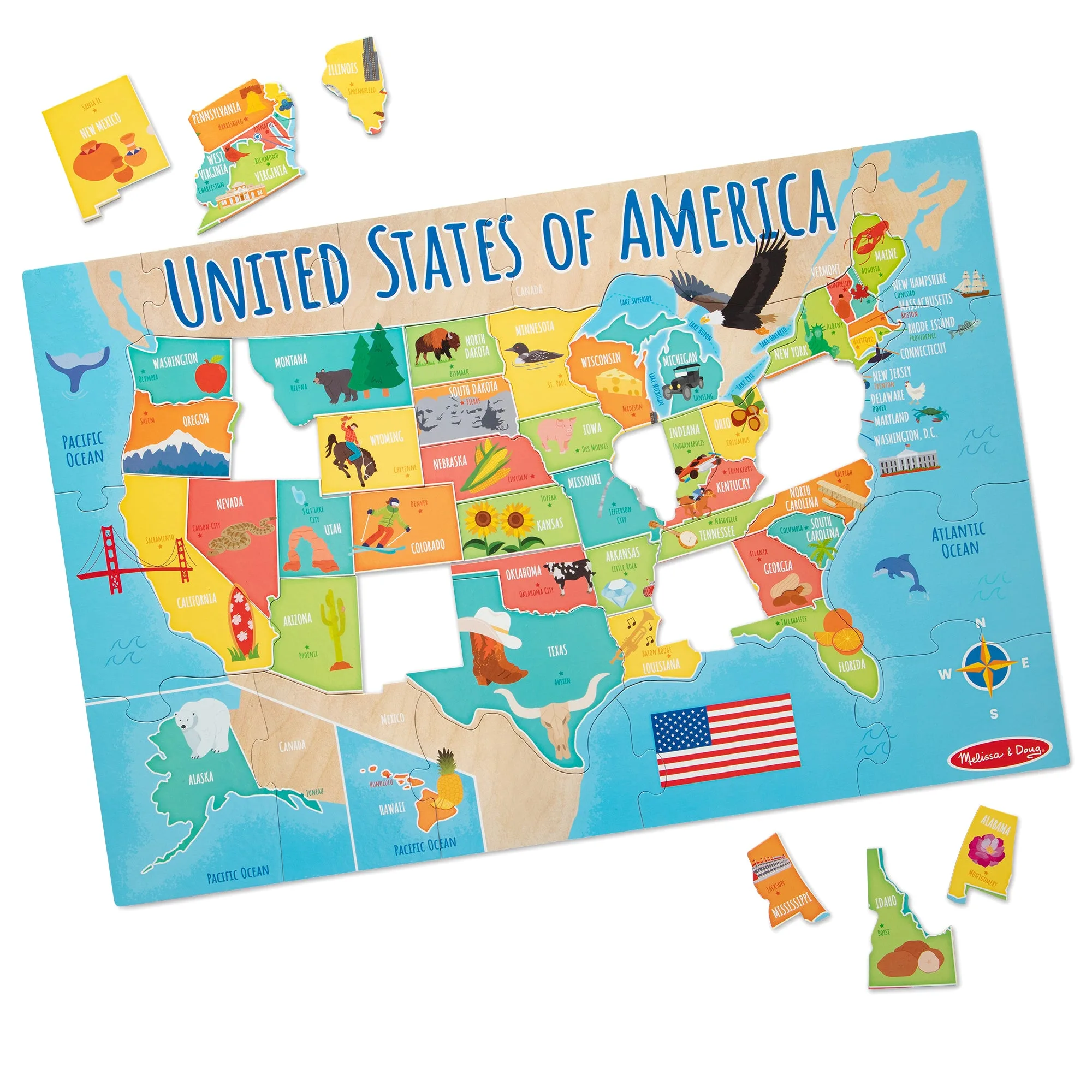
- 2. Sort puzzles by set and count pieces: Place each puzzle with its board and count the pieces against the total. For a puzzle like the Map Floor Puzzle, use the included guide to verify all 51 pieces are present. Common mistake: skipping the count. Without it, you won't know a piece is missing until your child tries to build the puzzle.
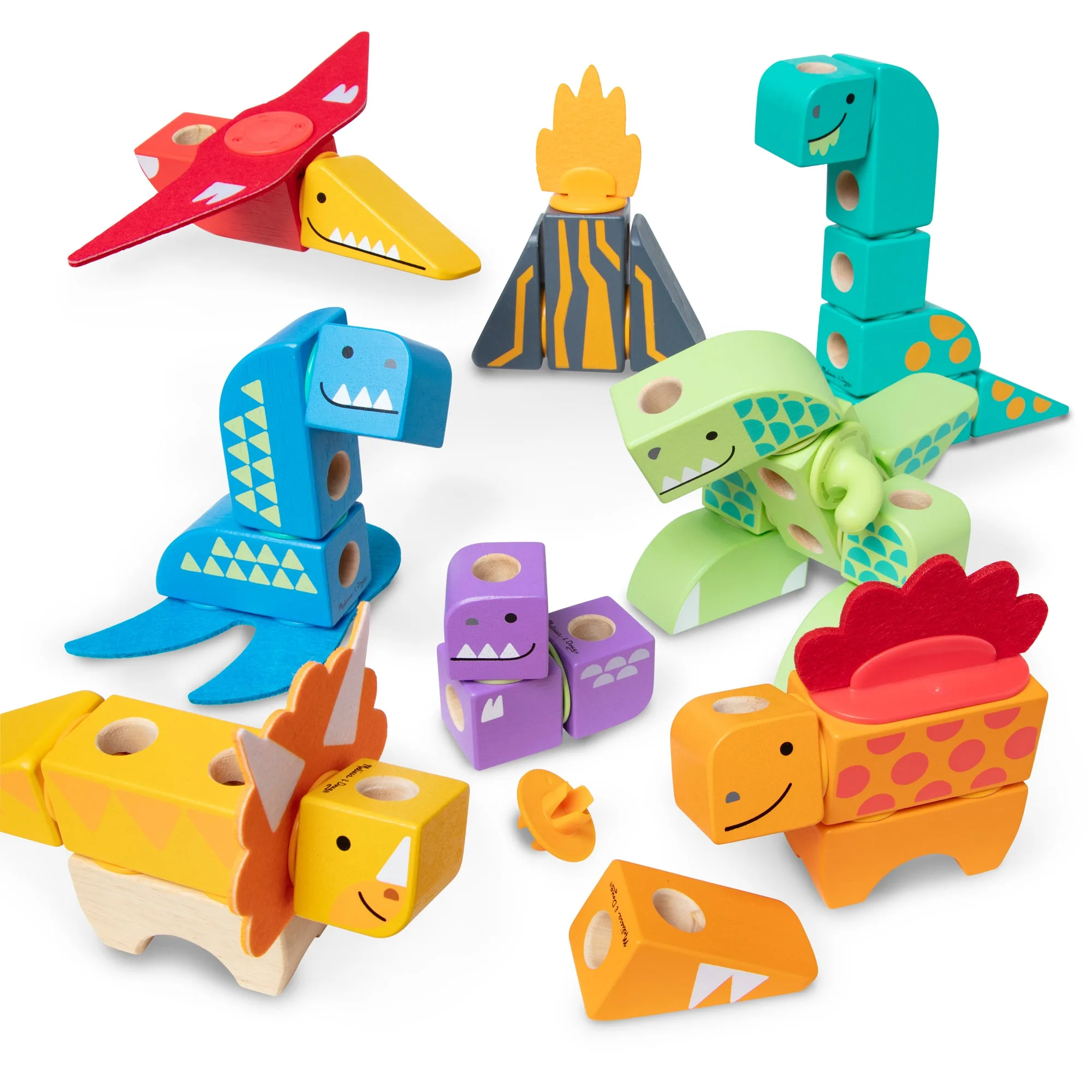
- 3. Choose a container for each puzzle and one bin for blocks: Use clear, shallow bins or a puzzle storage rack for puzzles. For blocks like the Blockables Dinosaur Play Set, use a single open bin so all connectors and blocks stay together. Checkpoint: your child should be able to open and close the container without help.
- 4. Label every container with a picture or name: Tape a photo of the completed puzzle to its bin. Label the block bin simply as 'Blocks.' This makes cleanup obvious for pre-readers. Common mistake: using only written labels for young children who can't read them yet.
- 5. Place containers at your child's height: Store puzzles and blocks on a low shelf or in a bottom drawer so your child can reach them independently. This reduces the chance they'll dump a bin to find what they want. Checkpoint: if your child needs to climb or ask for help, the storage spot is too high.
- 6. Return pieces immediately after play: Make a two-minute cleanup part of the end of each play session. Pieces go back in their labeled bin before a new toy comes out. Common mistake: waiting until the end of the day to clean up, when pieces have already scattered.
- 7. Do a monthly piece check and rotate: Once a month, open each bin and count pieces against the puzzle total. Rotate a few sets out of reach and bring others back to keep play focused. Next step: keep a small 'lost pieces' jar for any orphaned pieces you find, and check it during each monthly count.
Products that fit this storage system
- Map Floor Puzzle - 51 Pieces: Map Floor Puzzle - 51 Pieces includes an illustrated guide to help kids match shapes, colors, and details as they assemble the map. The guide doubles as a visual checklist, so you can quickly confirm all 51 pieces are back in the bin during your monthly check.
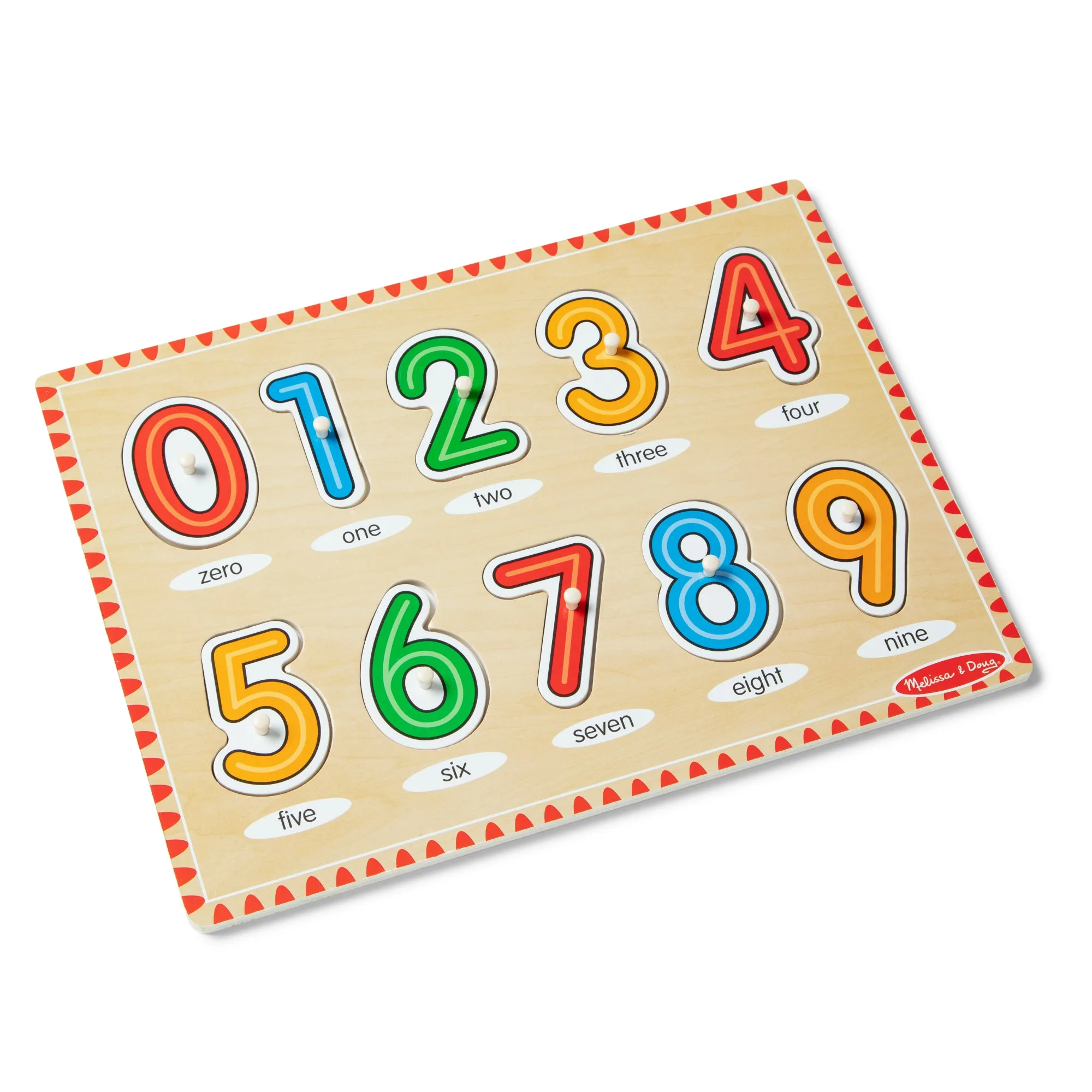
- Lift & See Numbers Peg Puzzle - 10 Pieces: Lift & See Numbers Peg Puzzle - 10 Pieces has a colorful picture under each piece showing the same number of items as the numeral. Because each piece is distinct and self-checking, it is easy for even young children to return the right piece to the right spot, which supports independent cleanup.
- Blockables™ Dinosaur Play Set: Blockables Dinosaur Play Set features connectable, stackable solid wood blocks with special connectors that let kids snap together smooth, colorful blocks. The connectors are small and easy to lose, so keeping the whole set in one labeled bin is more important than sorting individual blocks.