Quick answer
To style a fern green rug, anchor it in a neutral room for a calming focal point, or pair it with warm wood tones and soft ivory accents to let the deep green stand out.
Why fern green works in almost any room
Fern green is a versatile, earthy shade that bridges the gap between a bold color and a neutral. It adds visual interest without overwhelming a space, making it suitable for living rooms, bedrooms, dining areas, and even home offices.
The deep green base with soft ivory accents, as seen in the Astrid Fern Green Rug, creates a pattern that reads as both organic and structured. This balance helps the rug feel intentional rather than busy.
One common concern is that a patterned green rug might clash with existing decor. In practice, fern green complements most neutral palettes — beige, gray, cream, and warm white — and works especially well with natural materials like wood, rattan, and linen.
Pairing fern green with other colors
For a calm, cohesive look, pair a fern green rug with soft neutrals: cream sofas, beige walls, or light wood floors. The green becomes a subtle anchor rather than a statement.
If you want more contrast, add touches of rust, terracotta, or mustard yellow in throw pillows or artwork. These warm tones bring out the earthy side of fern green without competing.
Avoid pairing fern green with other cool, dark tones like navy or charcoal unless you have plenty of natural light. In dim rooms, the combination can feel heavy.
How to style a fern green rug in 4 steps
- Choose the right room and layout: Place the rug in a room that gets decent natural light. Fern green looks richest in bright spaces. For living rooms, use a large rug that extends under the front legs of your sofa. For bedrooms, place it under the lower two-thirds of the bed. Checkpoint: Avoid placing a fern green rug in a room with only cool artificial light — it can make the green look muddy.
- Anchor with neutral furniture: Let the rug be the main color story. Pair it with a cream, beige, or light gray sofa or bed frame. Keep larger furniture pieces neutral so the rug stands out without competing. Common mistake: Adding too many patterns on the sofa or walls can make the room feel chaotic. Stick to solid or subtly textured upholstery.
- Add warm accent pieces: Bring in warm wood tones — walnut, oak, or teak — through coffee tables, sideboards, or bed frames. Add soft ivory or cream throw pillows and a textured blanket to echo the rug's ivory accents. Checkpoint: If the room starts to feel flat, introduce one warm accent color like rust or terracotta in a small dose — a single pillow or a vase.
- Layer textures for depth: Combine the rug with natural materials: a jute or sisal rug underneath (if your rug is thin), linen curtains, a wool throw, or a ceramic vase. The contrast between the rug's pattern and other textures keeps the space interesting. Common mistake: Using only smooth, shiny surfaces (glass, metal, polished floors) can make the rug feel isolated. Mix in matte and textured finishes.
Product spotlight
-
Astrid Fern Green Rug: The Astrid Fern Green Rug features a deep fern green base with soft ivory accents, inspired by Norse knot motifs. The intricate pattern adds texture and visual depth, making the rug a focal point even in minimalist rooms.
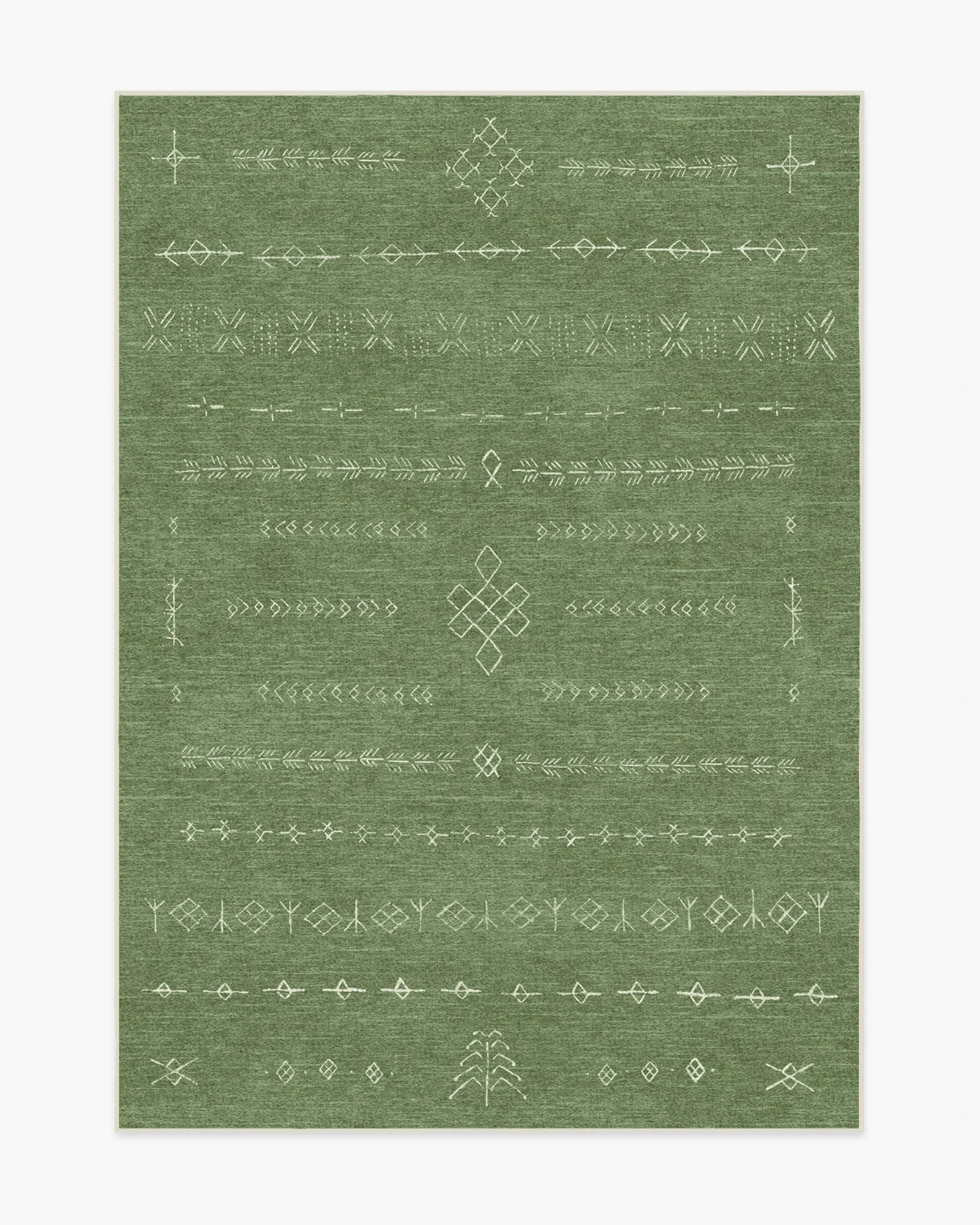
Astrid Fern Green Rug