Quick answer
Balance the shoe's volume with a hem that falls at or just above the ankle bone, then keep the lower half tonal or column-like so the eye reads one line instead of a heavy base. If you want a single reliable formula, pair chunky low-tops with straight or wide-leg pants that skim the shoe rather than bunch over it. Always check the mirror from knee down before leaving.
Why chunky low-tops look bulky in the first place
A chunky low-top adds height and width at the foot but stops below the ankle, so the visual weight sits at the very bottom of your silhouette. Bulk happens when the pant hem covers the collar, stacks fabric on the tongue, or ends mid-calf and chops the leg into two short blocks. The fix is not to avoid volume; it is to control where the volume reads. Treat the shoe as the anchor and make everything above it either narrow or continuous.
The hem rule that does most of the work
For wide-leg or straight pants, the hem should graze the top of the shoe with no more than a slight break. If the fabric pools, it hides the low collar and turns the shoe into a platform. For cropped pants, stop at the narrowest part of the ankle or higher, never at the widest part of the calf. If you are between lengths, choose the shorter option and add a visible sock only when the sock color matches the shoe or the pant.
Color and line: how to make the base feel lighter
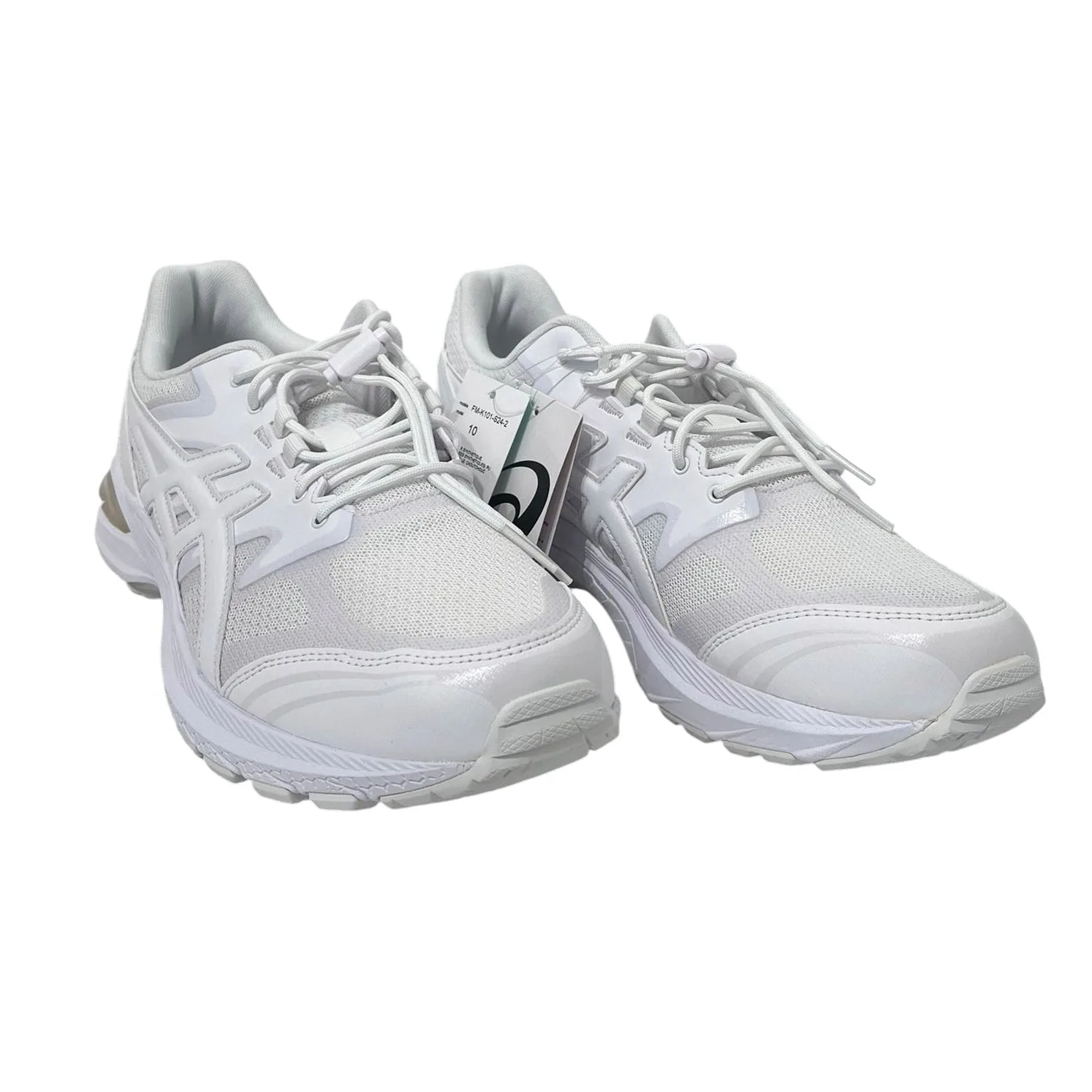
A tonal lower half, meaning pants and shoes in the same or a close color family, removes the horizontal break at the ankle and makes chunky low-tops read as an extension of the leg. All-white low-tops with cream or stone pants are the easiest version; black or dark shoes with dark denim work the same way. If you want contrast, keep it above the waist so the bottom stays quiet. Avoid a bright sock between a dark pant and a light shoe unless you want that line to be the focal point.
What to wear on top without adding more weight
Because the shoe is already substantial, the top half can be relaxed but should not be equally heavy at the hem. A sweatshirt or hoodie that ends at the high hip keeps the leg line visible; a longer top works if it is narrow or tucked at the front. If you wear a dress or skirt, choose one that ends above the knee or at the ankle, not at mid-calf. The goal is one clear vertical line from waist to shoe.
Step-by-step: build the outfit
- Start with the shoe and decide the color direction: Put the chunky low-tops on first. Decide whether the lower half will be tonal (pants close to the shoe color) or contrasting. Common mistake: choosing pants before the shoe and then trying to force a match. Checkpoint: if the shoe is white, cream or stone pants will look intentional; a stark black pant will make the white shoe the loudest point.
- Choose the pant leg and check the hem in the mirror: Try straight or wide-leg pants first. The hem should skim the shoe collar with little or no stacking. If it bunches, either hem the pant or switch to a cropped length that ends at the ankle. Checkpoint: look at the side view. If the fabric covers the low collar entirely, the shoe loses its shape and the outfit reads heavier.
- Add the top and keep the waist visible: A sweatshirt or hoodie ending at the high hip works well. If you prefer a longer top, tuck the front or choose a narrower cut so the leg line stays open. Checkpoint: from the front, you should see one continuous line from waist to shoe, not a block of fabric sitting on top of the sneaker.
- Do a final proportion check from knee down: Look at the outfit from the knee down only. If the shoe looks like a separate heavy object, shorten the hem, switch to a tonal pant, or change the sock to match the shoe. Next step: if it still feels bulky, remove the visible sock and try the same outfit with a slightly narrower pant leg.
Product facts
- ASICS/COMME des GARCONS SHIRT/Low-Sneakers/US 10/Cotton/WHT/ALL WHITE NWT NET: Pre-owned ASICS x COMME des GARCONS SHIRT low-top sneakers in all white, size US 10, listed in like-new condition. An all-white low-top is the easiest color to style tonally with light pants, and the like-new condition means the white upper will not fight the outfit with visible wear.