Quick answer
Wear a patchwork thimble on your middle or ring finger of your dominant hand, using the dimpled surface to push the needle through fabric layers without slipping or hurting your finger.
Why a patchwork thimble is different from a standard thimble
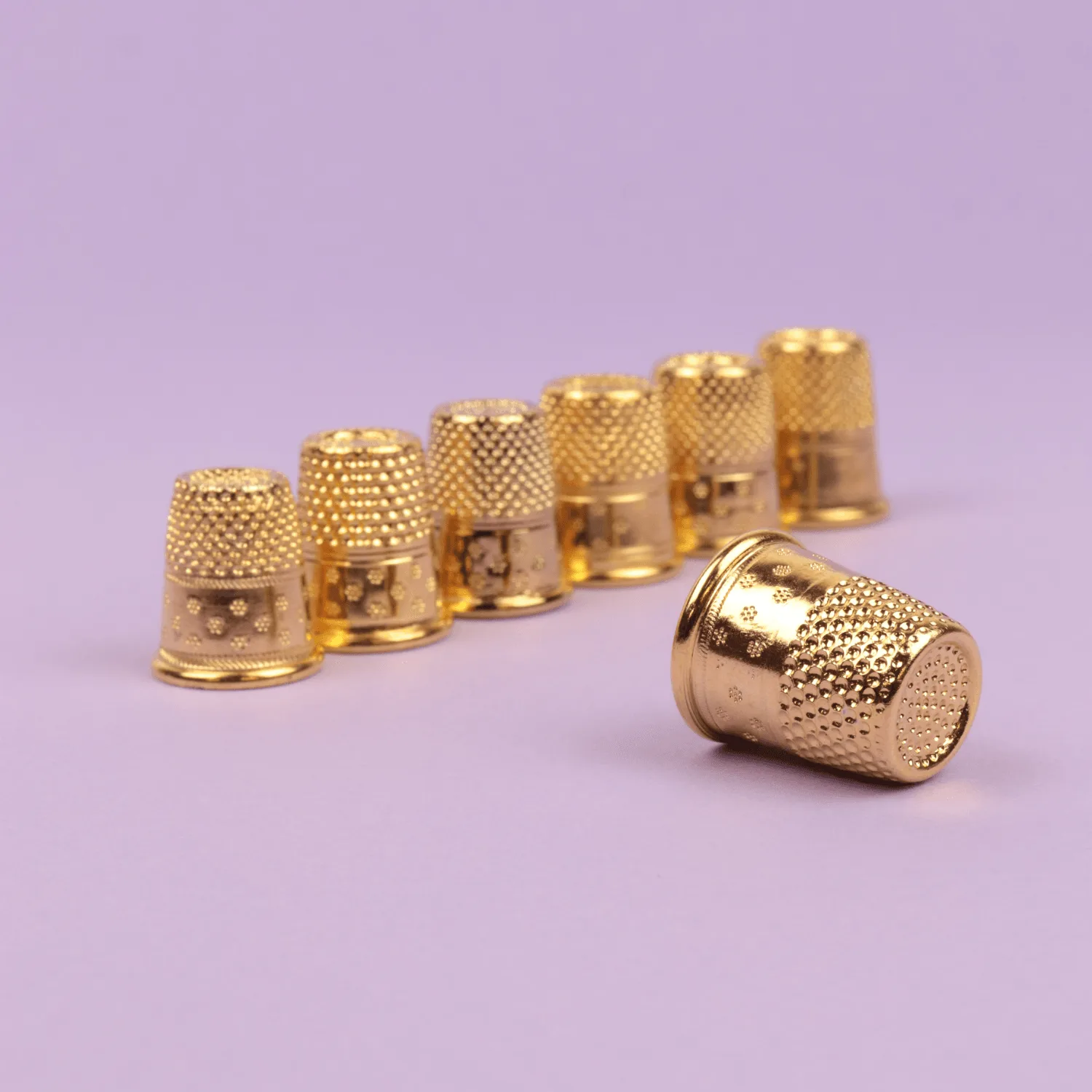
Patchwork thimbles often have a deeper dimple pattern and a side notch to help guide the needle at an angle. The brass or metal construction provides durable protection when pushing through multiple quilt layers. A standard sewing thimble may lack the grip needed for dense patchwork seams.
Choosing the right size and fit
A thimble that is too loose will spin or fall off; one that is too tight can cut off circulation. The thimble should fit snugly on the middle or ring finger without leaving marks. Many patchwork thimbles come in multiple sizes, so measure your finger circumference before ordering.
How to use a thimble for patchwork quilting
- 1. Choose the correct finger: Place the thimble on the middle finger of your dominant hand (or ring finger if that feels more natural). This finger will do the pushing while your thumb and index finger guide the needle. Common mistake: wearing the thimble on the thumb, which reduces control and speed.
- 2. Position the thimble correctly: Slide the thimble so the dimpled top covers the fingertip and the side notch (if present) aligns with the side of your finger. The notch helps you push the needle at a 45-degree angle, which is ideal for patchwork. Checkpoint: The thimble should not spin when you move your finger. If it does, try a smaller size.
- 3. Hold the needle properly: Grip the needle between your thumb and index finger near the eye. Rest the needle's blunt end against the dimpled surface of the thimble. Your middle finger does the pushing while the other fingers guide. Common mistake: gripping the needle too far down, which reduces leverage and causes hand fatigue.
- 4. Push through the fabric: Press the thimble against the needle's end to drive it through the fabric layers in one smooth motion. Use the side notch to rock the needle up and out on the other side. Pull the needle through with your non-dominant hand. Checkpoint: If the needle slips, your thimble may need deeper dimples or a different material.
- 5. Maintain a steady rhythm: Practice a consistent push-pull rhythm: push with the thimble, pull with the other hand, then rock the needle back up. This reduces strain and speeds up your stitching over time. Common mistake: rushing the pull, which can cause the needle to bend or the thread to tangle.
Product used in this guide
-
Dé à coudre spécial patchwork - Série Luxe: Made from gold-plated brass with a dimpled surface and a side notch for needle control. The dimpled surface prevents the needle from slipping, and the notch helps you push the needle at the correct angle through thick quilt layers.
Dé à coudre spécial patchwork - Série Luxe