Quick answer
Wear a paperclip chain alone with a structured work outfit, then add a second layer for weekends. Keep the chain at 16 to 20 inches for office necklines and let it sit over a plain tee or open collar on casual days. Choose one metal tone and repeat it in your other jewelry so the look reads intentional rather than accidental.
A paperclip necklace chain is one of the easiest pieces to wear because its flat, elongated links catch light without competing with your outfit. The trick is deciding whether it plays a supporting role or becomes the focal point. That decision changes with the setting, not with the chain itself.
This guide walks through a repeatable process for styling a paperclip chain at the office and on weekends. It covers neckline matching, layering order, metal coordination and the small checkpoints that keep the look clean. The same chain can do both jobs when you adjust length and companions.
Why paperclip chains work for both settings
Paperclip links are wider and flatter than a standard cable chain, so they read as modern and slightly architectural. That makes them appropriate with a blazer and a button-down, where a daintier chain can disappear. The same open links also look relaxed against a cotton tee or a knit, which is why the style moves easily into weekend wear.
The chain itself does not change, but the surrounding pieces do. At work, you want the necklace to support a polished silhouette. On weekends, you can let it sit lower and pair it with a pendant or a second chain. Planning that shift in advance stops you from over-accessorizing on either day.
- Choose one metal tone for the day and repeat it in earrings or a bracelet.
- If your paperclip chain is the only necklace, it should sit at or just below the collarbone.
Match the chain to your neckline
Neckline is the single biggest factor in how a paperclip chain looks. A crew neck or a high buttoned shirt leaves little skin visible, so a 16-inch chain sits close to the collar and reads as a subtle detail. A V-neck or an open collar gives the chain room to fall, which flatters the longer links.
For a work outfit, keep the chain above the neckline or just touching it. For a weekend outfit, let it fall into the open space of a scoop or V-neck. If you are unsure, stand in front of a mirror and move the clasp one inch at a time until the chain settles where you want it.
- Common mistake: letting a long chain disappear under a high neckline, which hides the links entirely.
- Checkpoint: the chain should be visible from the front without you adjusting it.
Build a work-ready look
Start with a plain top in a solid color, then add the paperclip chain as your only necklace. A structured blazer, a tucked shirt or a fine-knit sweater all work because they give the chain a clean background. If you want a second piece, choose small studs or a thin bracelet rather than another necklace.
Metal choice matters here. A silver or white-tone chain looks crisp against navy, gray and white. A gold-tone chain warms up black, cream and olive. Whichever you pick, keep the hardware on your bag and belt in a similar family so the outfit feels coordinated.
- Keep the chain at 16 to 18 inches for buttoned shirts and blazers.
- Avoid layering more than two necklaces in a professional setting.
Loosen it up for the weekend
On weekends, the paperclip chain can move lower and share space. Wear it at 20 inches over a plain tee, a linen shirt or a casual dress. If you want a layered look, add a finer chain or a small pendant underneath so the paperclip links stay the widest element in the stack.
Texture helps here. Denim, ribbed knits and cotton all give the chain something to contrast against. If your outfit is already busy with prints, keep the jewelry simple and let the chain stand alone. If the outfit is plain, this is the moment to add the second layer.
- Common mistake: layering two thick chains together, which tangles and looks heavy.
- Checkpoint: the longest chain should sit at least one inch below the shortest.
Coordinate metals and finishes
Mixing metals can look deliberate, but it needs a repeated element to work. If you wear a gold paperclip chain with silver earrings, add one more gold or silver detail so the mix reads as a choice. Otherwise, stay in one tone and vary the finish instead, such as a polished chain with a brushed pendant.
Pay attention to the finish of your other hardware too. A warm gold chain next to cool silver bag hardware can look accidental. Check your watch, rings and bag before you leave, and adjust one piece if the tones are fighting.
- Repeat your dominant metal at least twice in the outfit.
- If you mix, keep the paperclip chain as the larger piece and the second metal as an accent.
Test the look before you commit
Before buying a second chain or a pendant, test the length you already own with the outfits you actually wear. Lay the chain over the neckline of your most-worn work top and your most-worn weekend top. If it works with both, you have your answer. If it only works with one, you know which length to add next.
This test also tells you whether you need a different material. A water-resistant stainless steel chain with a gold finish is a practical choice if you wear jewelry daily and do not want to remove it for hand washing. Sterling silver is a classic option if you prefer a cooler tone and do not mind polishing.
- Checkpoint: if the chain sits awkwardly on both tops, the issue is length, not style.
- Write down the length that worked so you can repeat it when you shop.
Six steps to style a paperclip chain
- Pick your neckline first: Choose the top you are wearing, then hold the chain against it. High necklines need a 16-inch chain; open necklines can take 18 to 20 inches. Checkpoint: the chain should be visible without tugging.
- Decide solo or layered: For work, wear the paperclip chain alone. For weekends, add one finer chain or a small pendant beneath it. Mistake to avoid: stacking two thick chains, which tangles.
- Set the layering order: Put the shorter, finer chain on first, then the paperclip chain so the wider links sit on top and stay untwisted. Checkpoint: the longest chain should hang at least one inch below the shortest.
- Repeat one metal tone: Match the chain to your earrings, watch or bracelet. If you mix metals, repeat each tone at least twice. Mistake to avoid: letting bag hardware clash with the chain.
- Adjust for the setting: At work, keep the total number of necklaces to one or two. On weekends, you can add a pendant or a third thin chain. Checkpoint: step back from the mirror and check the look at arm's length.
- Test before you buy more: Lay your current chain over your most-worn work top and weekend top. Note the length that works with both, then shop for that length. Next step: if only one top works, add a second chain in the missing length.
Pieces that work with this approach
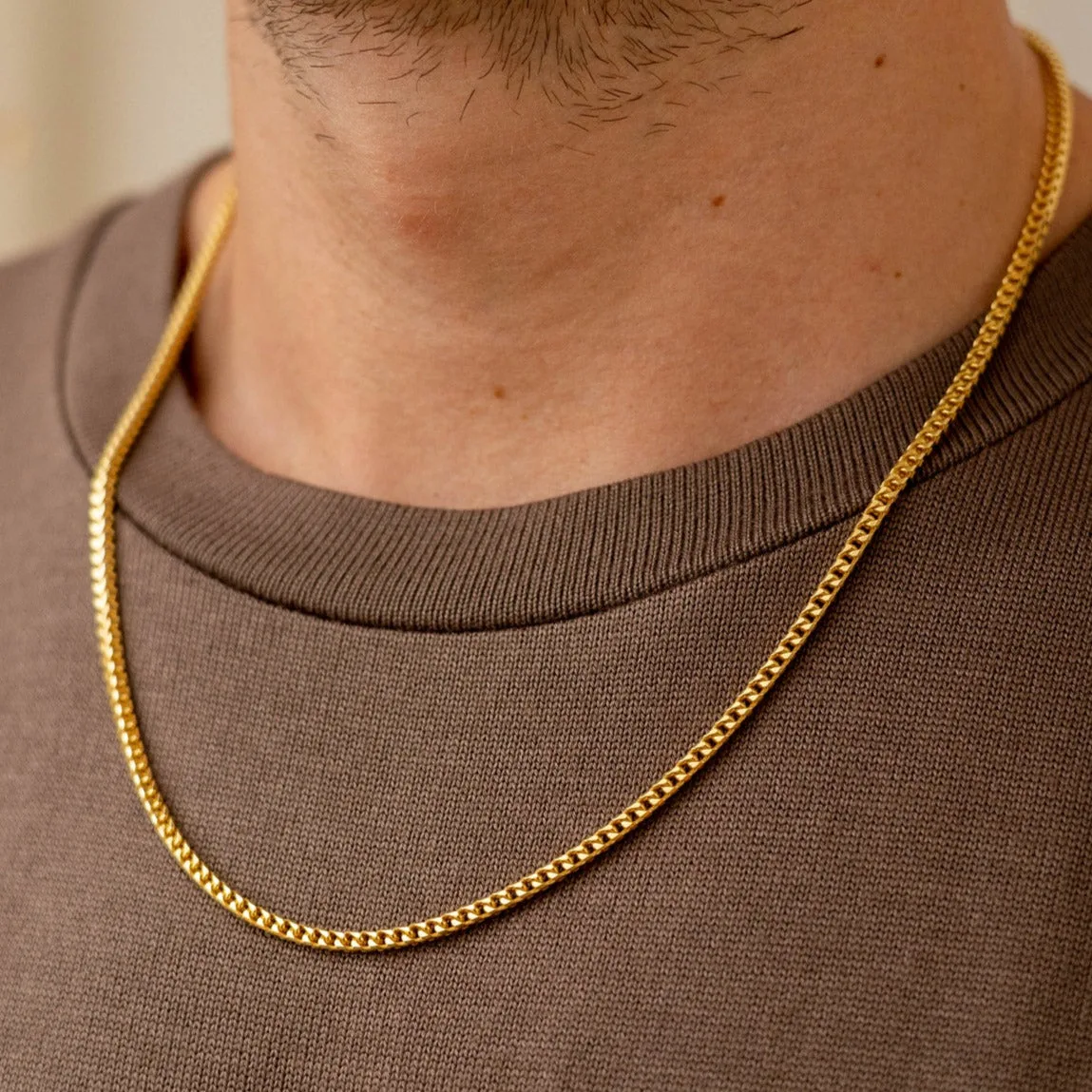
- Franco Chain - 3mm: Available in sterling silver or 14k gold vermeil, 20 inches (51 cm) long and 3 mm thick. A 20-inch chain sits lower on the chest, which makes it a natural weekend layer over a tee or open shirt. The 3 mm width is wide enough to read as a statement without overwhelming a finer second chain.
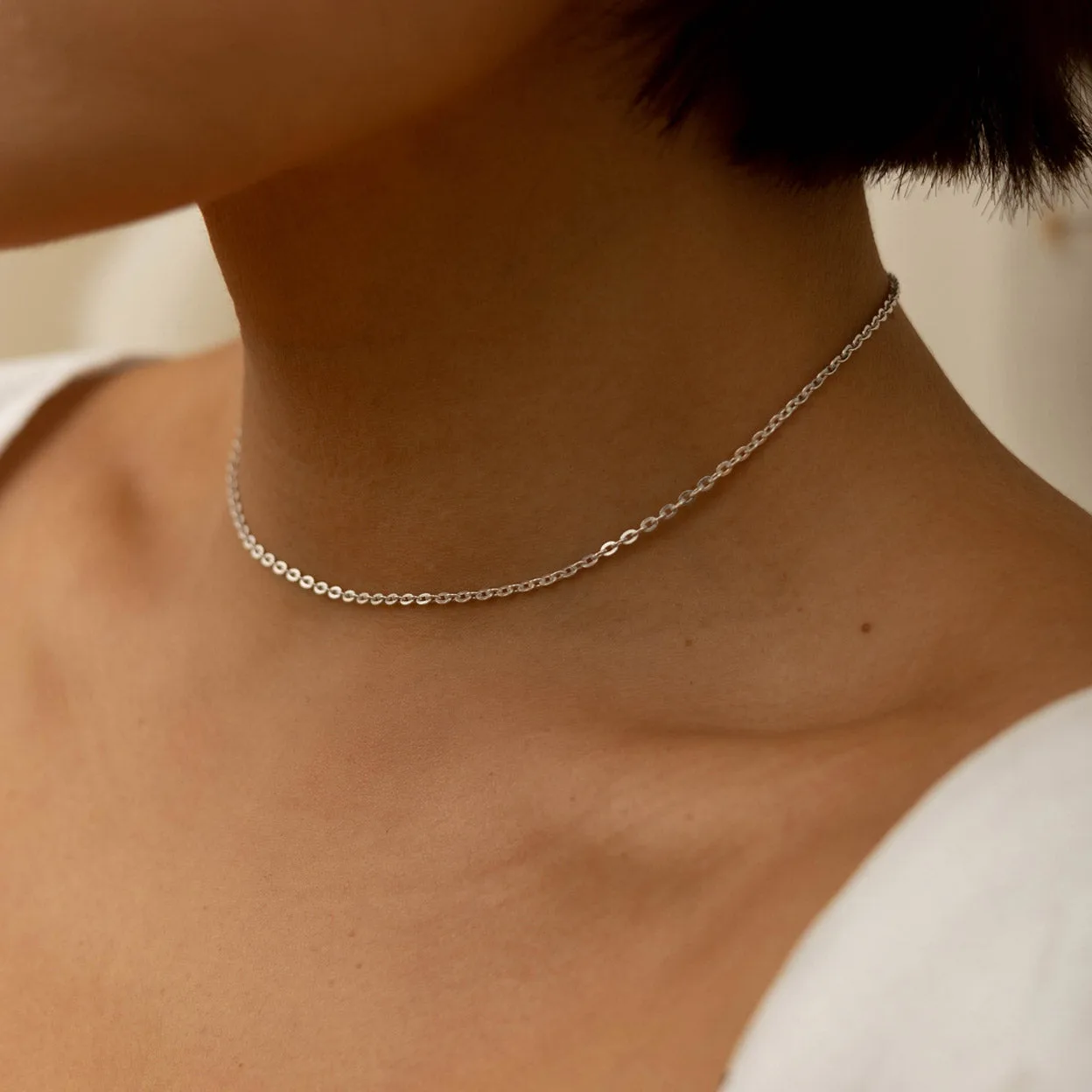
- Silver Twilight Necklace: A simple silver necklace available in 14-inch choker or 16-inch length, designed to be worn alone or layered with another length. The 16-inch option works well as the shorter layer in a two-chain stack, while the 14-inch version sits closer to the collarbone for a cleaner work look. Buying two lengths is the simplest way to build a layered set that stays untangled.
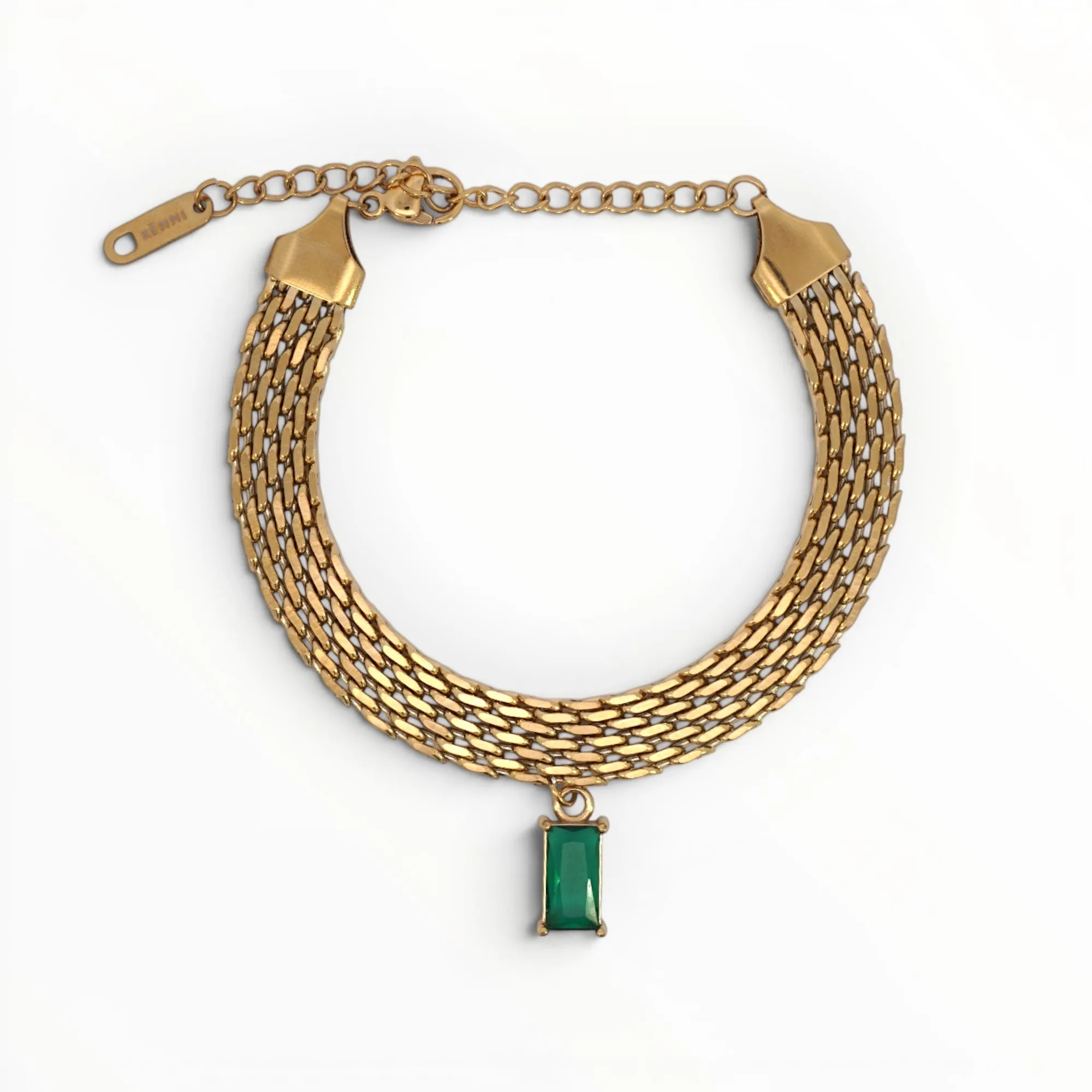
- Noctera Bracelet: A gold-tone bracelet in stainless steel with an 18k gold finish, water-resistant and hypoallergenic, with a textured chain and emerald-toned pendant detail. If you wear a gold paperclip chain, this bracelet repeats the metal tone and adds texture at the wrist, which balances the outfit without adding a second necklace. The water-resistant finish makes it practical for daily wear.
A paperclip chain does not need a separate wardrobe to move from desk to weekend. Match the length to your neckline, keep the layering simple, and repeat one metal tone so the look stays intentional. Test the chain against the tops you actually wear before adding another piece, and you will get more use out of a single necklace than you expected.