Quick Answer
Switch to Pigeon Wide Neck Nipple L when your baby is around 6 months old and shows signs of needing a faster flow, such as longer feeding times or frustration during feeds.
Why the Right Nipple Size Matters
As your baby grows, their feeding needs change. A newborn nipple delivers a slow flow that matches a newborn's sucking ability, but as they get older, they need a faster flow to finish feeds efficiently and avoid frustration.
Using a nipple that is too slow can cause your baby to tire before finishing a bottle, leading to poor intake and unnecessary fussiness. On the other hand, jumping to a faster flow too early can overwhelm your baby and cause choking or milk spillage.
Signs Your Baby Is Ready for a Faster Flow
Look for these cues that your baby is ready for a larger nipple size: taking longer than 20 minutes to finish a bottle, becoming fussy or pulling away during feeds, or showing disinterest in the bottle altogether.
Remember that every baby develops at their own pace. Use these signs as a guide, not a strict timeline, and consult your pediatrician if you are unsure.
Steps to Transition Smoothly
- Check the signs: Before switching, confirm your baby shows at least two signs of needing a faster flow, such as prolonged feeding times or fussiness during feeds. Don't switch just based on age; observe your baby's feeding behavior first.
- Introduce the new nipple gradually: Start by using the Pigeon Wide Neck Nipple L for one or two feeds a day, while continuing with the old nipple for other feeds. This gives your baby time to adjust to the new flow. A gradual switch helps prevent your baby from rejecting the new nipple.
- Watch for choking or leaking: During the first feeds with the new nipple, watch for signs of choking, coughing, or milk leaking from the mouth. If these occur, stop and revert to the old nipple for a few more days. If your baby struggles, wait a week and try again; don't force the transition.
- Monitor feeding duration: After a few days, check if your baby finishes bottles in a reasonable time (about 10-15 minutes). If feeds are still very long, the new nipple may not be fast enough, but if feeds are too quick, consider a slower flow. Feeding time is a good indicator of whether the flow is appropriate.
- Check the nipple regularly: Inspect the new nipple for signs of wear, such as cracks or stickiness, and replace it if needed. The pack of three ensures you have spares on hand. Regular checks prevent nipple failure during feeds.
Product Facts
-
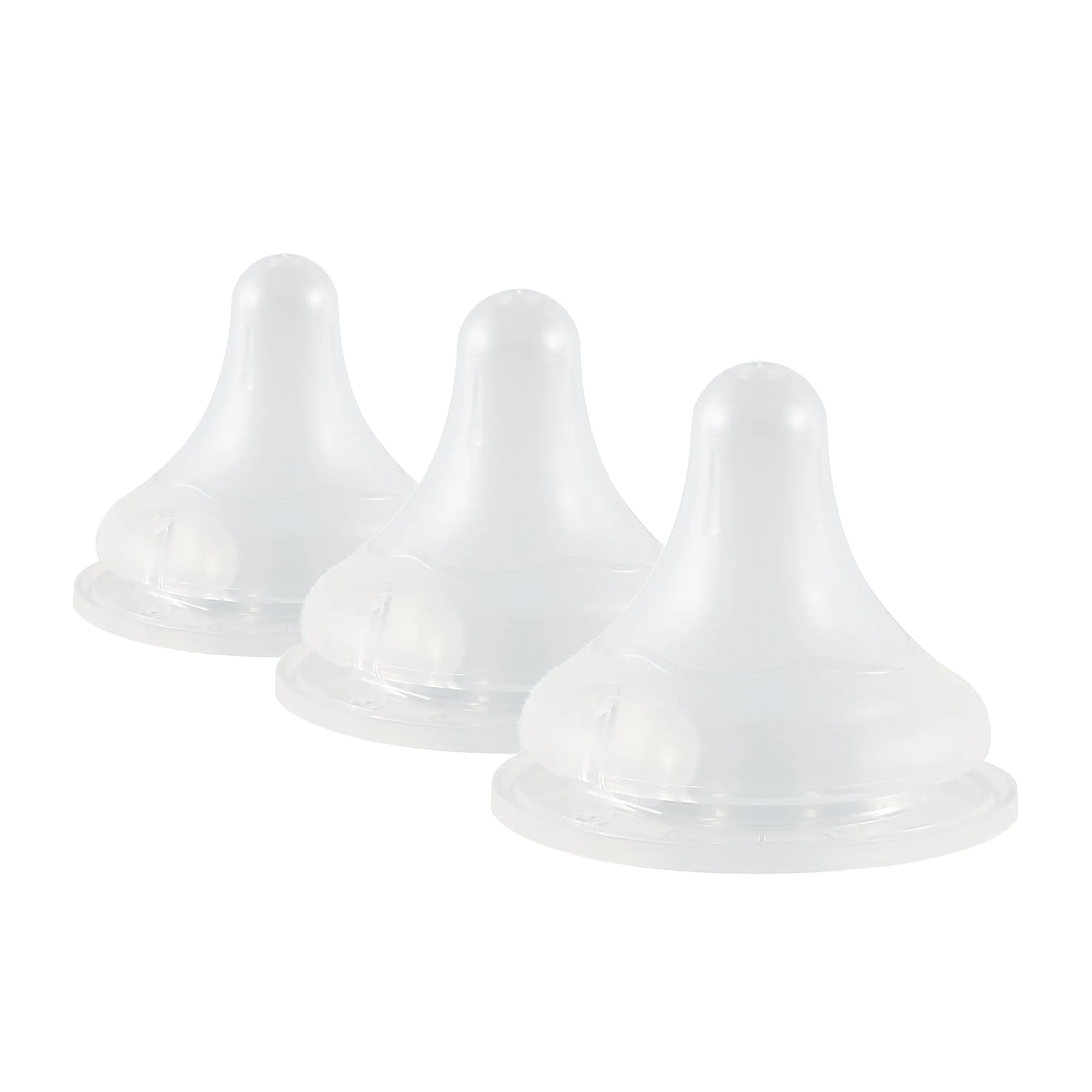
Pigeon Wide Neck Nipple L 3Pcs: The Pigeon Wide Neck Nipple L is designed for babies aged 6 months and older and comes in a pack of three. This size matches the typical age when babies need a faster flow, and the pack ensures you have replacements ready for regular feeding.
Pigeon Wide Neck Nipple L 3Pcs