Quick answer
Teach Castle Panic by running one practice round out loud, then playing a real game with open hands. Set up the board, explain the three phases of a turn, and let new players trade cards before the first Monster reaches the wall. Keep the rulebook closed unless a specific question comes up.
Set up so the first turn makes sense
Place the Castle Panic board in the center and put the six Towers in their starting spaces. Shuffle the Monster tokens and draw the starting set according to the rulebook for your player count. Give each player a hand of cards, then deal one extra card face up to the table as a shared reference.
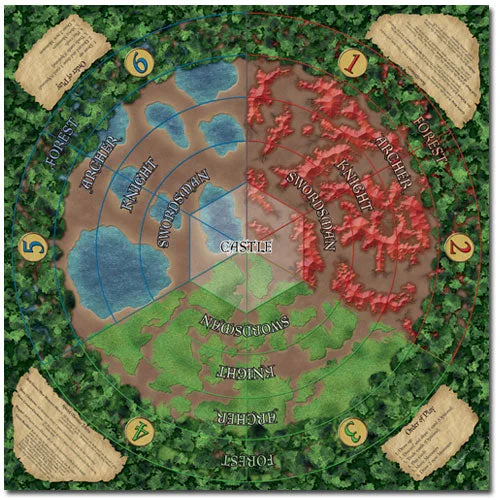
Do not skip the board orientation. New players need to see that the rings and arcs on the board match the range numbers on their cards. Point to one green arc, one red arc, and one black arc before you explain anything else.
Explain a turn in three phases
Say it plainly: on your turn you draw and trade, then you discard and slay, then Monsters move and attack. Walk through one full turn yourself while everyone watches. Draw a card, show how trading works, discard a card to hit a Monster in range, then roll for the Monsters.
New players usually understand slaying quickly. What trips them up is the order of trading and discarding. Trading happens before you discard, so a player can swap for the exact card they need before committing to an attack.
Use open hands for the first game
Let everyone play with cards visible for the first full game. This removes the pressure of hidden information and lets you coach without hovering. You can say, 'You have a blue Archer and there is a blue Goblin in the blue Archer ring' instead of taking over the turn.
Switch to closed hands for the second game. By then the turn structure is automatic and the table can start making real trade offers.
Coach the two rules that get forgotten
First: you can trade any card with any player, not just the active player. New players often wait for their own turn to make a trade. Second: when a Tower falls, the Monster that destroyed it stays on the board and keeps moving inward. Players frequently remove the Monster along with the Tower.
Write both rules on a sticky note and leave it on the table. A visible reminder beats repeating yourself three times.
Your 15-minute teaching script
- Minute 0-3: Build the board together: Have new players place the Towers and draw the starting Monsters themselves. Name the rings and arcs as they place pieces. Checkpoint: every player can point to the green, red, and black arcs without help.
- Minute 3-6: Run one turn out loud: Take a turn while narrating: draw and trade, discard and slay, then move and attack with the Monsters. Do not let anyone interrupt with rules questions until the turn ends. Checkpoint: a new player can repeat the three phases back to you in order.
- Minute 6-10: Play one open-hand round: Everyone plays with cards face up. Prompt trades and range checks, but let players choose their own targets. Mistake to avoid: do not play the turn for them. Point at the board, not at the card.
- Minute 10-13: Cover the two forgotten rules: Remind the table that any player can trade at any time, and that a Monster stays on the board after destroying a Tower. Checkpoint: ask who can trade right now. If they point only at the active player, repeat the rule.
- Minute 13-15: Start the real game: Reset the board, deal fresh hands, and play for real with open hands for one more round if needed. Next step: switch to closed hands on game two and let the table run itself.
What you need on the table
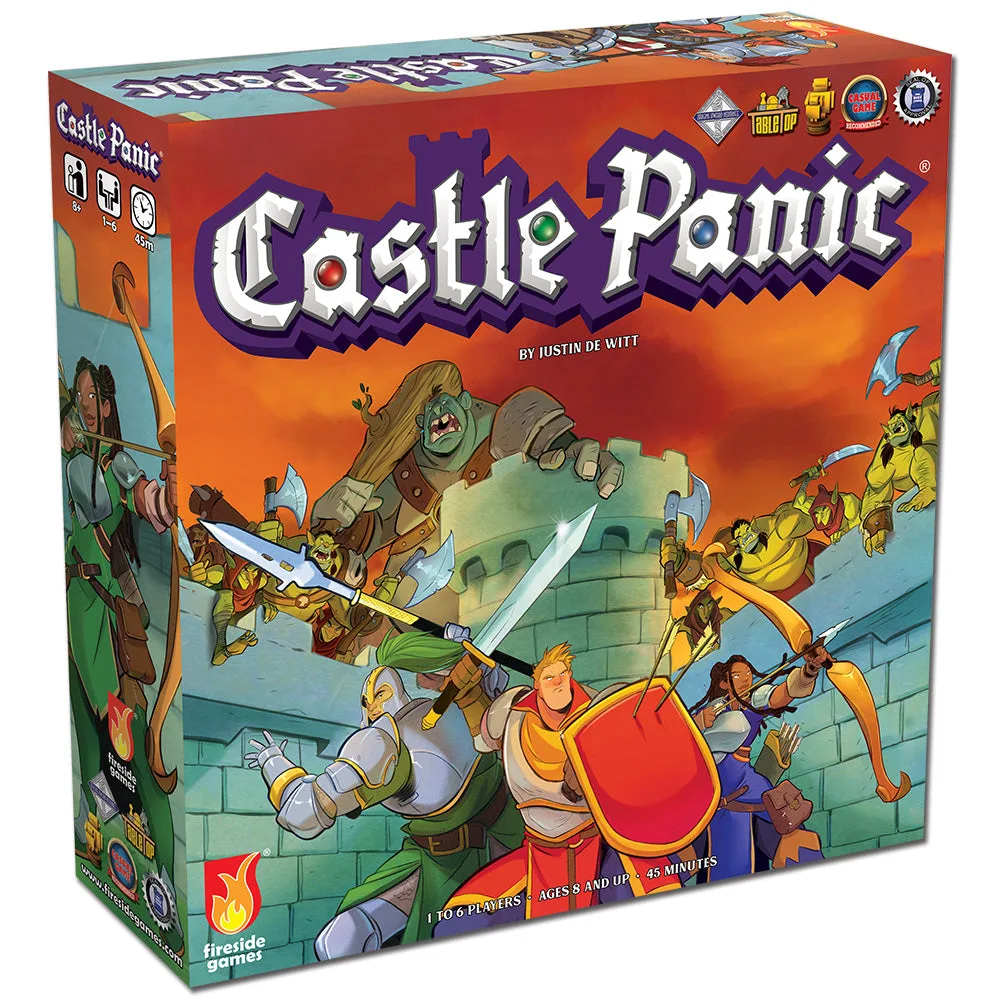
- Castle Panic Second Edition: Castle Panic Second Edition is a cooperative tower defense board game for 1 to 6 players, built as a family game and a game-night opener. The co-op format means you can teach by helping rather than competing, and the 1-6 player range lets you run a teaching game at almost any table size.
- Castle Panic Game Board: This listing is for one replacement Castle Panic board only; no other game pieces are included. If your teaching copy has a worn or marked board, a fresh board keeps the arcs and range markings readable for new players. It does not replace missing tokens or cards.
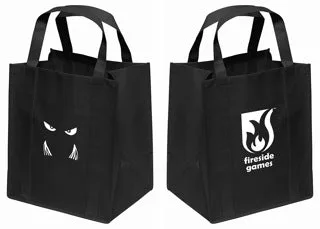
- Castle Panic Game Tote: The Castle Panic Game Tote is a reusable, non-woven bag sized to carry games to game night. A dedicated tote keeps the box, board, and loose tokens together so you are not rebuilding the setup from scratch every time you teach a new group.