Quick Answer
Use the IQ Sorting House Red to teach shapes and sorting through a simple sequence: start with shape recognition, then progress to matching, sorting, and building. These step-by-step activities turn play into learning.
Why the IQ Sorting House Works for Teaching Shapes
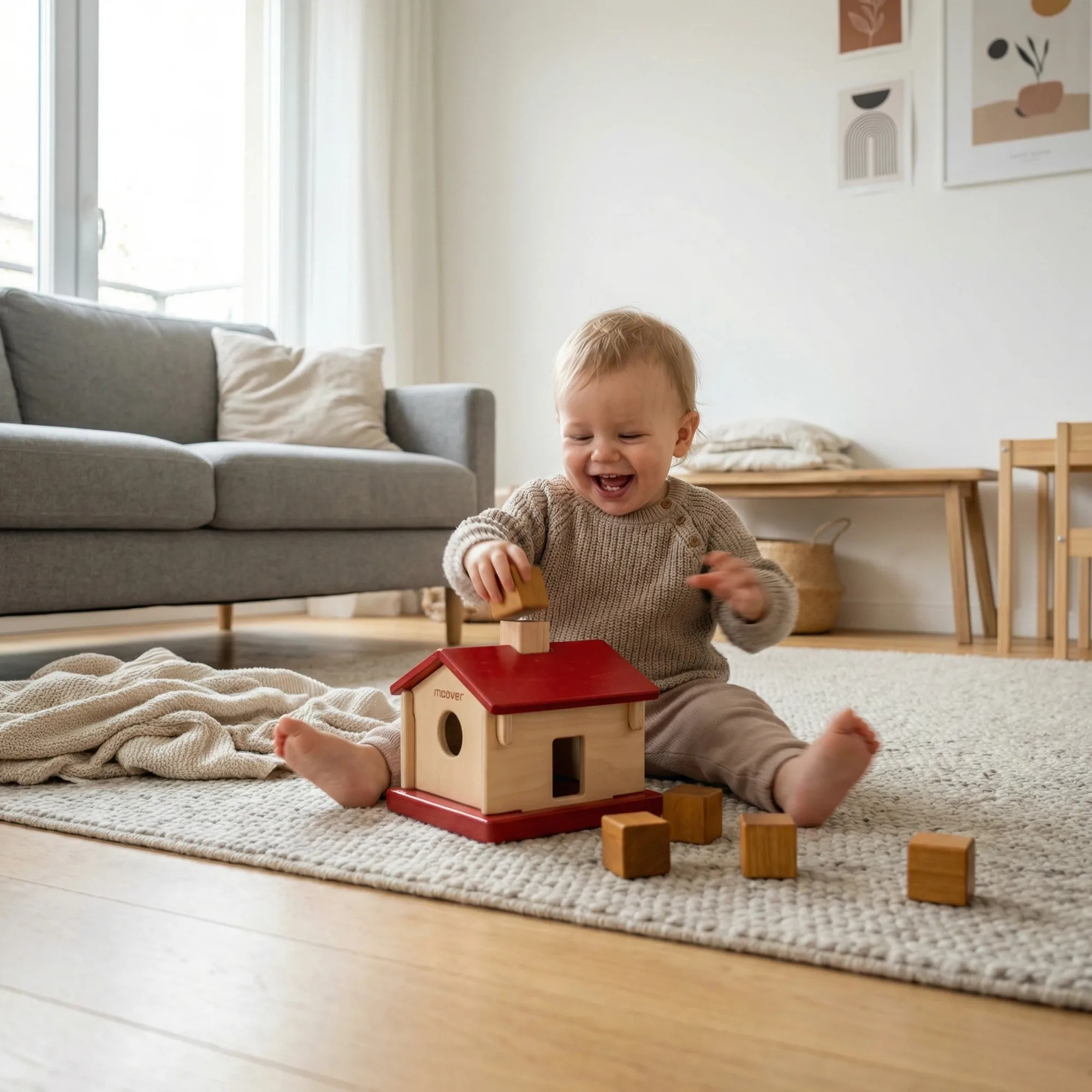
The IQ Sorting House Red is designed for both younger and older children, making it a versatile tool for teaching shapes and sorting. The 17x17x17cm wooden house includes four shapes that fit through matching windows, encouraging hands-on exploration and problem-solving.
Because it is made from FSC-certified bass plywood with child-safe paint, it is safe for toddlers from 6 months and up. The assembly required also offers an opportunity for older kids to practice following instructions and building spatial awareness.
Progressive Learning: From Recognition to Sorting
Teaching shapes and sorting is most effective when you break it into small, achievable steps. Start with simple shape recognition, then move to matching and sorting. The IQ House supports this progression because it offers multiple ways to play: dropping shapes through windows, building the house, and even using the shapes for free play.
This gradual approach helps toddlers build confidence and avoids frustration. It also aligns with how young children learn best—through repetition and hands-on experience.
Step-by-Step Shape and Sorting Activities
- Start with Shape Recognition: Show your child one shape at a time, name it (e.g., 'circle'), and let them hold it. Point to the matching window and say, 'This is where the circle goes.' Do this for each shape before moving on. Checkpoint: If your child can name at least two shapes after a few sessions, you're ready to move on.
- Practice Matching Shapes to Windows: Place the house in front of your child and hand them one shape. Ask, 'Where does this one go?' Let them try. If they struggle, guide their hand gently to the correct window. Repeat until they can match all four shapes independently. Checkpoint: Common mistake is rushing; give your child time to explore and make mistakes—this is part of learning.
- Encourage Sorting by Shape: Once matching is mastered, mix up the shapes and ask your child to sort them into piles by shape (e.g., all circles together). Use the house windows as a sorting tool: ask them to put all circles through the round window first, then the squares, and so on. Checkpoint: If your child can sort all shapes without help, they've mastered basic sorting.
- Turn It into a Game: Shape Hunt: Hide the four shapes around the room and ask your child to find them. Once found, have them place each shape in the correct window. This adds movement and excitement to the learning process. Checkpoint: Make sure the shapes are within safe reach and the game stays fun—end on a positive note.
- Build the House Together: After sorting play, involve your child in assembling the house (if it was taken apart). This teaches spatial reasoning and following simple instructions. You can narrate each step: 'Now we put the roof on top.' Checkpoint: If your child loses interest, take a break and return later—building can be more challenging than sorting.
Product Spotlight
-
IQ sorting House Red: The IQ Sorting House Red includes a sorting house and four shapes, made from 10 and 20mm FSC-certified bass plywood with child-safe paint. The durable, safe materials make it ideal for repeated hands-on play, which is essential for toddlers as they learn shapes and sorting.
IQ sorting House Red