Quick answer
Start with a properly fitted scooter and safety gear, then teach balance and steering on a flat, soft surface before moving to gentle slopes.
Why a lightweight scooter helps beginners
A scooter that is too heavy can frustrate a child and make balance harder to learn. Lightweight models allow kids to lift and steer easily, building confidence faster.
Choosing the right safety gear
A properly fitted helmet is non-negotiable. Knee and elbow pads protect against scrapes during falls, which are common in early lessons. Wrist guards can also help prevent injuries.
Step-by-step guide to teaching scooter safety
- Step 1: Gear up and check the scooter: Put on a helmet, knee pads, and elbow pads. Adjust the scooter handlebar height so it reaches your child’s waist. Check that the wheels spin freely and the brakes work. Common mistake: skipping knee pads. Falls on pavement can cause painful scrapes even at low speed.
- Step 2: Practice balancing on a flat surface: Start on a smooth, flat area like a driveway or playground. Have your child place both hands on the handlebars, put one foot on the deck, and push off gently with the other foot. Let them glide a few feet while keeping both feet on the deck. Checkpoint: if your child wobbles immediately, lower the handlebar height slightly for better control.
- Step 3: Introduce steering and turning: Once your child can glide straight, teach them to lean slightly in the direction they want to turn while turning the handlebars. Practice wide, gentle turns first. Common mistake: turning the handlebars too sharply. This can cause the scooter to tip. Encourage slow, smooth turns.
- Step 4: Add gentle slopes: Find a very gentle, short slope (like a shallow driveway). Have your child coast down while keeping both feet on the deck and using the rear brake to slow down. Repeat until they feel confident. Checkpoint: if your child speeds up too much, choose a less steep slope or practice braking more before descending.
- Step 5: Practice stopping and dismounting: Teach your child to step off the scooter with one foot while keeping the other foot on the deck, then bring the back foot forward. Practice stopping from different speeds using the rear brake. Common mistake: jumping off the scooter while it is still moving. This can lead to falls. Always brake first.
Scooters that make learning easier
-
Viro Rides Compact Scooter Black and Red: The Viro Rides Compact Scooter folds down to fit inside a backpack or school locker. Its lightweight, portable design means kids can carry it easily and practice in different safe locations without hassle.
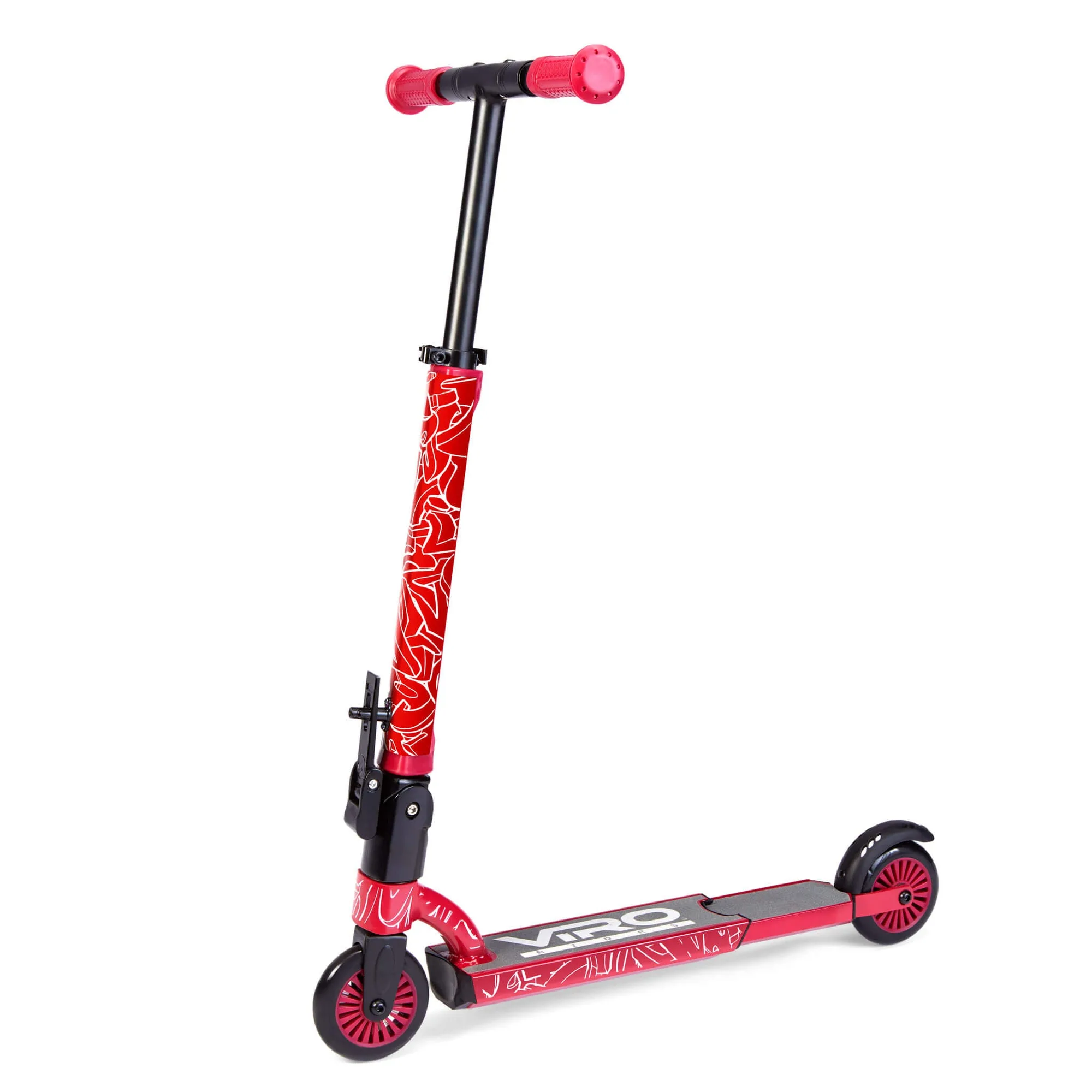
Viro Rides Compact Scooter Black and Red
-
Glow Stick Scooter™: The Glow Stick Scooter features an interactive light show that gets brighter with speed. The visual feedback encourages kids to maintain a steady pace, which helps them learn smooth steering and control.
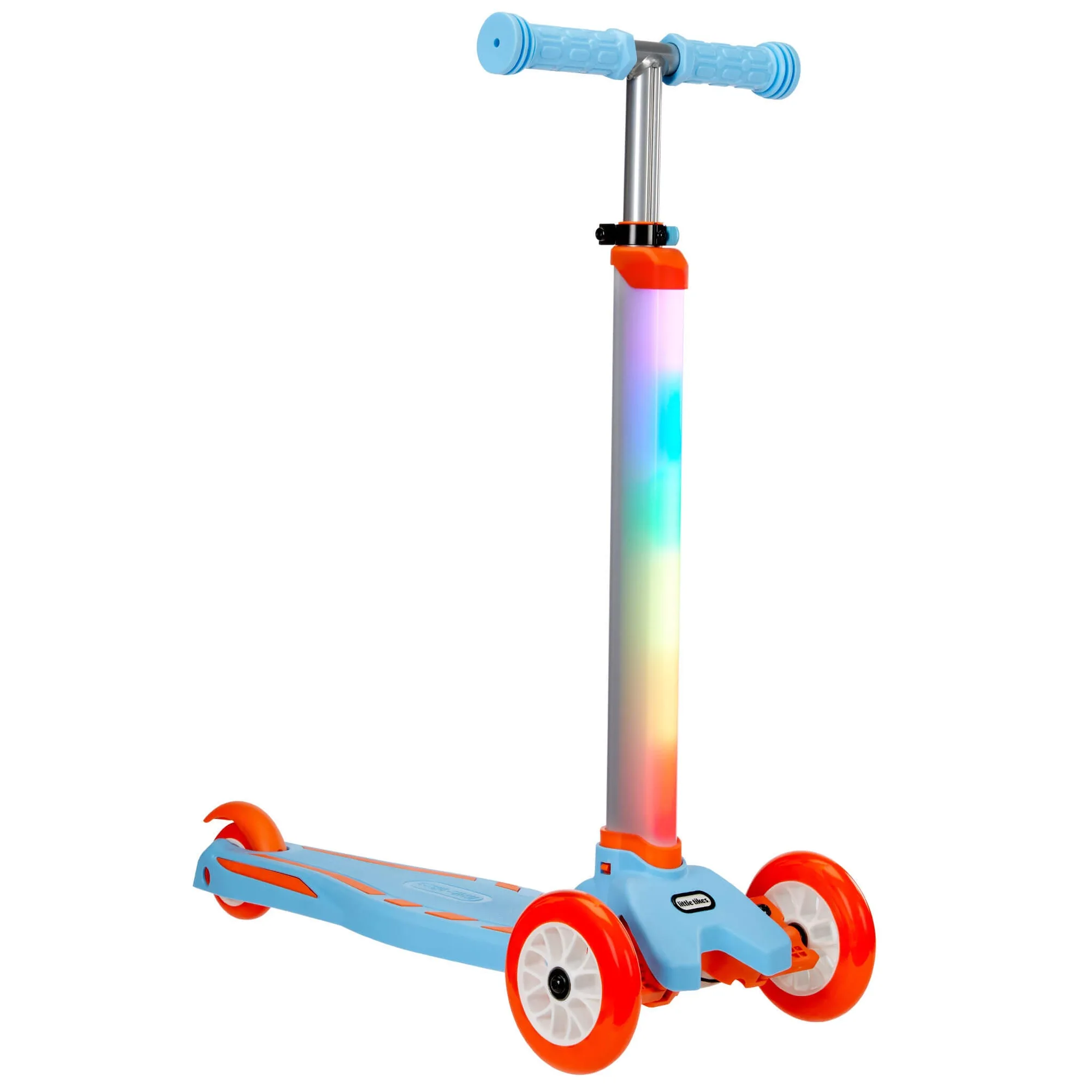
Glow Stick Scooter™