Quick answer
If your band rides up when you lift your arms, your straps dig in, or your cups gape or overflow, you are likely in the wrong size. Do the band test first: fasten on the loosest hook and try to pull the band more than an inch away from your back. If it moves easily, size down in the band. If it leaves red marks, size up. Then check the cups.
Most bra discomfort is not a comfort problem — it is a size problem. The band, cups, and straps each fail in different ways, and each failure points to a specific fix. This guide walks through the bra wrong size signs in the order you should check them, so you can diagnose the issue in a fitting room mirror in under two minutes.
You do not need a tape measure for this. You need to know what a correct band feels like, what a correct cup looks like, and when a style simply does not suit your shape no matter what size you try.
Start with the band, not the cups
The band carries most of the support, so a wrong band size throws off everything else. Fasten the bra on the loosest hook — that is how a new bra should fit, giving you room to tighten it as the elastic relaxes over time. If the band rides up your back, it is too loose. If it leaves deep red marks or you can only breathe shallowly, it is too tight.
A quick test: with the bra on, try to pull the band away from your back. One finger's width of give is normal. If you can pull it two inches or more, the band is too big. If you cannot slide a finger underneath at all, it is too small.
- Band rides up when you raise your arms: size down in the band.
- Band leaves red marks or feels restrictive: size up in the band.
- Band sits level all the way around: correct band size.
Read the cups: gaping, spilling, or cutting in
Cup problems are often mistaken for band problems. If the center gore — the piece between the cups — does not sit flat against your sternum, the cups are usually too small, even if the band feels fine. If the cups wrinkle or gape at the top, they may be too large, or the cup shape may not match your breast shape.
Spilling over the top or sides means the cup is too small. Cutting in across the top edge with empty space at the bottom usually means the cup is the wrong shape, not the wrong size — a full-coverage style on a shallow shape will do this even in the correct size.
- Center gore floats away from the chest: try a larger cup.
- Cups gape at the top: check whether the cup is too large or the wrong shape for you.
- Spilling over the top or sides: size up in the cup.
Check the straps and the back
Straps should sit flat and carry almost no weight. If they dig into your shoulders, the band is probably too loose and the straps are doing the band's job. Tightening the straps will not fix this — it will only make the digging worse. Loosen the straps, then re-check the band.
Straps that slide off your shoulders are usually a width or style issue rather than a size issue. A demi or balconette cut with widely spaced straps will slip on narrow shoulders even in the right size. If the straps fall no matter how you adjust them, the style is wrong for your frame.
- Digging straps: loosen them and tighten the band instead.
- Slipping straps: look for a style with closer-set straps or a different cup cut.
- Back band riding up: this is a band size issue, not a strap issue.
The wrong bra size fix, in order
Work through the fixes in this sequence: band first, then cups, then straps. Changing the cup size before the band is correct will send you in circles, because a band that is too loose makes the cups feel too small. Once the band is level and snug on the loosest hook, re-check the cups.
If you go down a band size, go up a cup size to keep the same cup volume — this is the most common bra sizing mistake. If you go up a band size, go down a cup. After two size adjustments in either direction, stop adjusting and try a different cup shape instead.
- Adjust one element at a time and re-check in the mirror.
- Change band and cup in opposite directions to keep volume the same.
- If two size changes do not fix it, the shape is the problem, not the size.
Bra fit check: symptom, cause, fix
- Band rides up your back: The band is too loose, so the back climbs instead of anchoring. Fasten on the loosest hook and size down in the band. If the band still rides up after sizing down once, the band is not the problem — check the cup.
- Center gore floats off your chest: The cups are too small, pushing the gore away from the sternum. Go up one cup size while keeping the band the same. If the gore still floats in a larger cup, the cup depth is wrong for your shape.
- Straps dig into your shoulders: The band is too loose and the straps are carrying the weight. Loosen the straps, then tighten or size down the band. Stop tightening straps to fix digging — it makes the problem worse.
- Cups gape or wrinkle at the top: Either the cup is too large or the cup shape does not match yours. Try one cup smaller; if it still wrinkles, switch to a demi or lower-cut style. Two cup sizes tried and still gaping: change the style, not the size.
- Straps slide off your shoulders: This is usually a strap placement or frame-width issue, not a size issue. Look for closer-set straps or a different cup cut. If straps fall in every size you try, the style is wrong for your frame.
- Red marks or restricted breathing: The band is too tight. Size up in the band and down in the cup to keep the same volume. Marks that fade within an hour are normal; deep marks or pain are not.
Styles that make fit easier to read
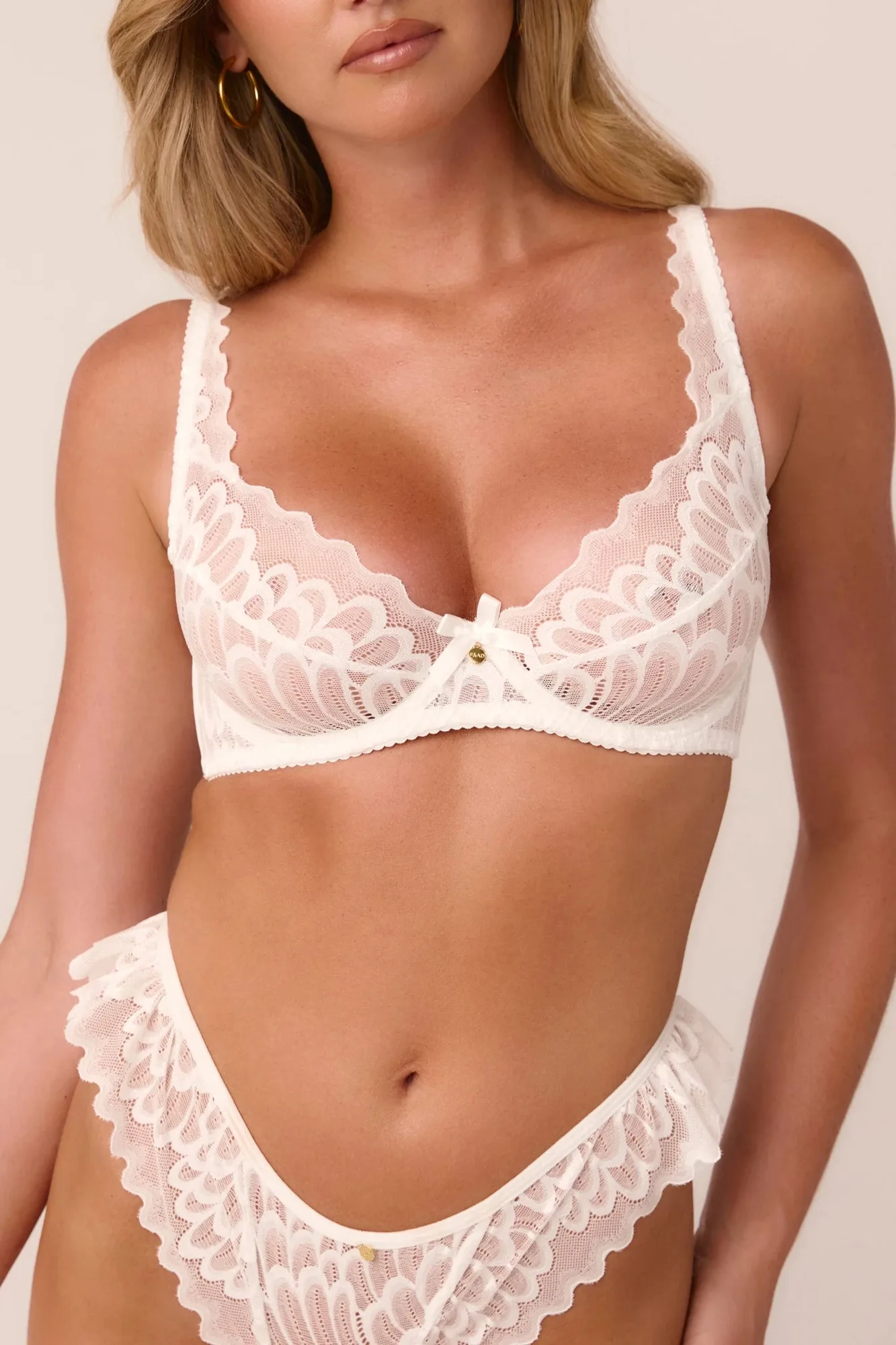
- Greta Bra - White: Stretch lace, underwire, full coverage, high apex style with adjustable shoulder and back straps and a hook and eye closure. Full coverage and stretch lace forgive small size variations, which makes Greta a good diagnostic bra — if this one fits, your size is close.
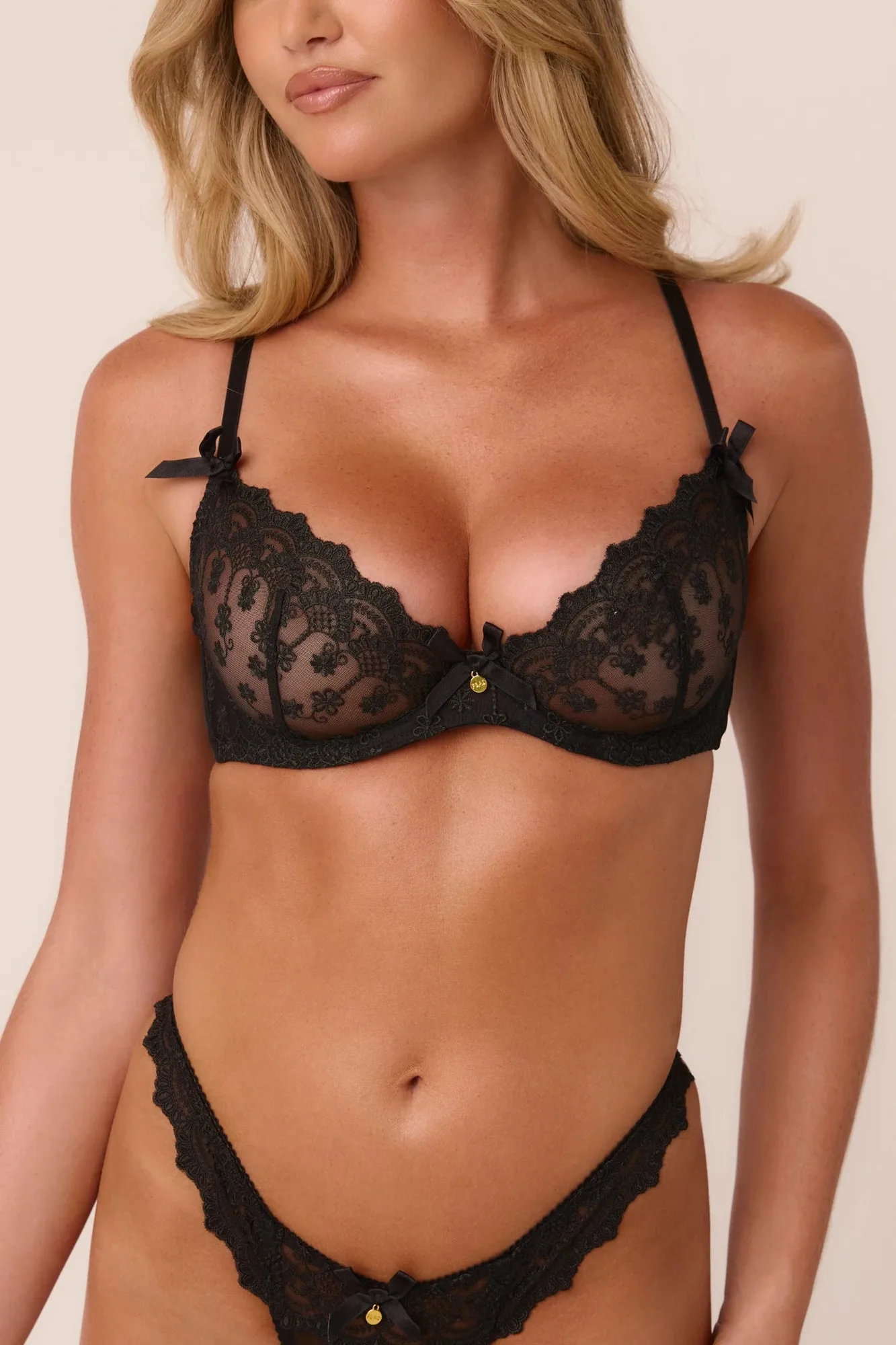
- Riley Bra Black: Low cut underwired demi-bra with flower embroidery lace, gold hardware, adjustable back and shoulder straps, and a demi cup. A demi cup sits lower on the breast, so it is less likely to gape at the top if you have a shallow shape — useful when full-coverage cups keep wrinkling.
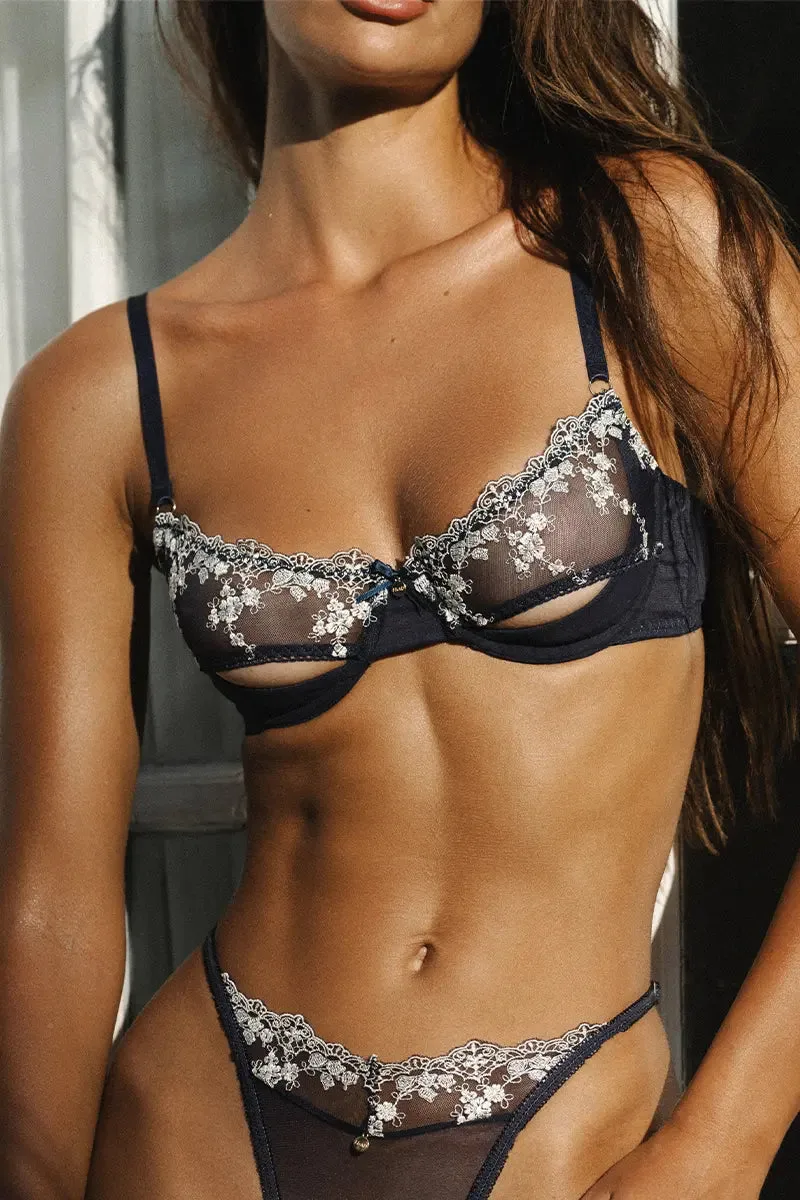
- Bianca Bra - Navy: Underwire bra with floral embroidered lace over sheer mesh, unlined cups, a subtle underboob cut-out, slim adjustable straps, and double-band back detailing. Unlined cups show fit honestly: if the lace wrinkles or the band lifts, you will see it immediately, making this a useful fit check rather than a cover-up.
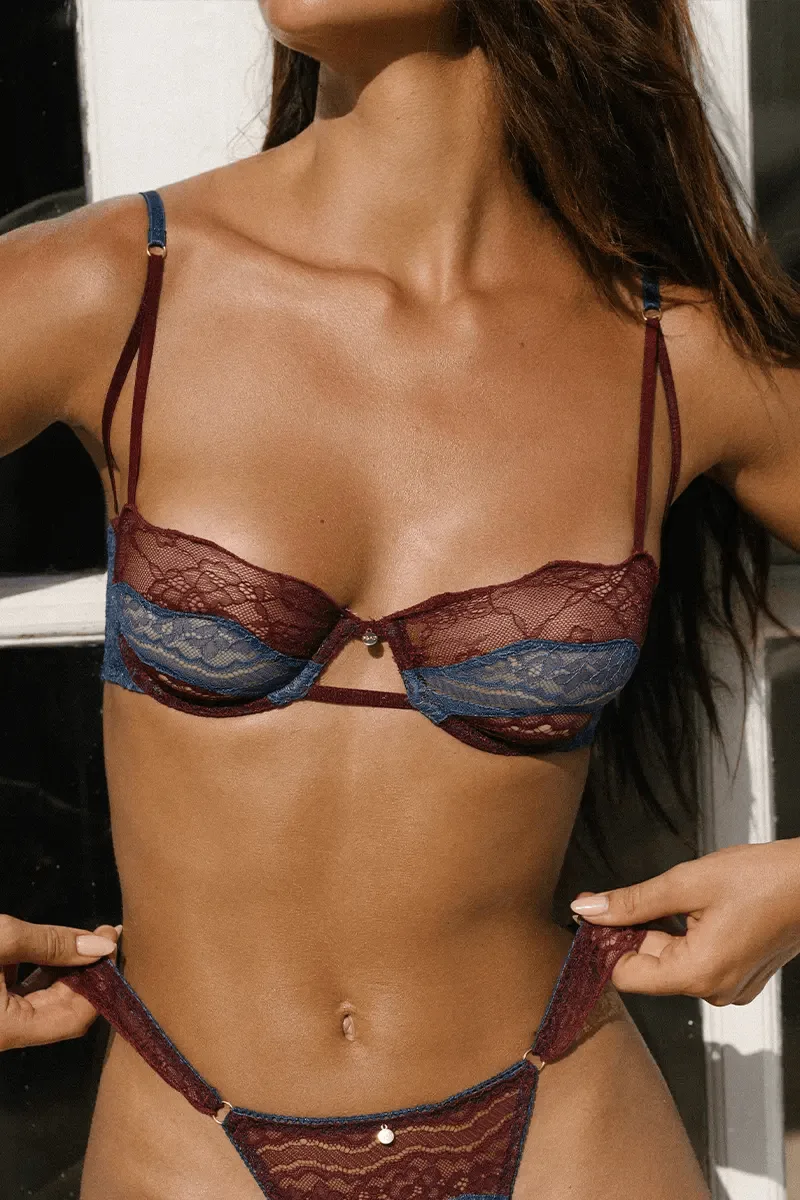
- Allegra Bra - Berry: Underwire balconette bra in soft stretch lace with contrasting two-tone panels, unlined cups, scalloped edging, a subtle centre cut-out, adjustable straps, and gold hardware. The balconette cut and scalloped edging suit lower necklines, but the shape works best on fuller tops — if it cuts in while the band fits, the cup shape is the issue.
Run the band test first, then the gore check, then the straps — in that order, most wrong-size problems resolve in one or two adjustments. If two size changes do not fix it, stop adjusting and change the cup shape instead. A bra that fits disappears on your body; if you are aware of it all day, something is still off.