Quick answer
To tie a baby headband without slipping, choose the correct size, position the band behind the ears, and use a gentle crisscross or knot technique at the back.
Why size matters for a no-slip fit
A headband that's too loose will slide down, while one that's too tight can leave marks or feel uncomfortable. Organic cotton rib headbands, like the large bow elastic headband from kate quinn, offer a range of sizes from newborn to 8 years, so you can pick the exact fit. The elastic back also adapts slightly as your baby grows, but starting with the right size is key.
For newborns, the smallest size (S, 0-6m) is usually best. If your baby is between sizes, size down for a snugger hold—the organic cotton rib has natural stretch that accommodates a bit of growth.
Choosing the right headband style
Not all headbands are created equal. A large bow headband adds a cute focal point but also a bit of weight, which can cause slipping if the band isn't secure. The covered back elastic on the kate quinn large bow headband helps distribute pressure evenly, reducing the chance of it sliding off.
If your baby is especially active or has fine hair, consider a style with a wider band or a non-slip grip. Organic cotton rib is naturally grippy compared to satin or polyester, making it a good choice for staying put.
Step-by-step: How to tie a baby headband without slipping
- Step 1: Choose the right size: Measure your baby's head circumference or refer to the age range on the headband. For kate quinn's large bow headband, S fits 0-6m, M fits 6-12m, L fits 12-24m, and so on. If in doubt, choose the smaller size for a snug fit that won't slip. Common mistake: guessing the size. Always check the size chart or measure first.
- Step 2: Position the headband correctly: Place the headband behind both ears, not on top of them. The band should sit at the base of the skull, not on the crown. This gives the band a natural anchor point. If the band sits above the ears, it will likely slide forward. Keep it behind the ears for a secure hold.
- Step 3: Adjust the tension with the elastic back: If the headband has a covered back elastic (like the large bow headband), gently stretch the elastic to adjust the tension. It should feel snug but not tight—you should be able to slide one finger between the band and your baby's head. Overstretching can make the band loose; understretching may leave marks. Aim for a comfortable, even tension.
- Step 4: Secure with a small knot or twist (optional): For extra hold, especially on active babies, tie a small knot at the back of the headband or twist the band once before fastening. This creates a slight grip that prevents sliding. Avoid tying too tightly—a loose knot is enough. A knot works best on elastic headbands. If the band is non-elastic, skip this step to avoid damaging the fabric.
- Step 5: Check and adjust throughout the day: Babies move a lot, so check the headband every hour or after naps. If it has shifted, reposition it behind the ears and re-tighten the elastic or knot as needed. Don't leave a headband on during sleep. Always remove it for naps and bedtime.
Products that help
-
large bow elastic headband | butterum leaf | organic cotton multi rib: Available in sizes S (0-6m) through XXXL (6Y-8Y) with a covered back elastic and slip-on style. You can pick a precise size for your baby's age, and the covered elastic prevents the band from digging in or slipping.
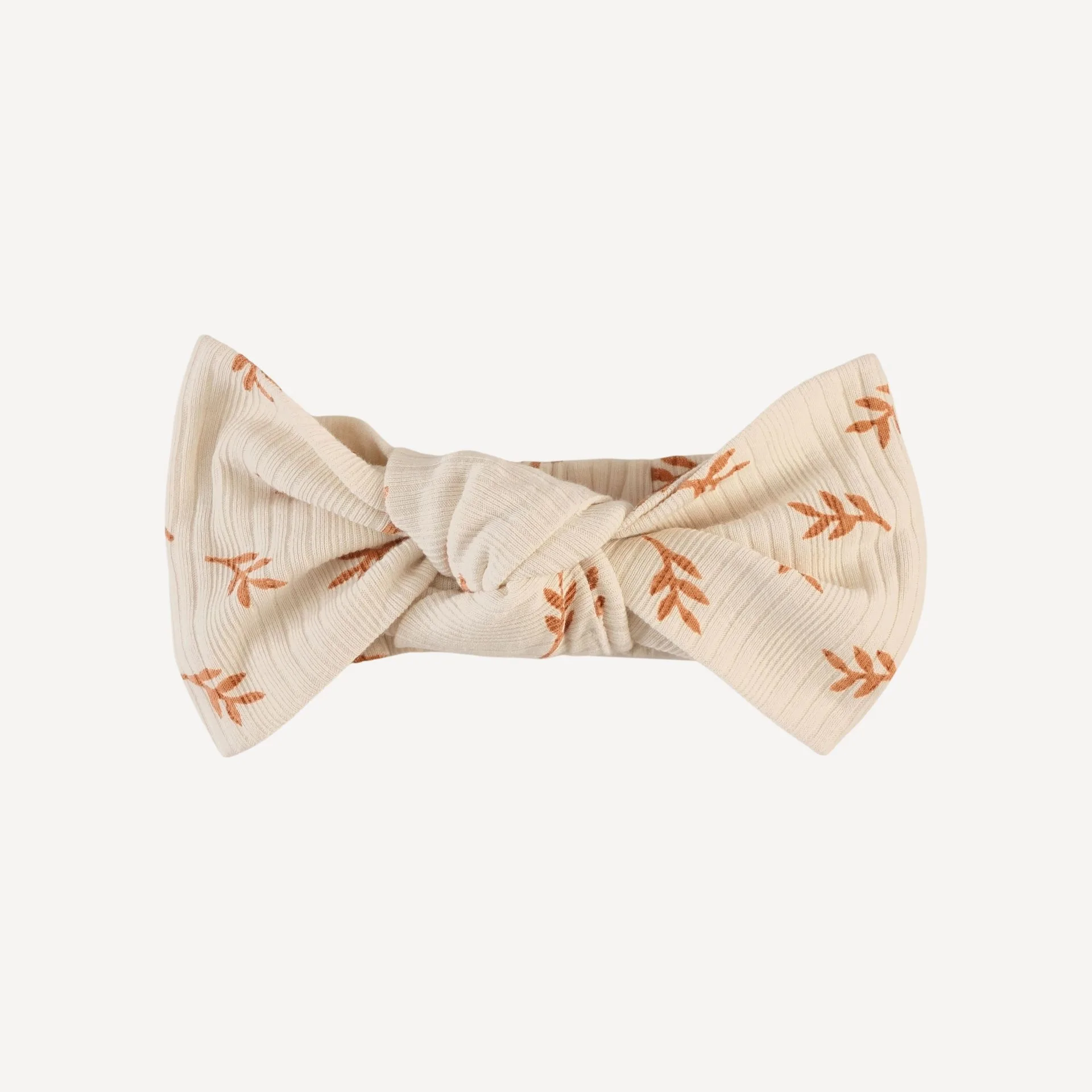
large bow elastic headband | butterum leaf | organic cotton multi rib