Quick answer
Transition your baby to a fitted crib sheet when they start rolling or outgrow the bassinet — around 3-6 months — but only if the sheet fits snugly, is made from breathable fabric, and is paired with a firm, flat mattress.
Why the right sheet matters for safe sleep
A fitted crib sheet that actually fits is a safety feature first. A loose sheet can bunch up and create a suffocation risk, while a too-tight sheet may pull up at the corners. The goal is a sheet that stays firmly tucked under all four corners of a firm mattress, with no excess fabric.
Breathability is another key factor. Bamboo viscose muslin sheets, like those made from Tanboocel®, offer natural temperature regulation and moisture-wicking, which helps reduce overheating — a known SIDS risk factor. A sheet that dries quickly also makes a two-sheet rotation practical for overnight accidents.
When to make the switch
Most babies transition to a crib between 3 and 6 months, often when they start rolling over or have outgrown the bassinet weight limit. The American Academy of Pediatrics recommends a firm, flat sleep surface with a tightly fitted sheet — no blankets, pillows, or bumpers.
If your baby is still in a bassinet, check the manufacturer's guidelines. Some bassinets accept fitted sheets, but many require only the original mattress pad. Always follow the product instructions.
Step-by-step: Transition to a fitted crib sheet safely
- Choose a firm, flat mattress: Place the mattress directly on the crib base (no pillow-top or memory foam toppers). The mattress should fit snugly against the crib sides — no more than two fingers of space between mattress and frame. A mattress that is too small leaves gaps where a sheet can slip loose.
- Select a sheet with deep pockets and strong elastic: Look for a fitted sheet that wraps fully under the mattress corners and has elastic that runs all the way around, not just at the corners. Test by tugging the sheet after installation — it should not shift more than an inch. Sheets labeled 'deep pocket' or 'extra stretch' are not always safer; check the fit manually.
- Install the sheet corner by corner: Start with one corner, then the opposite diagonal corner, then the remaining two. Smooth the fabric toward the center to remove wrinkles. Run your hand over the entire surface — there should be no folds, ripples, or loose fabric. Wrinkles can create small depressions that a rolling baby might sink into.
- Perform the pinch test: After installation, try to pinch and lift the sheet at the center of the mattress. If you can gather any fabric, the sheet is too loose. A properly fitted sheet should feel drum-tight. Repeat this test after every wash, as elastic can relax over time.
- Keep the crib bare: Remove all blankets, pillows, stuffed animals, and bumper pads before placing baby in the crib. The only items on the sleep surface should be the fitted sheet and a sleep sack or wearable blanket if needed. Loose bedding remains the leading cause of sleep-related infant accidents.
Product spotlight
-
Baby Muslin Fitted Crib Sheet in Tanboocel® Viscose from Bamboo - French Breakfast: The Baby Muslin Fitted Crib Sheet in Tanboocel® Viscose from Bamboo is designed to tuck tight and stay tucked, with a material blend that dries fast. A sheet that stays put reduces the need for middle-of-the-night adjustments, and fast drying means you can rotate just two sheets without running out.
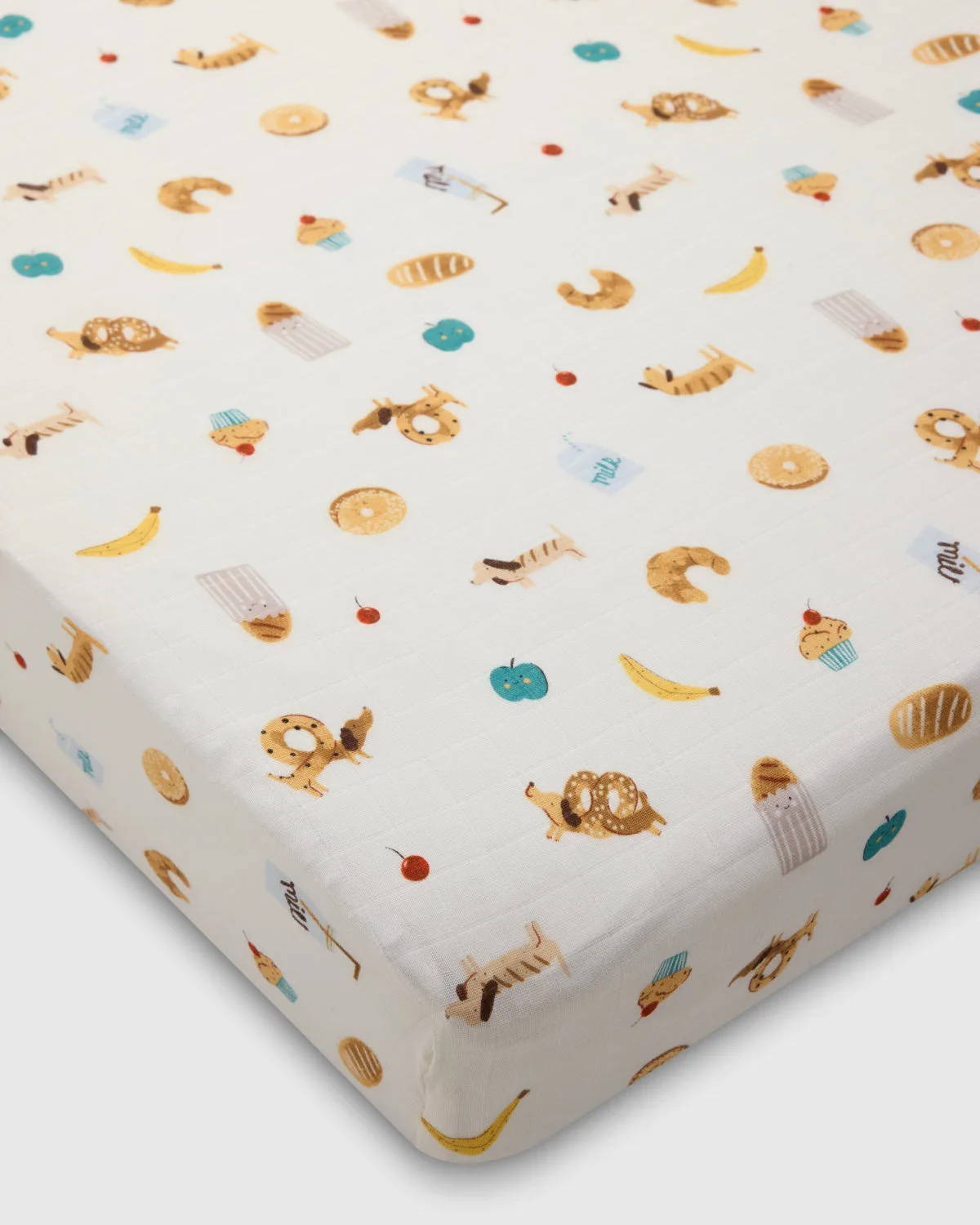
Baby Muslin Fitted Crib Sheet in Tanboocel® Viscose from Bamboo - French Breakfast