Quick Answer
To help your baby move from tummy time pillow to sitting up, use the pillow to build core strength through daily tummy time, then gradually introduce supported sitting exercises that let your baby practice balance and trunk control.
Why Tummy Time Builds the Muscles for Sitting
Sitting up requires strong neck, back, and core muscles—the same muscles your baby develops during tummy time. When your baby lifts their head and pushes up on their forearms while on a tummy time pillow, they are actively strengthening the muscle groups needed for independent sitting.
The gentle incline of a tummy time pillow can make the position more comfortable and engaging, encouraging your baby to stay in the position longer and get more practice.
When to Start the Transition
Most babies begin to sit with support between 4 and 7 months, but every baby develops at their own pace. You can start practicing supported sitting as soon as your baby shows good head control and enjoys tummy time. Look for signs like pushing up on straight arms and rolling from tummy to back.
Remember, sitting is a milestone, not a race. Follow your baby's cues and never force them into a position they are not ready for.
Step-by-Step Transition Guide
- Start with Daily Tummy Time on the Pillow: Place your baby on the tummy time pillow for short, frequent sessions (2-5 minutes) several times a day. Ensure the pillow is on a firm, flat surface and that your baby is awake and supervised. Use the baby-safe mirror to encourage them to lift their head. Checkpoint: Your baby should be able to lift their head and look forward while on the pillow before moving to the next step.
- Practice Supported Sitting with the Pillow: Once your baby has good head control, sit them on the floor and place the tummy time pillow behind their back as a cushion. This gives them a soft surface to lean on while they practice sitting upright. Keep the pillow close so they can rest against it when they tire. Checkpoint: Watch that your baby's back stays relatively straight and they are not slumping to one side.
- Encourage Reaching and Playing While Sitting: Place toys just out of reach while your baby is sitting with the pillow behind them. This encourages them to reach forward and twist slightly, which strengthens their core and improves balance. Always stay close to catch them if they topple. Checkpoint: If your baby consistently falls backward or to the side, they may need more tummy time practice before continuing.
- Gradually Reduce Pillow Support: As your baby gains confidence, move the pillow slightly away from their back so they have to engage their muscles to stay upright. You can also hold their hands or hips for support instead of the pillow. Reduce support gradually, letting your baby do more of the work. Checkpoint: Your baby is ready for less support when they can sit for several seconds without leaning on the pillow.
- Celebrate Independent Sitting Moments: When your baby can sit without support for a few seconds, celebrate and encourage them to repeat it. Place them on a soft surface and let them practice sitting and playing. Remember, they may still topple over—that's normal! Keep the area safe with pillows or a play mat. Checkpoint: Once your baby sits independently for longer stretches, you can retire the tummy time pillow or use it for other activities.
Recommended Product
-
Animal Adventures Tummy Time Pillow: The Animal Adventures Tummy Time Pillow is multi-functional, giving your baby a place to lounge comfortably until they are able to roll over and become more mobile. This pillow supports your baby during tummy time, helping them build the core and neck strength needed for sitting up, and continues to be useful as they grow.
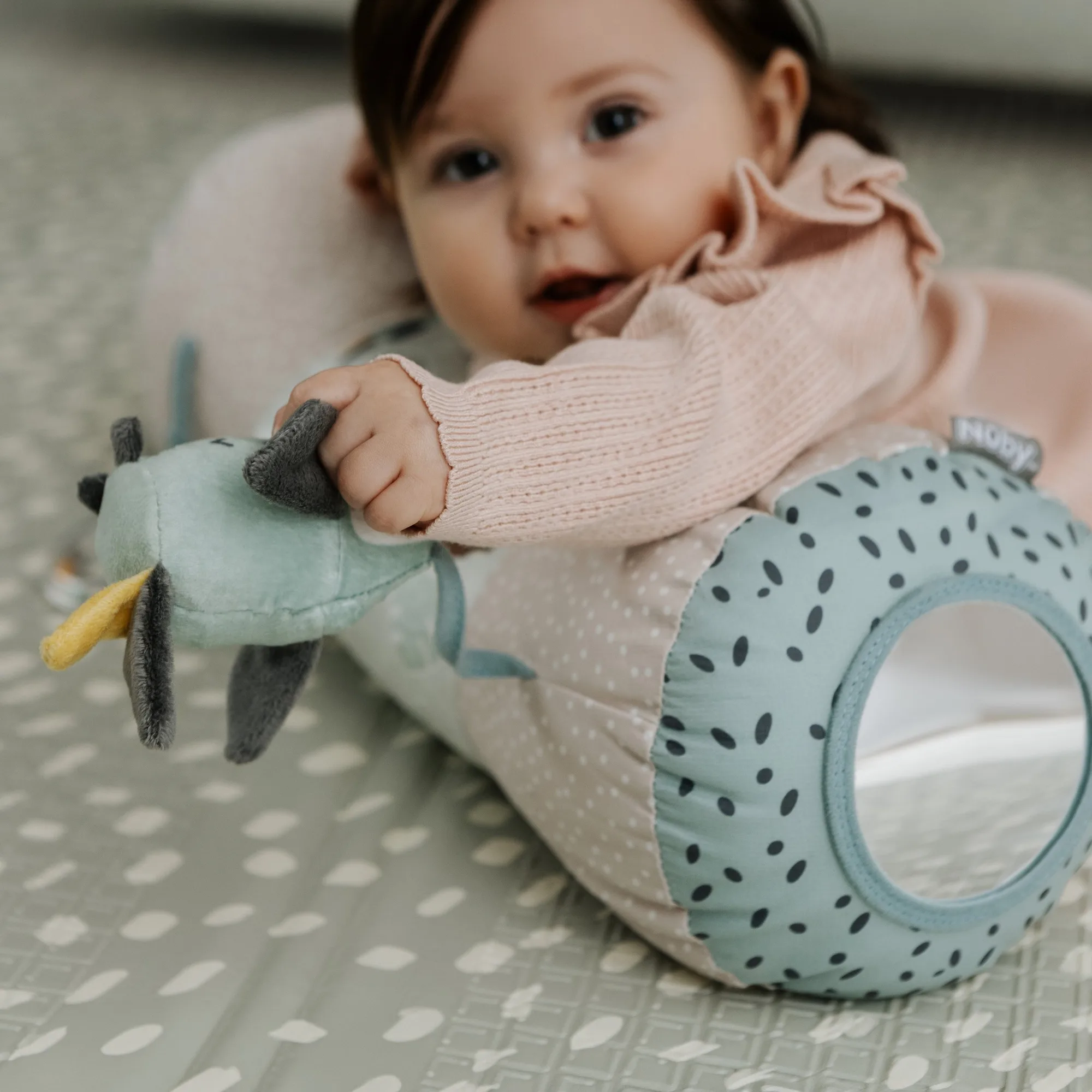
Animal Adventures Tummy Time Pillow