Quick answer
Skip the garment bag and pack your suit in a hard-shell carry-on using the bundle-and-brace method: fold the jacket inside out at the shoulders, lay it on top of a compressed packing cube, and sandwich it between soft layers so nothing shifts. A structured carry-on with a compression system holds the fold in place, so you can travel with a suit and arrive ready to wear it.
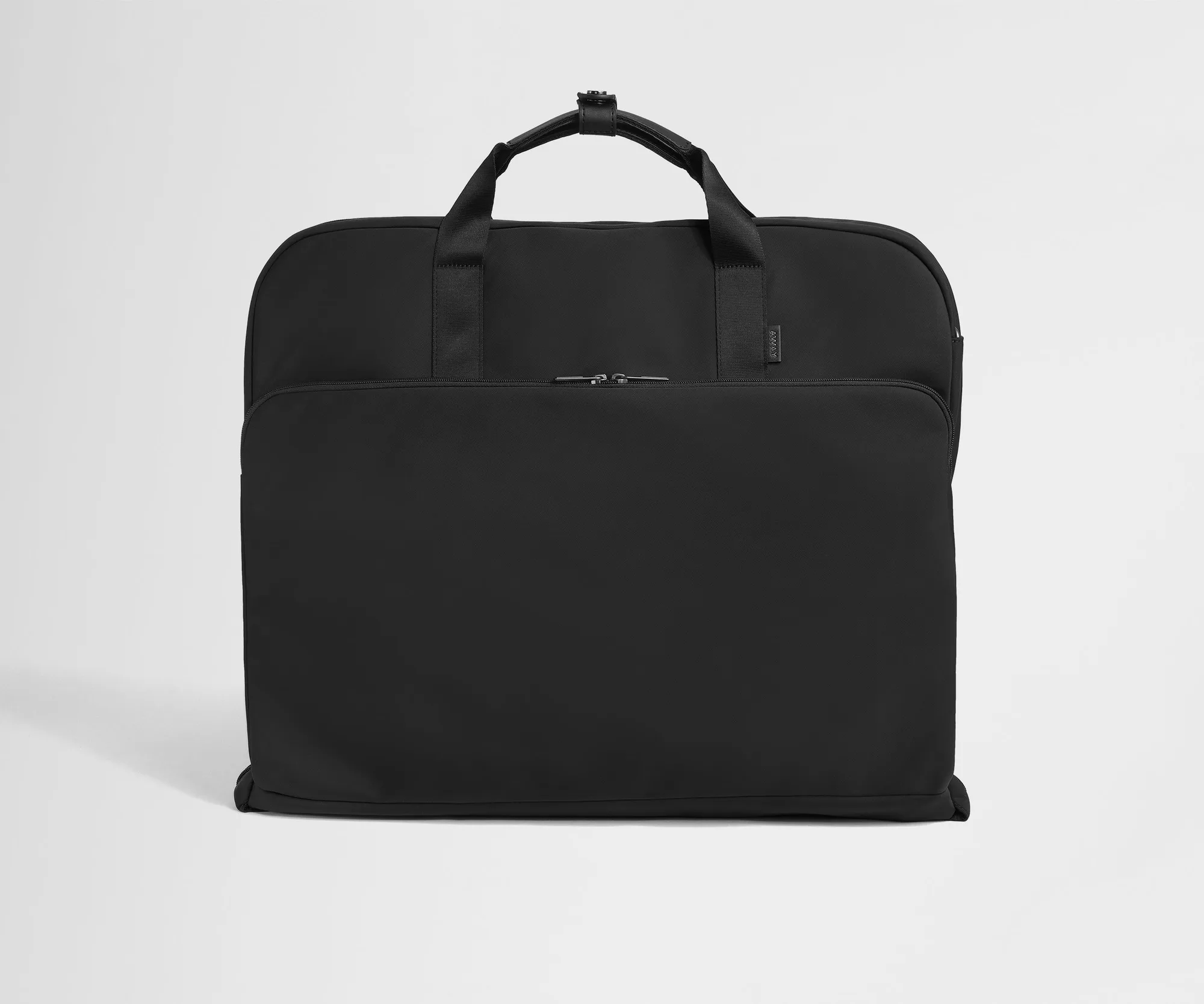
garment bag
A suit is the one thing you can't easily replace on a trip. Check it and you risk losing it; fold it badly and you arrive looking like you slept in it. The good news is that you don't need a separate garment bag to travel with a suit. With the right fold and a bag that holds its shape, a standard carry-on does the job better.
This guide walks through the exact process, from choosing the bag to unpacking at the hotel, with the checkpoint that matters at each stage.
Start with the right bag, not the right fold
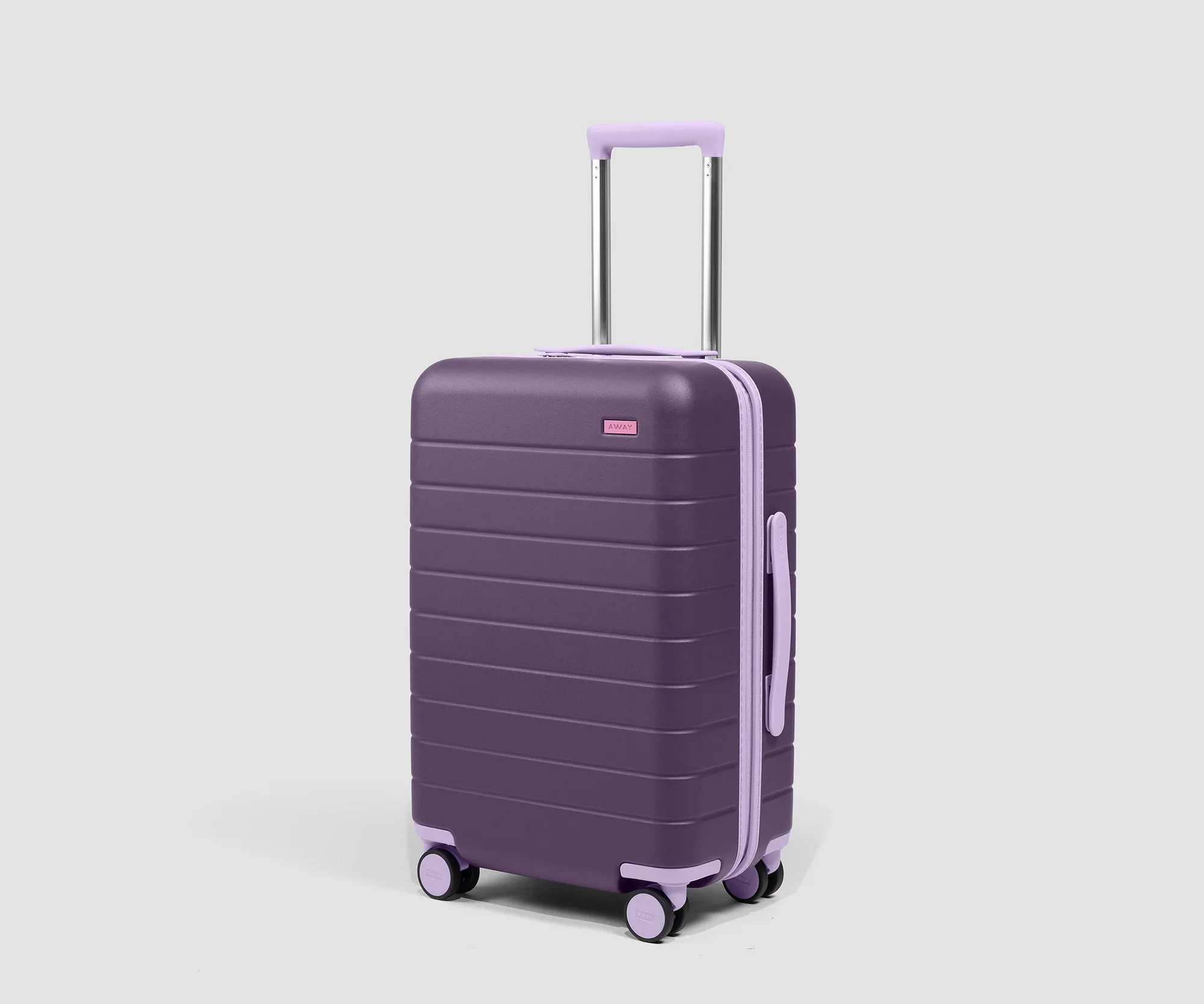
The fold only works if the bag keeps it flat. A soft, unstructured duffle lets the suit shift and crease; a hard-shell carry-on with an interior compression system holds the bundle in place. The Bigger Carry-On is sized to fit the overhead bin of most major US airlines and uses a compression system to pack, organize, and protect more, which is exactly what a suit needs.
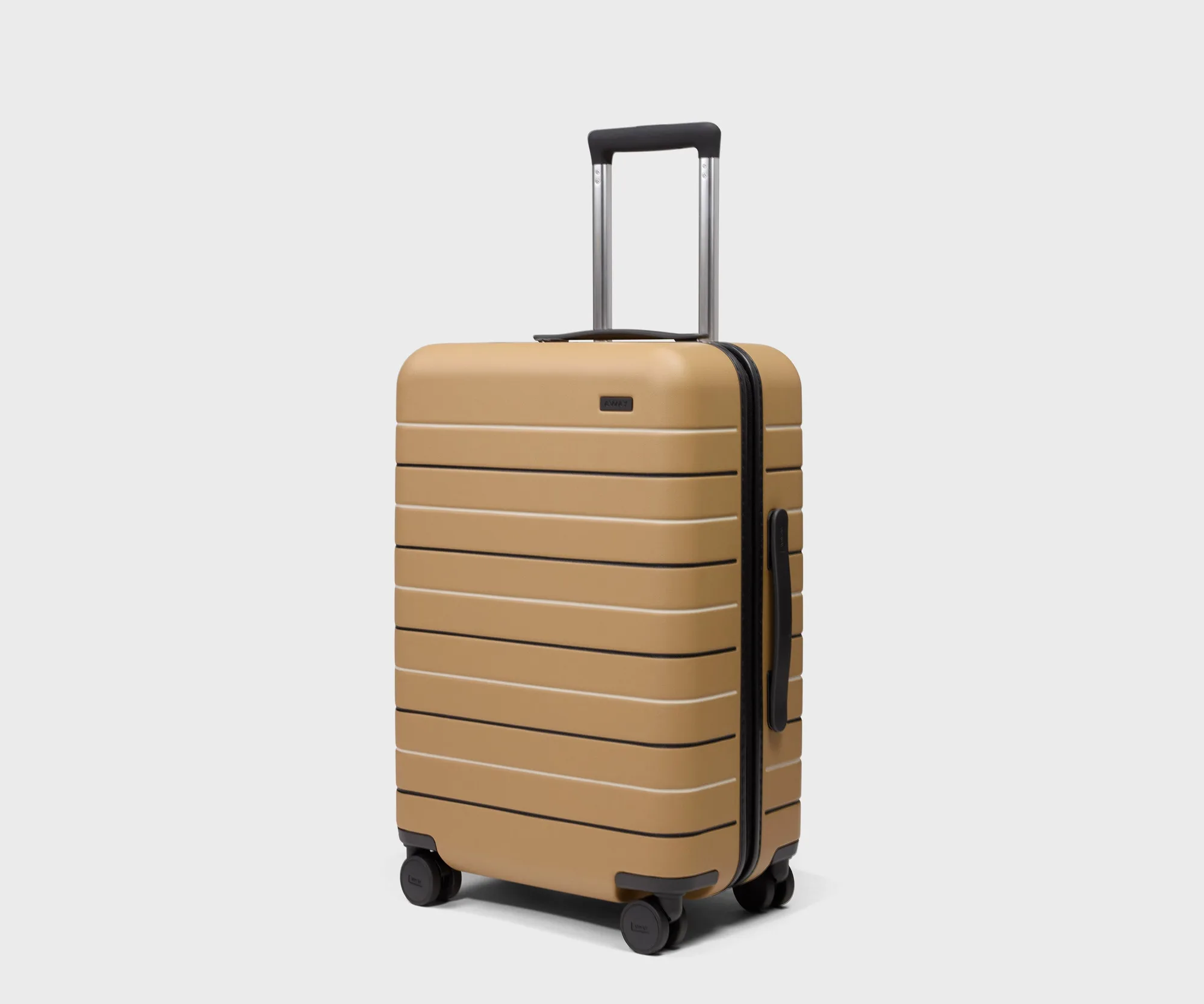
The Bigger Carry-On
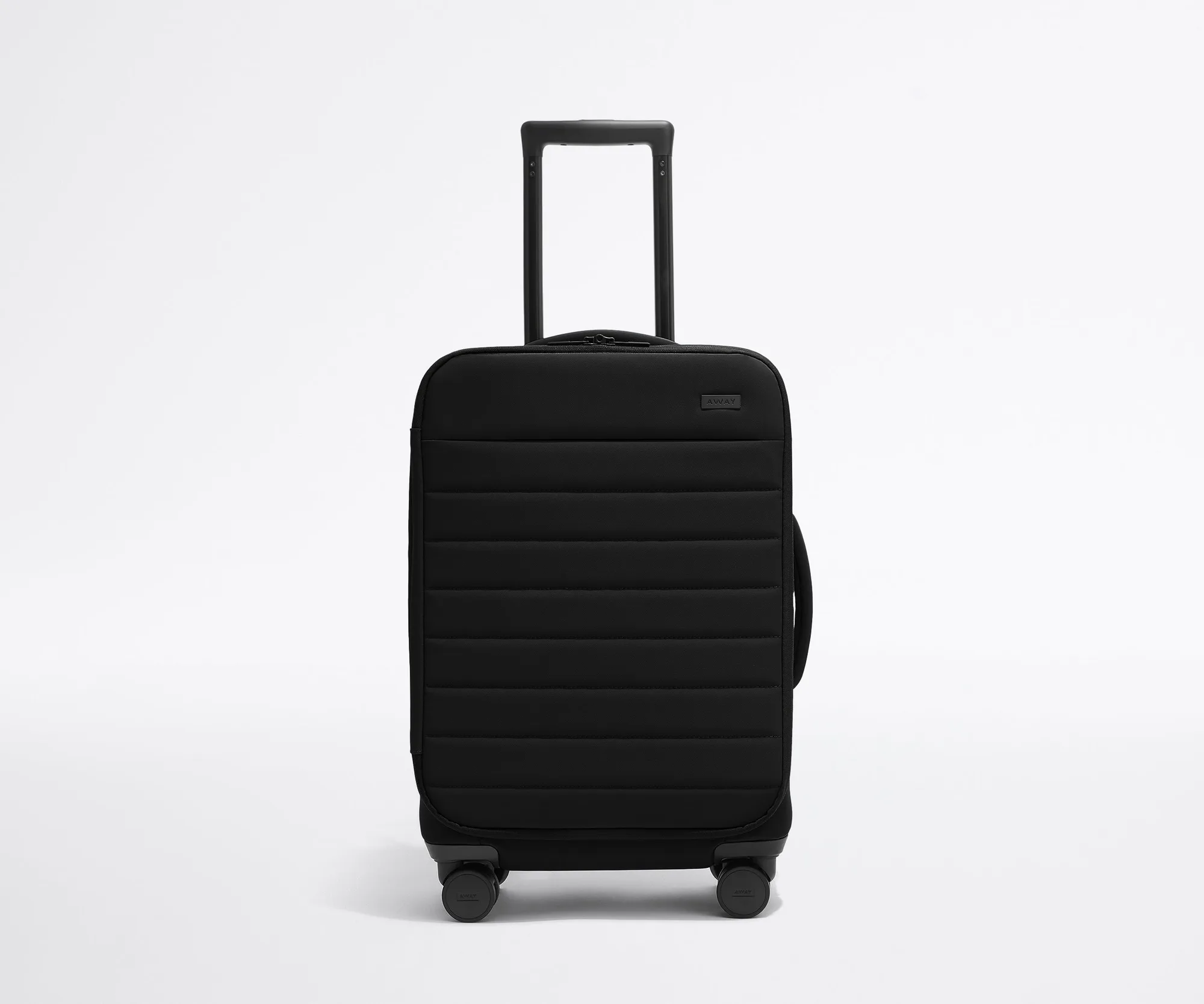
If you already own a Softside Carry-On, it can work too. The high-strength nylon exterior is flexible, so pack the suit in the center of the bag, surrounded by soft items, and avoid overstuffing. The checkpoint: close the bag and press down. If the shell flexes more than an inch, remove a layer.
- Hard-shell carry-on: best for structured suits and jackets.
- Softside carry-on: workable if you keep the suit in the middle and don't overpack.
Prep the suit before it goes in
Empty every pocket. A wallet, keys, or a phone left in a jacket pocket creates a hard lump that presses a crease into the fabric for the entire trip. Button the jacket, zip the trousers, and turn the jacket inside out so the lining faces out. This puts the friction on the lining instead of the wool.
Brush off lint and hang the suit for ten minutes before packing. If it already has light wrinkles, a quick steam in the bathroom while you shower can relax the fibers before they get folded. The checkpoint: run your hand over the shoulders and lapels. Any grit or crumbs will become a pressure point.
- Turn the jacket inside out to protect the exterior weave.
- Never pack a suit that's damp from rain or sweat.
Fold the jacket with the shoulder-in method
Lay the jacket face down. Fold one shoulder back so it crosses the center of the back, then tuck that sleeve along the spine. Repeat with the other shoulder so the jacket forms a long, narrow rectangle with the lining facing out. This keeps the shoulder structure from collapsing and prevents a crease across the chest.
For a two-button jacket, leave the top button fastened. For a three-button, fasten the middle. The checkpoint: the jacket should look like a folded blanket, not a ball. If the lapels bunch, refold; a bunched lapel will show up as a hard line when you unpack.
- Fold the jacket inside out and shoulder-in, not in half.
- Keep the fold lines on the lining side, not the wool.
Build the carry-on bundle around the suit
Place a packing cube or a folded sweater at the bottom of the bag to create a flat base. Lay the folded jacket on top, then lay the trousers on top of the jacket with the crease running down the center of the bag. Fold the trouser legs over the jacket so the suit becomes one soft package.
Surround the suit with soft items like t-shirts, socks, or a scarf. These act as padding and stop the suit from sliding. The checkpoint: shake the closed bag gently. If you hear or feel the suit moving, add a layer of soft clothing around it.
- Trousers go on top of the jacket, not under it.
- Use soft clothing as padding, not hard items like shoes.
Use the compression system, then stop
If your carry-on has an interior compression system, zip or cinch it down until the suit is held snug. The Bigger Carry-On's compression system is designed to help you pack, organize, and protect more, and it does the same job for a suit: it keeps the bundle from shifting. Don't over-compress. You want the suit held, not crushed.
The checkpoint: the bag should close without force. If you have to sit on it, you've packed too much, and the pressure will crease the suit. Remove a layer of clothing before you zip.
- Compress until snug, not until the shell bulges.
- If the bag won't close easily, the suit will crease.
Unpack immediately at the hotel
As soon as you reach your room, take the suit out and hang it. Unbutton the jacket, shake it out, and hang it on a proper hanger, not a hook. If you have time, hang it in the bathroom while you shower; the steam relaxes light folds. Give it at least thirty minutes before you put it on.
The checkpoint: check the shoulders and the back of the jacket first. Those are the areas that show creases fastest. If a fold remains, a quick press with a hotel iron on low steam handles it. Never iron directly on wool; use a pressing cloth or a towel.
- Hang the suit immediately, don't leave it in the bag.
- Use steam before you use an iron.
Pack the accessories that finish the look
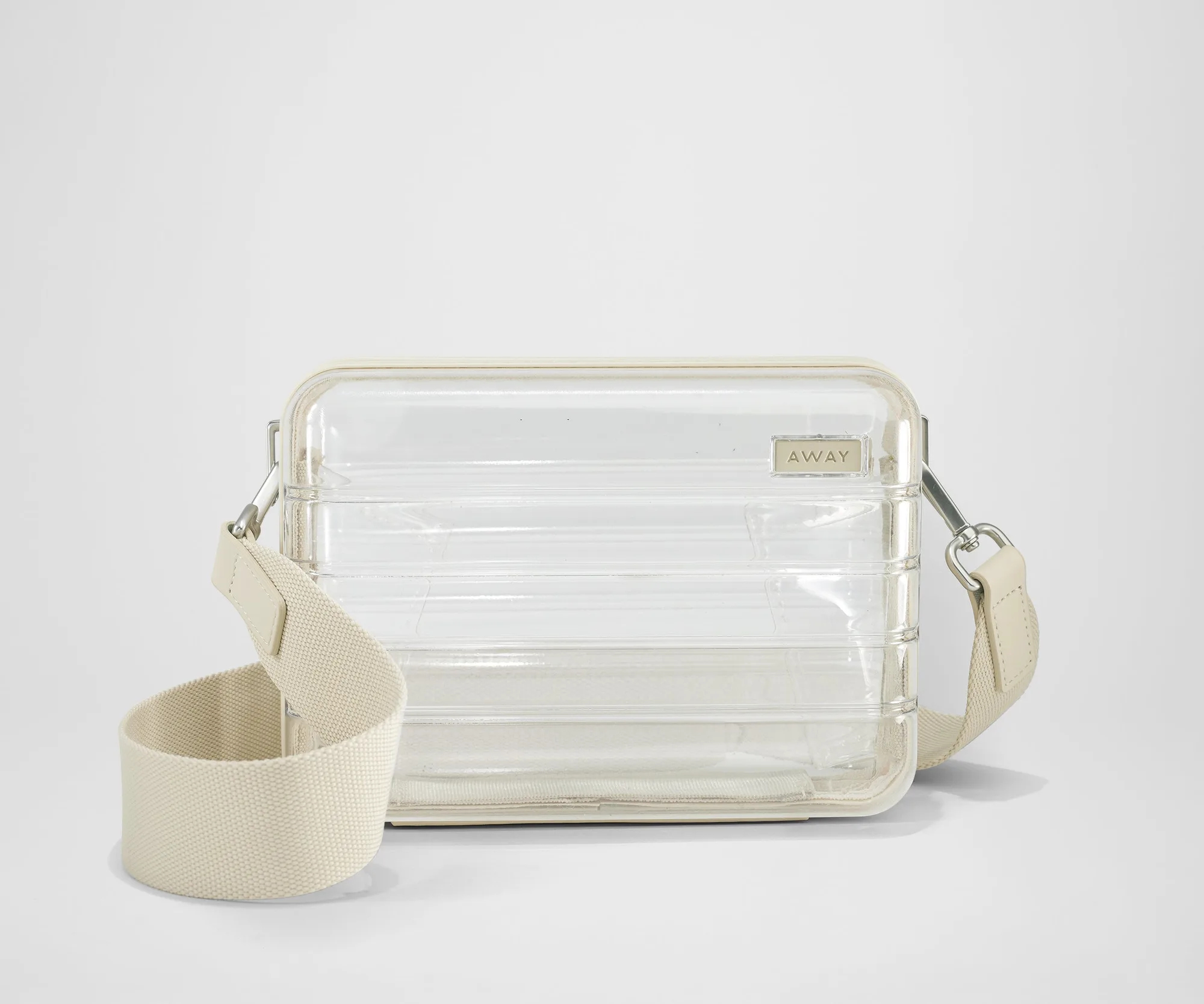
A suit needs the small things: a belt, tie, cufflinks, and a shoe bag. Roll the tie inside a jacket pocket or lay it flat in the lid of the carry-on. Shoes go at the bottom, soles down, in a bag. The Stadium Bag in Salt White is a clear, compact option for keeping small essentials organized and slipping easily into your Away suitcase, duffle, tote, or backpack, and its removable crossbody strap keeps your hands free once you're through the gate.
For a longer trip with a second outfit, the Match Day Stadium Bag Bundle in England keeps match-day or event essentials organized with clear panels that meet stadium regulations. The checkpoint: pack accessories last, in the gaps around the suit, so they don't press into the fabric.
- Roll ties, don't fold them.
- Keep shoes away from the suit fabric.
The wrinkle-free suit packing sequence
- Empty and prep the suit: Clear every pocket, button the jacket, and turn it inside out so the lining faces out. Checkpoint: no lumps, no damp fabric.
- Fold shoulder-in: Fold one shoulder back across the center, tuck the sleeve along the spine, then repeat on the other side. Checkpoint: the jacket forms a flat rectangle, not a ball.
- Build a flat base: Place a packing cube or folded sweater at the bottom of the carry-on to create a level surface. Checkpoint: the base doesn't shift when you press it.
- Layer jacket, then trousers: Lay the folded jacket down, then the trousers on top with the crease down the center, and fold the legs over. Checkpoint: the suit is one soft bundle.
- Pad the edges: Surround the suit with soft clothing like t-shirts, socks, or a scarf to stop movement. Checkpoint: shake the bag; the suit shouldn't slide.
- Compress gently: Use the interior compression system until the bundle is snug, then stop. Checkpoint: the bag closes without force.
- Unpack and hang immediately: Hang the suit on a proper hanger, steam it in the bathroom if needed, and give it thirty minutes. Checkpoint: shoulders and back first.
Bags that make suit travel easier
- The Bigger Carry-On: Sized to fit in the overhead bin of most major US airlines, with a lightweight, durable hard shell and a signature interior compression system that helps you pack, organize, and protect more. The hard shell holds the suit's fold flat and the compression system keeps it from shifting, which is what prevents wrinkles in transit.
- Softside Carry-On: The smallest of four size options, with a soft, high-strength nylon exterior, and it can easily fit in the overhead bin of most major airlines. A flexible softside works for a suit if you center the bundle and avoid overpacking, but it requires more padding than a hard shell.
- Stadium Bag in Salt White: Designed with a clear front and back, it keeps must-haves neatly organized and slips easily into your Away suitcase, duffle, tote, or backpack, with a removable crossbody strap. A clear, slim bag keeps tie, belt, and cufflinks separate from the suit so nothing presses a crease into the fabric.
Traveling with a suit comes down to one principle: keep the fold flat and stop it from moving. A structured carry-on with a compression system does that better than a garment bag, and the steps above take about five minutes once you've done them once. Pack the suit first, fill the gaps with soft items, and unpack the moment you arrive.