Quick Answer
Tuning a tin whistle is about adjusting your breath pressure and the position of the tuning slide, not turning pegs. Start by warming up the whistle, then listen for pitch and make small changes.
Why Tin Whistles Drift Out of Tune
Tin whistles are sensitive to temperature and moisture. Cold air makes the pitch flat, while warm breath can sharpen it. Even a few degrees change the sound, especially in the upper register. That's why a whistle that sounds fine at home might feel off at a session or outdoors.
The tuning slide—a small joint between the mouthpiece and the body—is your main mechanical adjustment. Pulling it out lengthens the tube and lowers the pitch; pushing it in shortens the tube and raises the pitch. But the slide only compensates for broad tuning issues. Most pitch problems come from how you blow, not the slide position.
When Breath Control Matters More
A common mistake is reaching for the slide every time a note sounds wrong. In reality, the second octave often goes sharp because players over-blow. The first octave can go flat if you under-blow. Before you touch the slide, try varying your breath pressure to center the pitch. This is especially true for high D and G notes, which are naturally unstable on many whistles.
If you consistently fight the same notes after adjusting your breath, then the slide needs a small tweak. But keep changes tiny—a millimeter can shift the pitch noticeably.
How to Tune Your Tin Whistle in 5 Steps
- Warm Up the Whistle: Play the whistle gently for 2–3 minutes. Blow warm air through it without forcing notes. This stabilizes the metal or plastic and brings the pitch to a consistent baseline. Skipping warm-up can lead to false tuning adjustments that change once the whistle heats up.
- Check Your Breath Pressure: Play a low D (all holes covered) and listen for a clear, stable tone. Then play the same note in the second octave. If the higher note sounds sharp, ease your breath. If it sounds flat, blow a bit firmer. Find the breath sweet spot for each octave. Most tuning issues are breath-related, not mechanical. Adjust breath first.
- Adjust the Tuning Slide: If the overall pitch is flat (you sound lower than a reference tuner or another instrument), push the slide in slightly. If the pitch is sharp, pull the slide out. Turn the mouthpiece gently—do not force it. A 1–2 mm change is enough. Pull the slide out only when the whistle plays flat across both octaves after warming up. Over-adjusting makes it hard to play in tune with others.
- Tune to a Reference: Use an electronic tuner, tuning app, or a fixed-pitch instrument like a piano or accordion. Play a steady low D and watch the tuner needle. Adjust the slide until the needle centers on D. Then play a high D to confirm it's also in tune—if not, revisit your breath pressure. Tune to the instrument you will play with. A tuner set to A=440 Hz is standard for most folk sessions.
- Test All Notes and Listen for Consistency: Play a slow scale from low D to high D. Listen for any note that sounds out of place. If one note consistently sounds off while others are fine, it's likely a breath or fingering issue, not the slide. Practice that note with varying breath to find its center. If a single note remains out of tune after breath and slide adjustments, the whistle may have a manufacturing flaw or need professional tweaking.
Product Mentioned
-
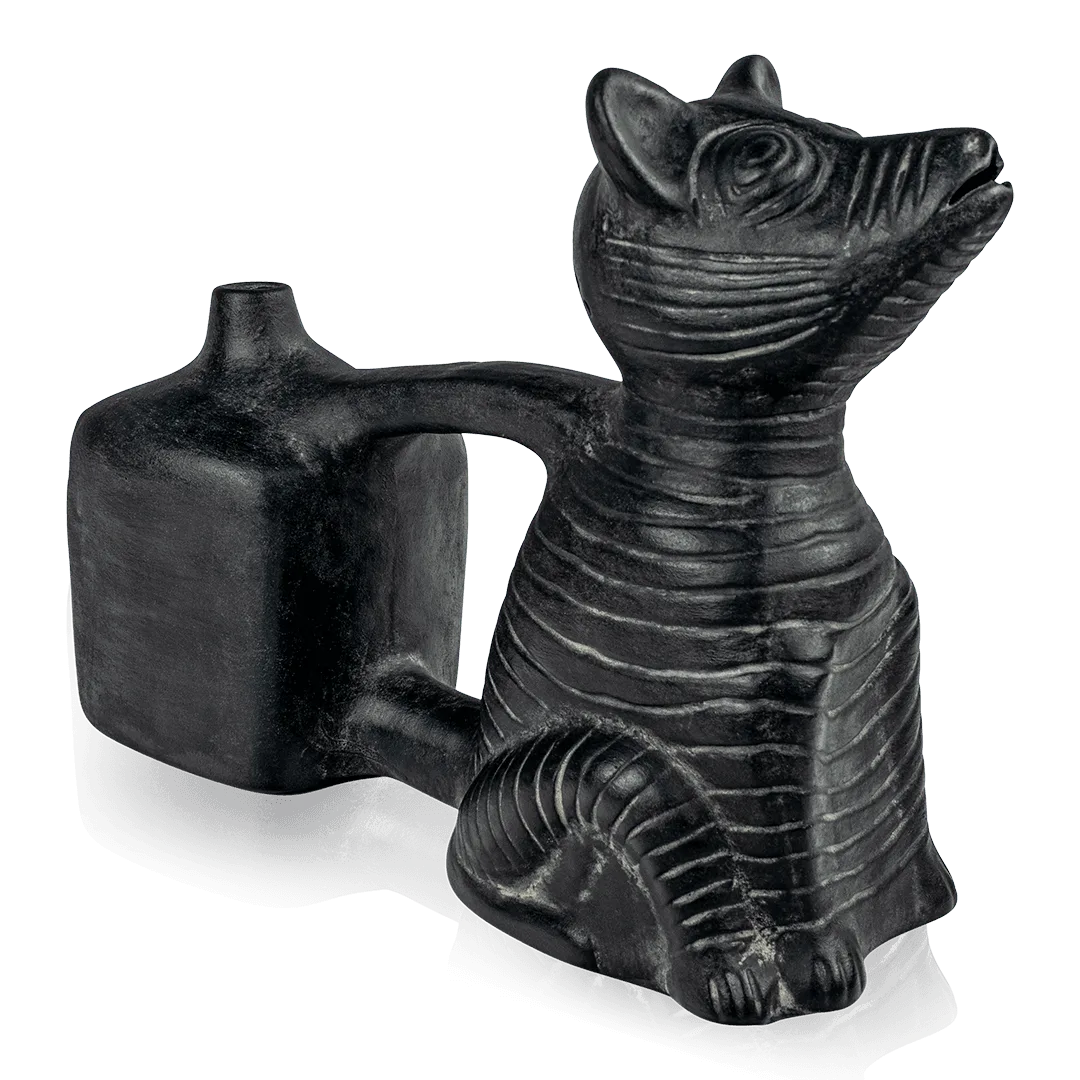
Peruvian Water Whistle: The Peruvian Water Whistle is a clay pitcher that produces sound by pouring water into cavities, recreating an Incan healing tool. This is not a standard tin whistle; its tuning is fixed by the shape of the clay and water flow, so the breath and slide adjustments in this guide do not apply. Use it as a conversation piece or for its intended ceremonial effect.
Peruvian Water Whistle


