Quick answer
Tune your kalimba by gently tapping each tine up or down with the tuning hammer while checking pitch against a tuner or reference note. Work from the center outward and make small adjustments to avoid bending the tines.
Why tuning matters for beginners
A kalimba that is even slightly out of tune can make simple melodies sound off. Since the instrument relies on the natural resonance of its metal tines, small changes in temperature, humidity, or handling can shift the pitch. Regular tuning keeps your playing accurate and enjoyable.
The Strumba Kalimba comes with fifteen labeled keys, which makes it easier to identify which note you are adjusting. The labels correspond to standard note names, so you can follow along with most kalimba tablature right away.
What you will need
A tuning hammer (usually included with the kalimba), a clip-on chromatic tuner or a tuning app on your phone, and a quiet environment so you can hear the pitch clearly. If you do not have a tuner, you can use a reference note from a piano or a tuning fork.
Step-by-step kalimba tuning instructions
- 1. Prepare your tuner and kalimba: Clip the tuner onto the kalimba body or open your tuning app. Pluck the center tine (usually the lowest note) gently with your thumb. Watch the tuner to see if the note is sharp (too high) or flat (too low). Common mistake: plucking too hard can give a false reading. Use a light, consistent pluck.
- 2. Adjust the tine with the tuning hammer: To raise the pitch (if flat), gently tap the tine toward the bridge—this shortens the vibrating length. To lower the pitch (if sharp), tap the tine away from the bridge. Use small, gentle taps; the tine is soft and bends easily. Checkpoint: after each tap, pluck the tine again and recheck the tuner. Overcorrecting is the most common beginner mistake.
- 3. Tune from the center outward: Start with the middle tines (the longest ones) and work your way to the outer tines. The center notes are the foundation of the scale. Tuning them first helps the outer notes stay in context. Empty
- 4. Check relative tuning by playing a scale or familiar song: Once all tines show the correct pitch on the tuner, play a simple scale or a song you know by ear. If something sounds off, revisit that tine. Your ears are the final judge. Common mistake: relying only on the tuner can miss subtle intonation issues that your ears will catch.
- 5. Retune after the first few playing sessions: New kalimbas often settle after a few hours of play. The tines may shift slightly as they adjust to tension. Expect to retune once or twice before the instrument holds pitch consistently. Empty
Product spotlight
-
Strumba Kalimba: The Strumba Kalimba has fifteen labeled keys on a two-tone beechwood body with soft, rounded edges. The labeled keys help beginners identify which tine to tune without memorizing note positions, and the comfortable body makes it easy to hold while adjusting.
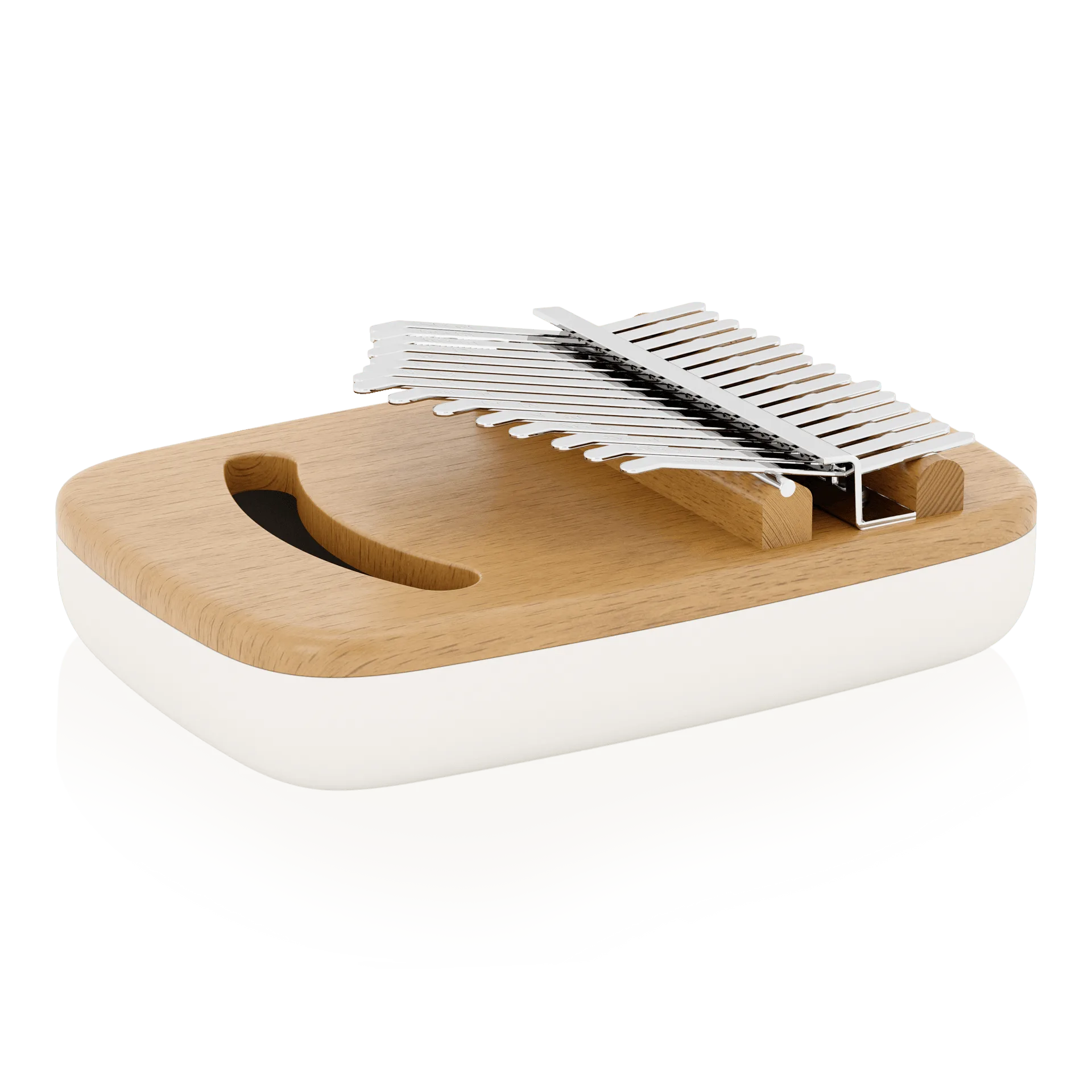
Strumba Kalimba