Quick answer
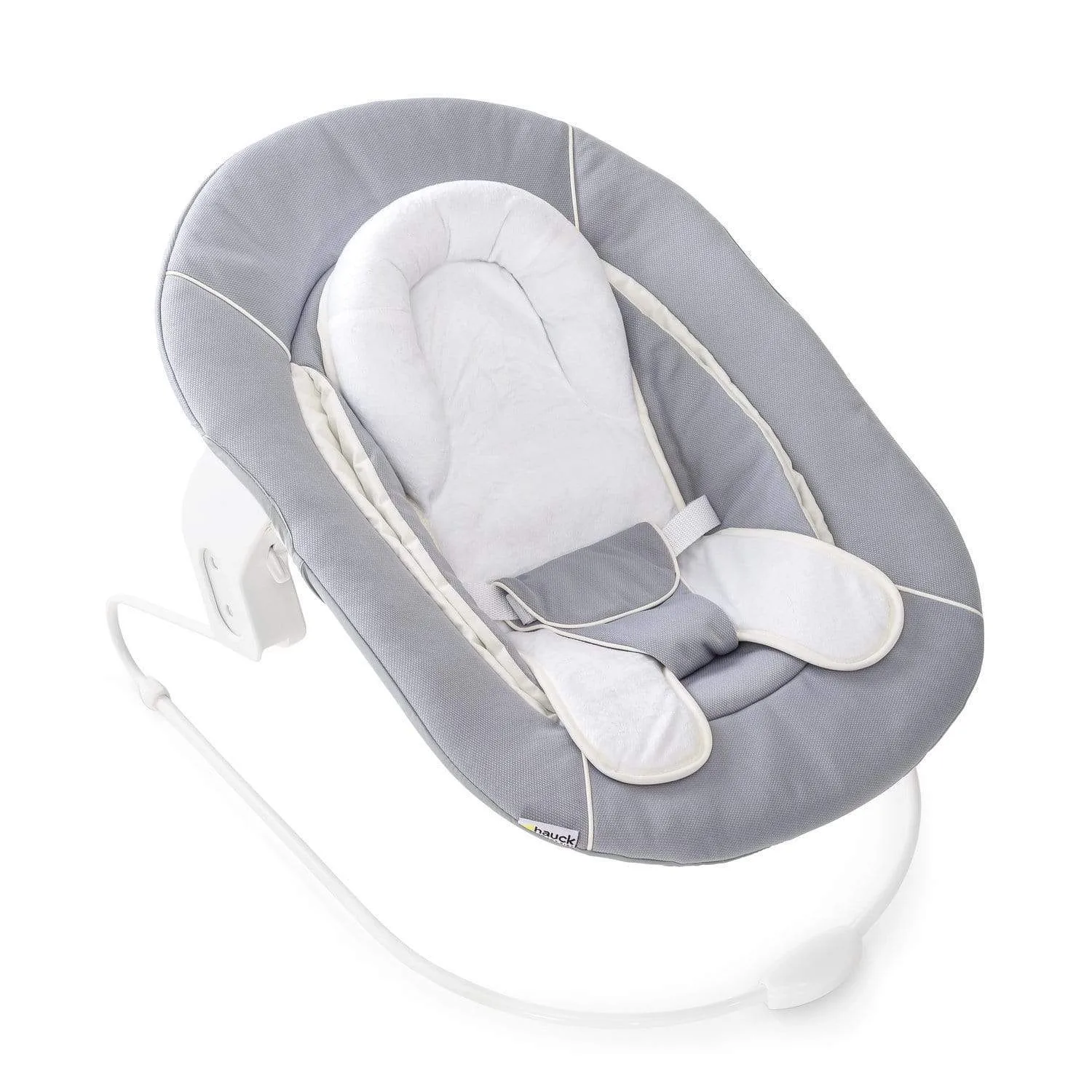
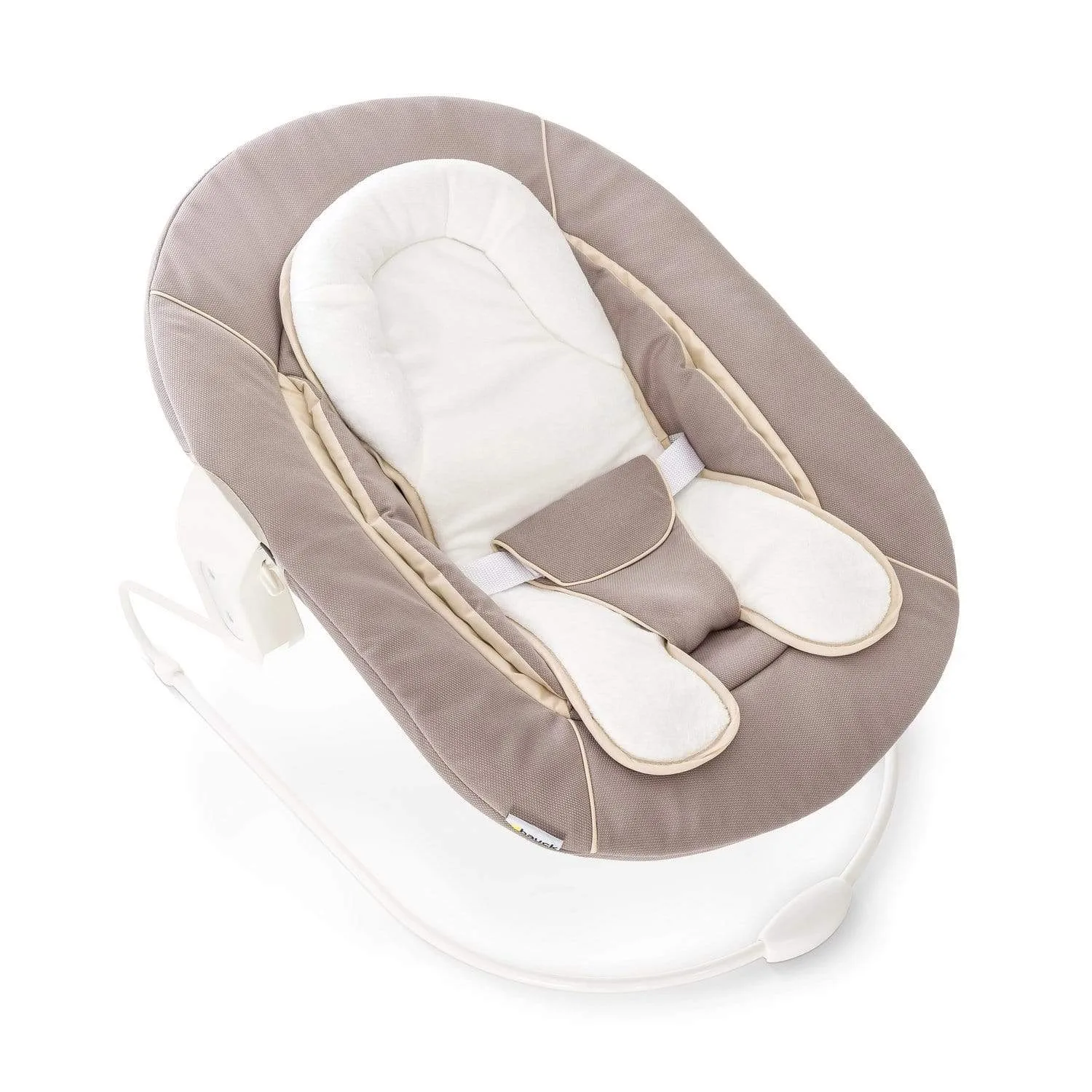
To use a baby bouncer safely at home, set it on a flat, stable floor, secure any attachment exactly as the manufacturer instructs, and keep your baby in the most reclined position that suits their age. Always follow the stated age and weight limits, never place the bouncer on a table or soft surface, and move your baby out once they can sit upright or try to climb out. For a newborn, a highchair-mounted option such as the Hauck Alpha Bouncer Deluxe can keep them safely at table level, but only when it is correctly fitted to a compatible highchair.
Why bouncer safety is about placement, not just the seat
Most bouncer incidents happen because of where the bouncer sits, not because the seat itself is faulty. A bouncer placed on a sofa, bed, or counter can tip or slide, and a bouncer on a high surface creates a fall risk. Keep it on the floor, away from stairs, radiators, cables, and anything a toddler sibling might pull.
A bouncer is a supervised awake-time product, not a sleep space. If your baby falls asleep in it, move them to a firm, flat sleep surface. This is one of the most important baby bouncer safety tips because it applies to every bouncer, including highchair-mounted models.
Check the age and weight limits before the first use
Bouncer age and weight limits vary by model, so read the label rather than assuming. The Hauck Alpha Bouncer Deluxe is designed for newborns up to approximately 9 months and a maximum of 9 kg, and it is intended as a highchair attachment rather than a floor-standing bouncer. That matters: a highchair-mounted bouncer must be fitted to a compatible highchair, so check your highchair model before buying.
If your baby is close to the upper weight limit, or already pushing up and trying to sit, the bouncer is no longer the right place for them. When to stop using a bouncer is usually earlier than parents expect, and it is safer to switch to a floor seat or play mat than to stretch the limit.
Set up and position the bouncer correctly
Follow the assembly instructions for your exact model. For a highchair attachment, that means locking it onto the compatible highchair frame exactly as described, then testing it with a gentle push before your baby goes in. For a floor bouncer, check that all legs or base parts are fully clicked into place and that the frame does not rock when nudged.
Use the baby bouncer position guide in your manual to choose the recline. Newborns need a flatter, more reclined position to support their head and neck, while older babies can use a more upright setting. If the bouncer has a seat reducer or newborn insert, use it only while your baby fits it properly, and remove it once they outgrow it.
Supervise every session and keep sessions short
Stay within arm's reach whenever your baby is in the bouncer. Bouncers are not a substitute for a cot, a playpen, or your attention, and they should not be used for long stretches. Short, supervised sessions are easier on your baby's posture and give you a chance to spot any discomfort.
If your baby slumps forward, seems uncomfortable, or tries to twist out, take them out straight away. A bouncer that no longer fits your baby's stage is a sign to move on, not to add extra padding.
Your six-step bouncer safety routine
- 1. Read the label before the first use: Find the age and weight limits for your exact model and note them. For the Hauck Alpha Bouncer Deluxe, that is up to approximately 9 months and a maximum of 9 kg. Checkpoint: if your baby is near either limit, plan the next stage now.
- 2. Assemble and test the bouncer: Follow the manual for your model. For a highchair attachment, lock it onto the compatible highchair frame and give it a gentle push to confirm it is secure before your baby goes in. Checkpoint: no wobble, no half-clicked parts, no improvised fittings.
- 3. Choose a safe spot on the floor: Place the bouncer on a flat, stable floor away from stairs, radiators, cables, and pets or toddler siblings. Never put it on a table, sofa, or bed. Checkpoint: if you would not put a car seat there, do not put a bouncer there.
- 4. Set the recline for your baby's stage: Use the position guide in your manual. Newborns need a flatter recline for head and neck support; older babies can use a more upright setting. Use the seat reducer only while it fits properly. Checkpoint: if your baby slumps forward, the position is wrong for their age.
- 5. Stay within arm's reach the whole time: Keep sessions short and supervised, and move your baby to a firm, flat sleep surface if they fall asleep. A pacifier such as the BIBS Colour Pacifiers 2 Pack can help settle a fussy baby during a session. Checkpoint: a bouncer is for awake, supervised time only.
- 6. Stop using the bouncer at the right time: Move your baby out once they reach the weight limit, can sit upright, or try to climb or twist out. When to stop using a bouncer is usually earlier than the maximum age on the label. Checkpoint: if your baby is trying to escape, the bouncer has done its job.
Product facts that affect safe use
- Hauck Alpha Bouncer Deluxe - Sand: The Hauck Alpha Bouncer Deluxe is a highchair attachment that secures to the hauck Alpha+ or Beta+ highchair and is suitable up to approximately 9 months and a maximum of 9 kg. It is not a floor bouncer, so safe use depends on correct attachment to a compatible highchair and on staying within the stated weight and age range.
- BIBS Colour Pacifiers 2 Pack (Size 1) - Iron/Baby Blue: The BIBS Colour Pacifiers 2 Pack (Size 1) uses a natural rubber latex nipple with a valve that lets air out when the baby closes down on it, and a round lightweight shield designed to sit away from the skin around the mouth. If your baby is unsettled in the bouncer, a well-fitting pacifier can help calm them during a short supervised session, but it does not replace supervision or a safe sleep surface.