Quick answer
Start with floor-level seated play on the curved board, then progress to supported standing and gentle rocking to safely build your toddler's balance and body control.
Why a curved wooden board works for toddlers
Unlike flat balance beams or static toys, a curved balance board challenges a child's core and leg muscles in a gentle, forgiving way. The board rocks only as far as the child pushes it, which builds confidence naturally. For toddlers who are still developing body awareness, this low-risk instability is ideal because it lets them experience falling safely—usually just a step off the board onto the floor.
Choosing the right board for your child's size
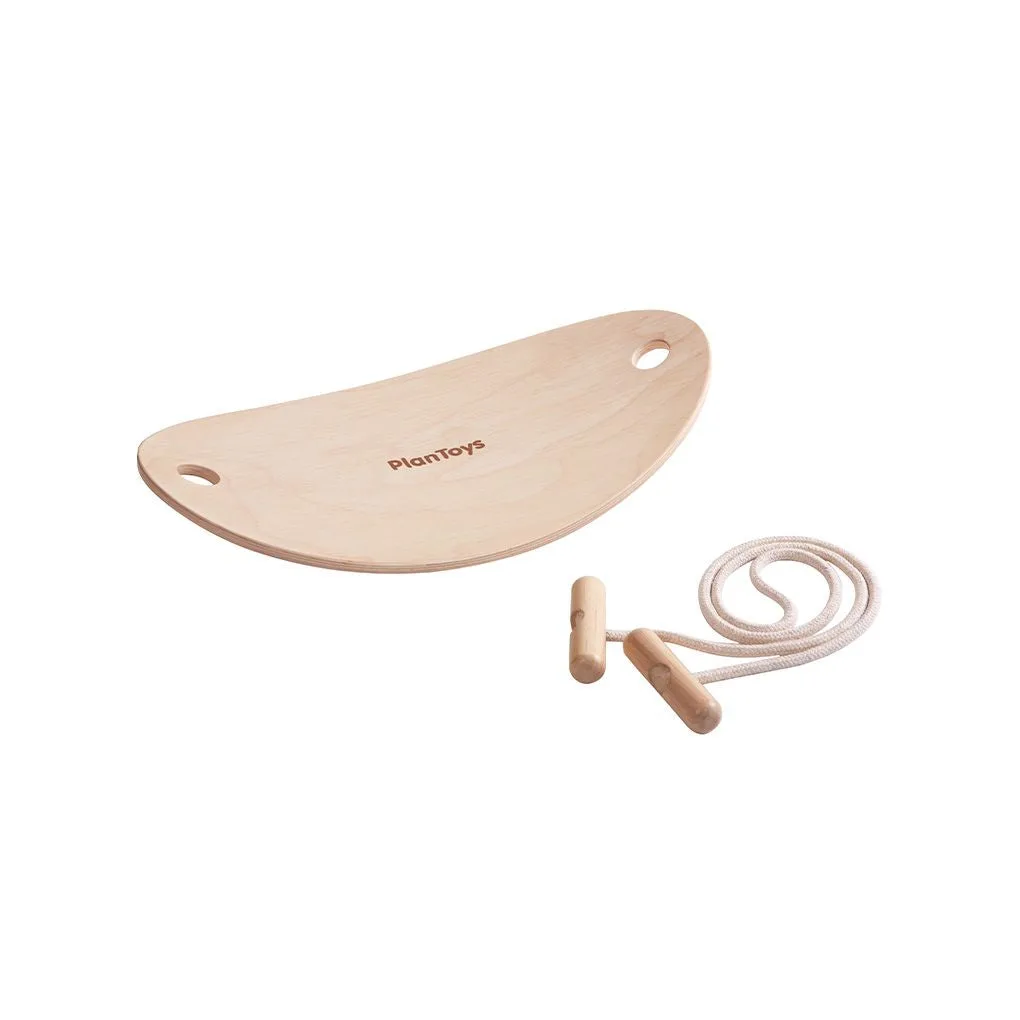
Most toddler balance boards are around 30 inches long and 12 inches wide, which suits children aged 18 months to 4 years. The PlanToys Balance Board, for example, uses a curved plywood design with a rope for added stability. If your child is on the smaller or larger side, watch for a board that lets them place both feet flat without stretching or crowding. A board that is too short or too narrow can frustrate early attempts.
Step-by-step balance board activities
- Step 1: Floor-level seated play: Place the board on a soft mat or carpet. Have your toddler sit on the curved side (like a rocking chair) while you hold the board steady. Let them rock gently back and forth with their feet on the floor. This builds familiarity with the board's movement without requiring standing balance. Keep sessions short (3-5 minutes) and stop if your child seems unsure—forcing can create fear.
- Step 2: Supported standing with the rope: Flip the board so the curve faces down. Hold one end of the rope and let your toddler hold the other. Guide them to place one foot on the board, then the other, while you keep the board stable. Once both feet are on, release the rope slowly and let them feel the slight wobble. Stay close enough to catch them, but let them find their own balance. A common mistake is holding the board too still—a tiny wobble teaches coordination.
- Step 3: Independent rocking and walking: Once your toddler can stand on the board for a few seconds without holding the rope, encourage them to shift weight from toes to heels to make the board rock. Next, ask them to take one small step forward along the board, then backward. This develops dynamic balance and body control. If they step off, that's fine—it means they recognized instability. Celebrate the attempt, not the duration.
Product details
-
Balance Board: This toy comes with a curved plywood board and rope that help children learn to balance by standing up, sitting down, rocking back and forth. The rope gives toddlers a stable handhold during early attempts, reducing fear and helping them learn the rocking motion safely.
Balance Board