Quick Answer
To use a compact riflescope for hunting, first mount it securely, then zero it at your typical shooting distance, and finally adjust the illumination and magnification for the hunting conditions.
Why Choose a Compact Riflescope for Hunting
A compact riflescope like the MT 1.2-6x24 is ideal for hunters who need a lightweight, low-profile optic that doesn't snag on brush. Its 1.2x low end gives a wide field of view for quick shots in thick cover, while 6x magnification provides enough reach for open-field shots up to 200 yards. The 30mm tube allows more light transmission than a 1-inch tube, which helps in low-light dawn or dusk conditions.
One trade-off is that compact scopes have smaller objective lenses (24mm in this case), which gather less light than larger 40mm or 50mm objectives. This means they are not the best choice for very low-light hunting or extreme long-range shooting. However, for most deer, hog, or varmint hunting inside 200 yards, the compact size and weight savings are a clear advantage.
Step-by-Step Guide to Using a Compact Rifle Scope
- 1. Mount the Scope Correctly: Use a compatible 30mm scope mount or rings. Position the scope so you have full eye relief (3.5-3.8 inches for the MT 1.2-6x24) and a comfortable cheek weld. Level the reticle using a bubble level, then torque the screws to the manufacturer's specification. Common mistake: mounting too far forward or backward, causing a poor sight picture or scope bite.
- 2. Zero the Scope at Your Typical Hunting Distance: Set the scope to its highest magnification (6x) for precise aiming. Fire a three-shot group at 100 yards (or your typical hunting range). Adjust windage and elevation turrets to center the point of impact. For close-range hunting, consider zeroing at 50 yards to simplify holdover. Checkpoint: After zeroing, confirm that the turret caps are tight and the adjustments are locked (if applicable).
- 3. Adjust Illumination for the Lighting Conditions: The MT 1.2-6x24 has a lever-controlled red and green illumination. In bright daylight, set the illumination to off or low to avoid washing out the target. At dawn or dusk, use a medium red setting for contrast against green foliage. Green illumination works well in snowy or overcast conditions. Common mistake: leaving illumination on high in bright light, which creates a glare and reduces target visibility.
- 4. Set Magnification for the Shot: For moving game in thick brush, use 1.2x to 3x magnification for a wide field of view. For stationary targets at longer range, dial up to 4x-6x. Practice transitioning between magnification settings smoothly so it becomes second nature in the field. Checkpoint: Before the hunt, confirm your magnification ring is not too stiff or too loose—adjust the ring tension if your scope allows.
- 5. Practice Shooting from Field Positions: Set up targets at various distances (25, 50, 100, 150 yards) and practice shooting from kneeling, sitting, and prone positions. This builds muscle memory for estimating holdover and compensating for the compact scope's shorter eye relief at higher magnification. Common mistake: only practicing from a bench rest, which doesn't prepare you for real hunting shots.
Product Highlight
-
MT1.2-6x24 Compact Riflescope for Hunting, 30mm Tube, Multi-Coated Lenses, Scope Mount Included: Fully multi-layer broadband coating ensures a clear sight picture, and the scope is fogproof and shockproof. This means you get a bright, clear image even in challenging weather, and the scope can withstand the recoil of hunting rifles without losing zero.
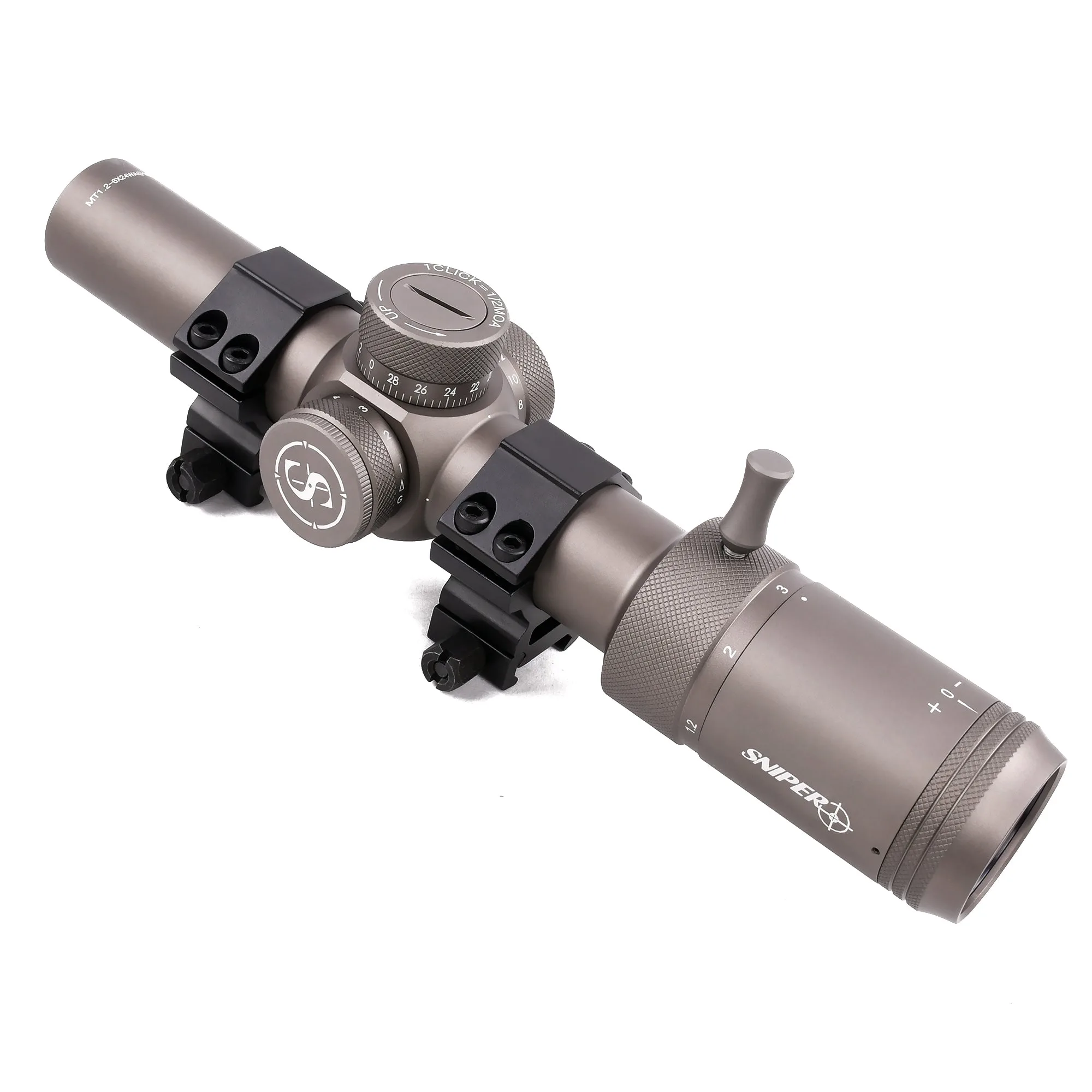
MT1.2-6x24 Compact Riflescope for Hunting, 30mm Tube, Multi-Coated Lenses, Scope Mount Included