Quick answer
Use a gag only with a partner who knows your limits, start with the smallest ball you can comfortably hold, and agree on a clear non-verbal stop signal before you begin. Check breathing and jaw comfort every few minutes, never leave a gagged person alone, and remove the gag at the first sign of numbness, panic or restricted breathing.
Choose a gag size and style that matches your experience
Ball gags are the most common starter style because the strap position is easy to adjust and the ball size is obvious. A smaller ball, roughly 1.5 inches across, lets you close your mouth less and breathe through your nose more easily; larger balls feel more restrictive and are usually better saved for later. If you are unsure, buy the smaller size first. A gag that is slightly too small is a minor annoyance, while one that is too large can cause jaw ache within minutes.
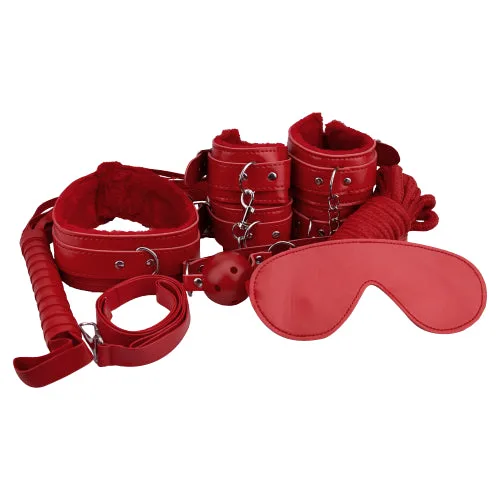
Silicone and rubber balls are firm but have a little give, while solid plastic or metal balls feel harder against the teeth. If you have a sensitive jaw or wear braces, a softer ball or a breathable style with holes is usually more comfortable. The Loving Joy Beginner's Bondage Kit Red (8 Piece) includes a breathable ball gag, which is a practical way to test whether you enjoy the sensation before buying a dedicated gag.
Set up your safety signals and partner check-ins
A gag removes speech, so you need a replacement signal before the gag goes in. Agree on a hand signal, a specific number of taps, or a small bell or squeaky toy your partner can hold. The signal must be something you can do even when your hands are restrained, so test it first without the gag. If your hands will be cuffed, use a different signal such as a head shake or a dropped object.
Decide in advance how long you will wear the gag and what happens when that time is up. A timer is more reliable than memory during play. Your partner should stay within arm's reach the whole time and should never leave the room, even briefly, while the gag is in place.
Insert the gag slowly and check the strap tension
Place the ball against your lips and let your jaw relax before opening. Forcing a ball in when your jaw is tense is the most common cause of jaw pain. Once the ball is seated, fasten the strap so it sits snug against the corners of your mouth without pressing into your cheeks or pulling your head forward. You should be able to slide one finger under the strap.
A strap that is too tight causes pressure headaches and numbness; one that is too loose lets the ball shift and can trigger a gag reflex. Check the tension again after a few minutes, because straps can loosen as you move. If you feel pressure behind your ears or at the base of your skull, loosen the strap immediately.
Breathe through your nose and watch for warning signs
With a ball gag in place, nose breathing is your main airway, so clear your nose before you start and keep your head in a position that does not block your nostrils. If you have a cold, allergy flare-up or blocked nose, skip gag play that day. Breathing should feel easy and quiet; if you are sniffling, gasping or feeling lightheaded, the gag comes out.
Watch for these warning signs and remove the gag at the first one: numbness or tingling in the jaw or lips, a sharp pain in the jaw joint, a feeling of panic, dizziness, or any difficulty getting air through your nose. Drooling is normal and not a danger sign by itself, but it can make the strap slippery, so check the fit again after a few minutes.
Remove the gag correctly and give your jaw a rest
Unfasten the strap before you try to open your mouth, then let the ball slide out rather than pulling it. Pushing the ball out with your tongue while the strap is still tight strains the jaw. After removal, close your mouth gently, swallow, and take a few slow breaths through both your nose and mouth.
Your jaw may feel tired or slightly stiff for a few minutes. That is normal, but lingering pain, clicking or numbness is not. Give your jaw at least a day to recover before wearing a gag again, and mention any recurring discomfort to a doctor or dentist if it does not settle.
Step-by-step safe gag routine
- Agree on a non-verbal stop signal: Choose a hand tap, head shake or dropped object that works even with restrained hands, and test it before the gag goes in. No signal, no gag.
- Start with a small, breathable ball: A smaller ball lets you breathe through your nose more easily and reduces jaw strain; a breathable style adds airflow. If you are between sizes, choose the smaller one.
- Fasten the strap with one finger of slack: The strap should sit snug but not press into your cheeks; you should be able to slide one finger underneath. Recheck the strap after five minutes.
- Breathe through your nose and stay still for the first minute: Settle your breathing before any other play; if nose breathing feels blocked or strained, remove the gag. Lightheadedness means stop immediately.
- Check in every few minutes: Your partner should ask for your signal and look for jaw tension, drooling that loosens the strap, or changes in breathing. Set a timer so check-ins do not get forgotten.
- Remove the gag and rest your jaw: Unfasten the strap first, let the ball slide out, then breathe slowly through nose and mouth. Wait at least a day before gag play again.
Product facts that help with safe gag use
- Loving Joy Beginner's Bondage Kit Red (8 Piece): This 8-piece kit includes a breathable ball gag along with handcuffs, ankle cuffs, a collar, leash, blindfold, whip and rope. A breathable gag is a sensible first gag because it allows more airflow than a solid ball, and the kit lets you practise signals and strap fit before investing in a single premium gag.