Quick answer
Fold your suit jacket inside out at the shoulders, place it in a garment sleeve with the collar at the top, and secure the sleeve so the suit cannot shift. Carry the sleeve flat or on top of your luggage rather than checking it. This keeps the jacket's structure intact and minimizes creases on a business trip.
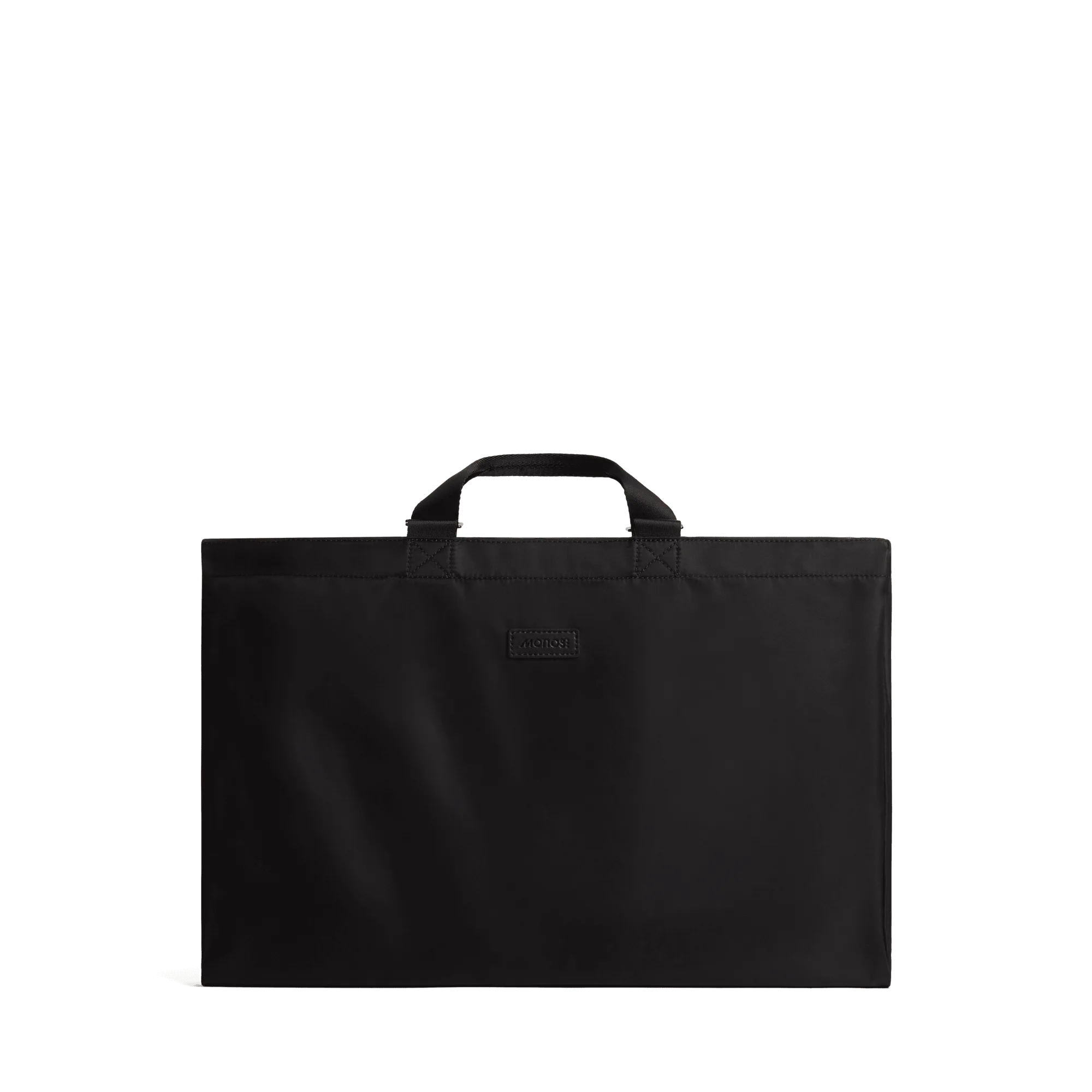
garment sleeve
A garment sleeve is the simplest way to move a suit from your closet to a meeting without pressing it twice. The trick is not the sleeve itself but how you fold and load the suit inside it.
This guide walks through the exact steps for packing a suit for a business trip, plus the checkpoints that separate a wrinkle-free arrival from a rushed hotel ironing session.
Prep the suit before it goes near the sleeve
Empty every pocket, including the inside breast pocket, and button the jacket once so the front panels stay aligned. Brush off lint and hang the suit for a few minutes so any creases from wearing it can relax before you fold it.
If you are packing trousers, fold them along the existing front and back creases rather than creating new ones. A quick steam or hang in the bathroom while you shower can remove light wrinkles before packing, which means less to fix on arrival.
- Checkpoint: no pens, receipts, or bulky items left in pockets that could press ridges into the fabric.
Fold the jacket for a garment sleeve
Turn one shoulder of the jacket inside out and tuck it into the other shoulder so the two fronts nest together. This distributes the bulk at the shoulders, which is the part of a suit that creases most stubbornly.
Fold the jacket in half vertically so the lining faces outward, then fold the sleeves back along their natural bend. The goal is to keep the collar and lapels as flat as possible while reducing the jacket to the width of your sleeve.
- Common mistake: folding the jacket in thirds, which puts a hard crease across the chest panel.
Load the sleeve so the suit cannot shift
Place the folded jacket into the garment sleeve with the collar at the top and the folded edge at the bottom. Add trousers behind the jacket, aligned with the same fold line, so both pieces move as one unit.
Use the sleeve's internal straps or compression points to hold the suit in place. If your sleeve has no straps, a soft packing cube or rolled belt at the bottom can stop the suit from sliding during transit.
- Checkpoint: lift the sleeve and tilt it. If the suit shifts more than an inch, tighten or repack before you leave.
Carry it on board and unpack correctly
A garment sleeve is designed to be carried, not checked. Keep it flat in an overhead bin or lay it on top of your rolling luggage so nothing heavy presses against the suit.
At the hotel, hang the jacket and trousers immediately and let them relax for 20 to 30 minutes before you assess wrinkles. Light creases often fall out on their own; only steam what remains.
- Common mistake: leaving the suit in the sleeve overnight, which traps folds instead of letting them release.
Business trip garment sleeve steps
- 1. Empty and button the jacket: Remove everything from the pockets and button the jacket once so the front panels stay aligned before folding. Checkpoint: no bulk in the pockets means no pressed ridges on the fabric.
- 2. Nest the shoulders: Turn one shoulder inside out and tuck it into the other so the jacket folds at its natural shoulder line. This is the single step that prevents the worst shoulder creases.
- 3. Fold in half, sleeves back: Fold the jacket vertically so the lining faces out, then fold the sleeves along their natural bend. Avoid folding in thirds, which creases the chest panel.
- 4. Add trousers behind the jacket: Fold trousers along their existing creases and place them behind the jacket so both pieces move together. Aligning the folds keeps the suit from shifting inside the sleeve.
- 5. Secure the load: Use internal straps or a soft filler at the bottom to hold the suit in place inside the sleeve. Checkpoint: tilt the sleeve; if the suit slides more than an inch, tighten it.
- 6. Carry on and unpack on arrival: Keep the sleeve flat in the overhead bin or on top of your bag, then hang the suit immediately at the hotel. Let the suit relax 20 to 30 minutes before deciding whether it needs steam.
Monos gear that supports this routine
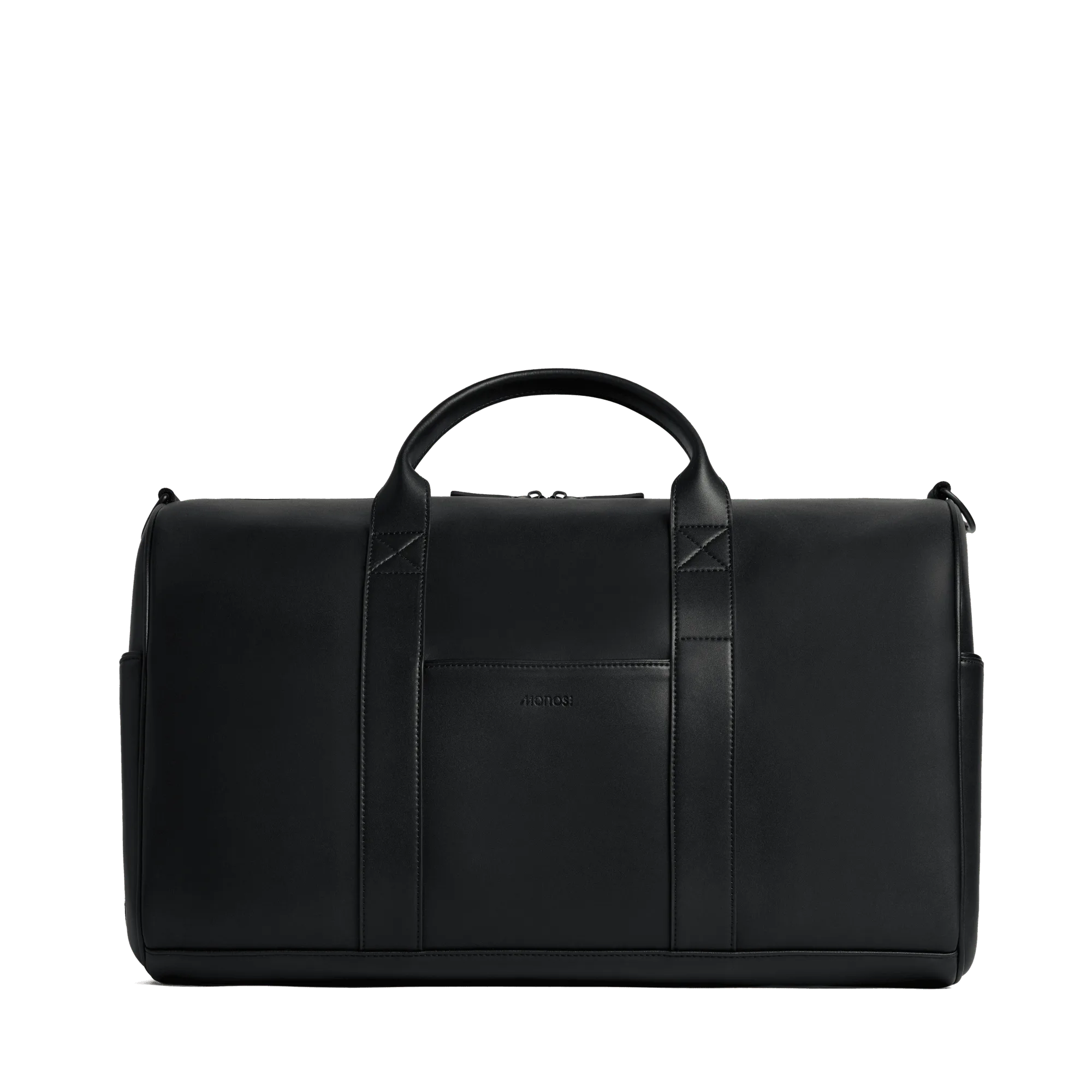
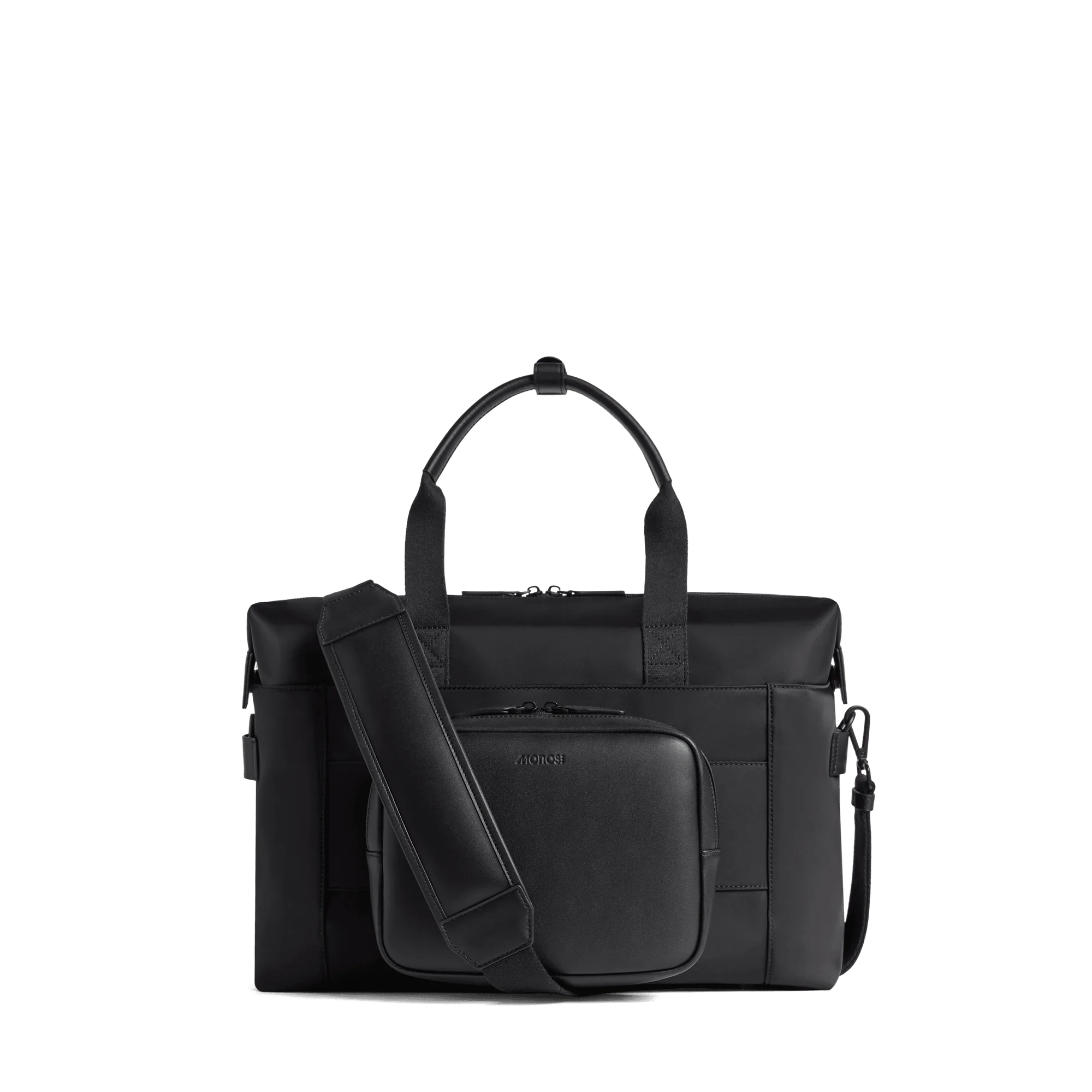
- Metro Carry-All Duffel: Crafted from ultra-microfibre vegan leather with a roomy main compartment, tech sleeve, and a size that fits into overhead bins as a carry-on. A duffel you can carry on board gives you a place to lay a garment sleeve flat on top of your bag instead of checking it.
- Metro Duffel: Made in premium nylon twill or ultra-microfibre vegan leather, both water and scratch-resistant, with a 15-inch laptop compartment and magnetic snaps under the main zipper. Water and scratch resistance protects a suit from weather and abrasion, and the magnetic opening makes it easier to slide a sleeve in and out without repacking.
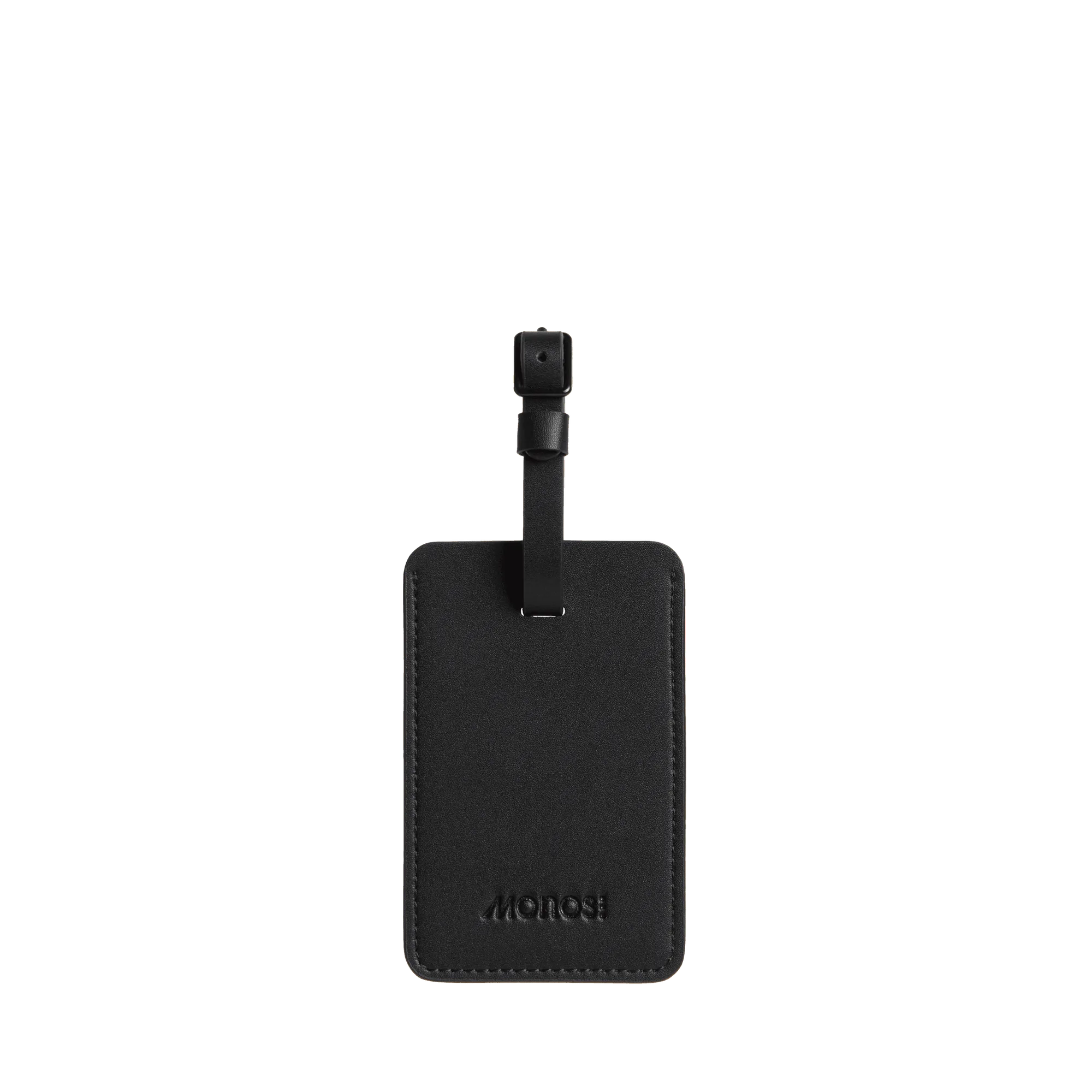
- Monos × Reformation Luggage Tag: Crafted from 100% deadstock leather in rich butterscotch, designed to travel with you and ensure your belongings arrive with you. If you ever gate-check a bag, a durable tag makes your luggage easier to identify and less likely to be lost.
A garment sleeve only works when the suit inside it is folded and secured with intent. Follow these steps, carry it on board, and unpack first thing, and your suit will be ready to wear without a detour to the iron.