Quick answer
To use a gimbal head for wildlife photography, mount it on a sturdy tripod, balance your camera and telephoto lens on the height-adjustable platform, then pan smoothly using the elevated tilt mechanism.
Why a gimbal head helps with heavy telephoto lenses
Standard ball heads struggle to hold large telephoto lenses steady, especially when panning to follow moving wildlife. A gimbal head's design keeps the lens's centre of gravity aligned with the tilt axis, reducing strain and enabling fluid motion. The Kenro Carbon Fibre Gimbal Head uses carbon fibre and aluminium to stay lightweight while supporting heavy DSLR setups.
Step-by-step gimbal head setup for wildlife photography
- Mount the gimbal head on a stable tripod: Attach the Kenro Carbon Fibre Gimbal Head to a tripod with a solid base. Ensure the tripod legs are spread wide and locked. A shaky tripod defeats the gimbal's purpose. Check that the tripod centre column is tight before attaching the head.
- Balance your camera and lens on the platform: Slide the camera and telephoto lens onto the height-adjustable platform. Adjust the platform height until the lens's centre of gravity aligns with the tilt axis. The head should stay level when you let go. If the head tilts forward or backward, readjust the platform height until it balances perfectly.
- Tighten the locking knobs securely: Lock the platform and tilt mechanism using the supplied knobs. Do not overtighten—just enough to prevent slippage. Over-tightening can restrict the smooth motion you need for panning. Leave a small amount of drag on the pan axis so the head resists sudden wind gusts.
- Pan smoothly to follow wildlife: With the gimbal head balanced, use your left hand under the lens barrel and your right hand on the camera grip to guide the pan. The elevated tilt mechanism lets you follow birds or animals in flight without jerky movements. Practice panning on a stationary target first to get a feel for the head's friction.
- Adjust the tilt angle for low or high subjects: For ground-level animals, loosen the tilt lock slightly and angle the head downward. For treetop birds, tilt upward. Re-tighten the lock once positioned. The gimbal head's design keeps the lens stable at any angle. Always re-check the balance after changing the tilt angle.
Product facts
-
Kenro Carbon Fibre Gimbal Head: The Kenro KENGHC1 Gimbal Tripod Head is manufactured in carbon fibre and aluminium and features an elevated tilt mechanism and height-adjustable platform. The carbon fibre construction keeps the head light enough for field use, while the adjustable platform lets you perfectly align the tilt axis with your lens's centre of gravity for smooth panning.
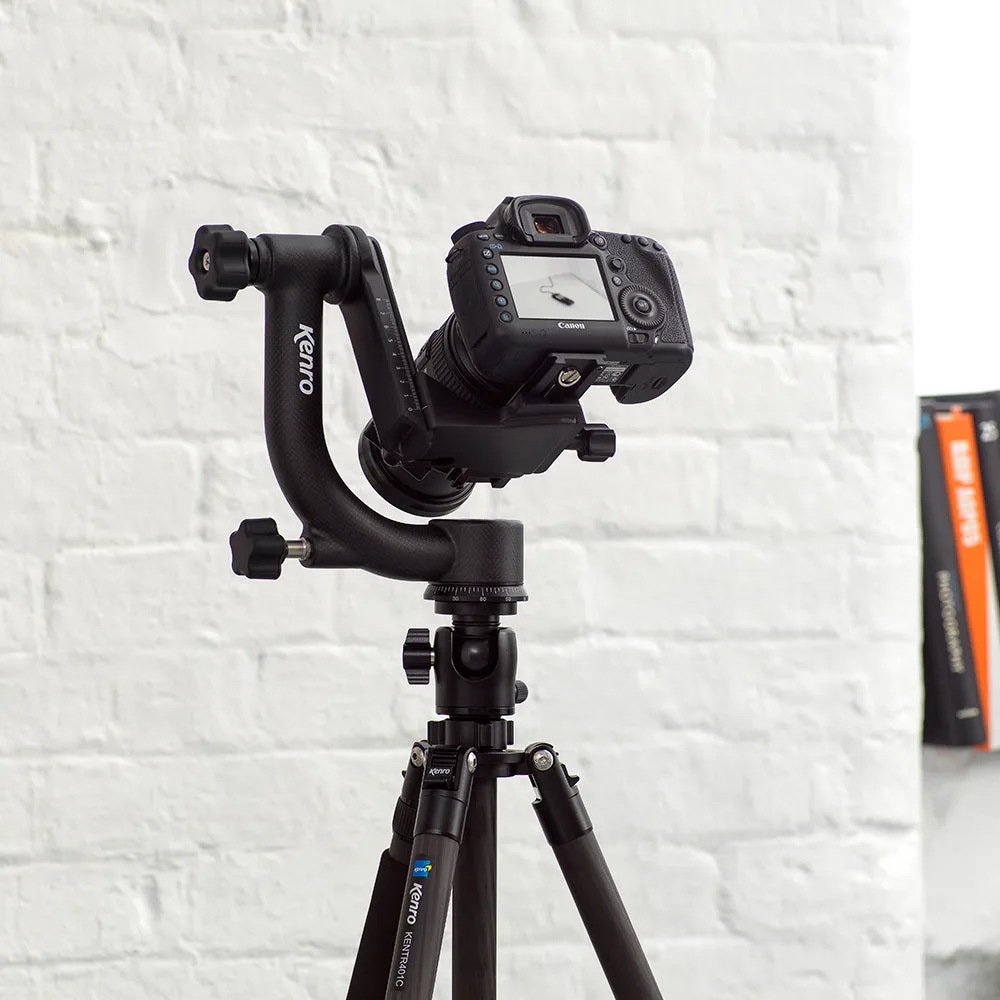
Kenro Carbon Fibre Gimbal Head