Quick answer
Fit the cover before you leave home, not at the airport. Slide it over the closed suitcase from the top, pull it down past the wheels, and secure every strap and zip. A snug cover protects against scratches and scuffs, but it must never block handles, wheels, or the telescopic trolley. Check the fit once, then leave it on for the whole trip.
A luggage cover is the simplest way to keep a hard shell looking new. It takes a few minutes to fit and can save you from the scratches, scuffs, and grime that come with conveyor belts and luggage holds. The catch is that a badly fitted cover causes more problems than it solves.
This guide walks through the full process: choosing the right cover, fitting it, securing it, and caring for it between trips. Every step includes the one mistake that most often undoes the work. If you travel with a hard suitcase, these habits will keep the shell protected and the cover usable for years.
Why a luggage cover is worth the effort
Hard shells resist impact, but they still pick up scratches, scuffs, and dark marks from belts and bins. A cover adds a sacrificial layer that takes the damage instead. It also keeps dirt and grease off the shell, which means less cleaning when you get home. For anyone who checks a bag regularly, that protection adds up.
Covers are not just about appearance. A distinctive cover makes your suitcase easier to spot on a crowded carousel, and it can hide the wear that makes older luggage look tired. The tradeoff is real: a cover adds a little bulk and must be removed for some airline handling. Weigh that against how much you value a clean shell.
- Best for checked hard suitcases that see frequent handling
- Less useful for bags that stay in the cabin
- A cover never replaces a luggage tag with your contact details
Check the cover fits before you travel
Suitcase covers are sized to shell dimensions, not to volume. Measure the height, width, and depth of your closed case, then compare those numbers with the cover's stated range. A cover that is too small will strain at the seams; one that is too large will shift and snag. If you own a set, check each case separately because covers rarely fit more than one size well.
Pay attention to handle and wheel cutouts. The cover must leave the top handle, side handle, and telescopic trolley fully accessible. If a cutout sits in the wrong place, you will fight the cover every time you lift the bag. Test the fit at home with the case packed, since a full suitcase is slightly wider than an empty one.
- Measure a packed case, not an empty one
- Confirm cutouts line up with handles and wheels
- Check the closure system before you buy
Fit the cover in the right order
Start with the suitcase closed, zipped, and standing upright. Slide the cover over the top first, then work it down over the corners. Pulling from the top keeps the fabric aligned and stops the cover from twisting. Once it reaches the wheels, check that the base sits evenly on both sides before you fasten anything.
Fasten the closure next. Depending on the design, that may be a zip, hook-and-loop strips, or elastic edging. Work from the base upward so the cover stays centered. Then open the handle cutouts and pull the handles through one at a time. Do not force a handle through a tight opening; if it will not pass cleanly, the cover is the wrong size or orientation.
- Fit the cover before the suitcase is packed into a car or taxi
- Keep the case upright while you pull the cover down
- Fasten the base before adjusting the top
Secure straps, zips, and tags
Loose straps are the main reason covers come off in transit. Run every strap through its buckle and pull it snug, then tuck the tail end under the strap rather than letting it hang. If the cover has a bottom zip, close it fully and check that no fabric is caught in the teeth. A cover that flaps will wear quickly and may catch on conveyor machinery.
Attach your identification to the suitcase itself, not only to the cover. A luggage tag fixed to the case handle stays with your bag even if the cover shifts or is removed. Adding a second tag to the cover is fine as a backup, but the primary tag should be on the bag. This is the step people skip, and it is the one that matters most if a bag goes missing.
- Tuck strap tails so nothing hangs loose
- Put the main luggage tag on the suitcase handle
- Photograph the closed setup before you check the bag
Handle the cover at the airport and in transit
Most airlines accept covers on checked bags, but security screening can require removal. Keep the cover easy to take off and refit: unfasten the base, lift the case out, and reverse the process afterward. If a cover has to come off, fold it flat and place it in an outer pocket so it does not get lost among your belongings.
At the carousel, lift the suitcase by its handles, not by the cover. The cover is a protective layer, not a load-bearing one. If the cover has shifted during the flight, refit it before you leave the airport rather than dragging a half-open cover through the terminal. A quick check takes seconds and prevents further damage.
- Be ready to remove the cover for screening
- Store a removed cover flat in an outer pocket
- Lift by the suitcase handles, never the cover
Clean and store the cover between trips
Wipe the cover with a damp cloth after each trip to remove grit and belt residue. Most covers are designed for surface cleaning rather than machine washing, so check the care instructions before you do anything more aggressive. Let the cover dry fully before folding it; damp fabric stored in a cupboard can develop odors or mildew.
Store the cover flat or loosely rolled, not compressed under heavy bags. Folds that set over months can crack coated fabrics and weaken seams. Before your next trip, unfold the cover and check the straps, zips, and seams for wear. Replacing a cheap cover is far easier than repairing or replacing a scratched suitcase shell.
- Wipe after every trip, dry fully before storage
- Store flat or loosely rolled
- Inspect straps and zips before each trip
The seven-step cover routine
- Measure a packed suitcase: Record height, width, and depth with the case full, then match those numbers to the cover's stated range. Common mistake: measuring an empty case, which is narrower than a packed one.
- Test handle and wheel cutouts: Set the cover on the case and confirm the top handle, side handle, and trolley all pass through cleanly. If a handle will not pass, stop and change size rather than forcing it.
- Slide the cover on from the top: With the case closed and upright, pull the cover down over the corners until it reaches the wheels. Checkpoint: the base should sit evenly on both sides before you fasten anything.
- Fasten the base closure first: Close the zip, hook-and-loop strips, or elastic edging from the bottom up to keep the cover centered. Common mistake: fastening the top first, which pulls the cover off-center.
- Snug every strap and tuck the tails: Run straps through their buckles, pull them firm, and tuck loose ends under the strap. Loose straps are the leading cause of covers coming off in transit.
- Attach the main tag to the suitcase: Fix your contact details to the case handle, then add a second tag to the cover only as a backup. This is the step most people skip and the one that matters most.
- Remove, clean, and store after the trip: Wipe the cover with a damp cloth, let it dry fully, then store it flat or loosely rolled. Inspect straps and zips before the next trip so a small failure does not become a lost cover.
Products that pair well with a covered suitcase
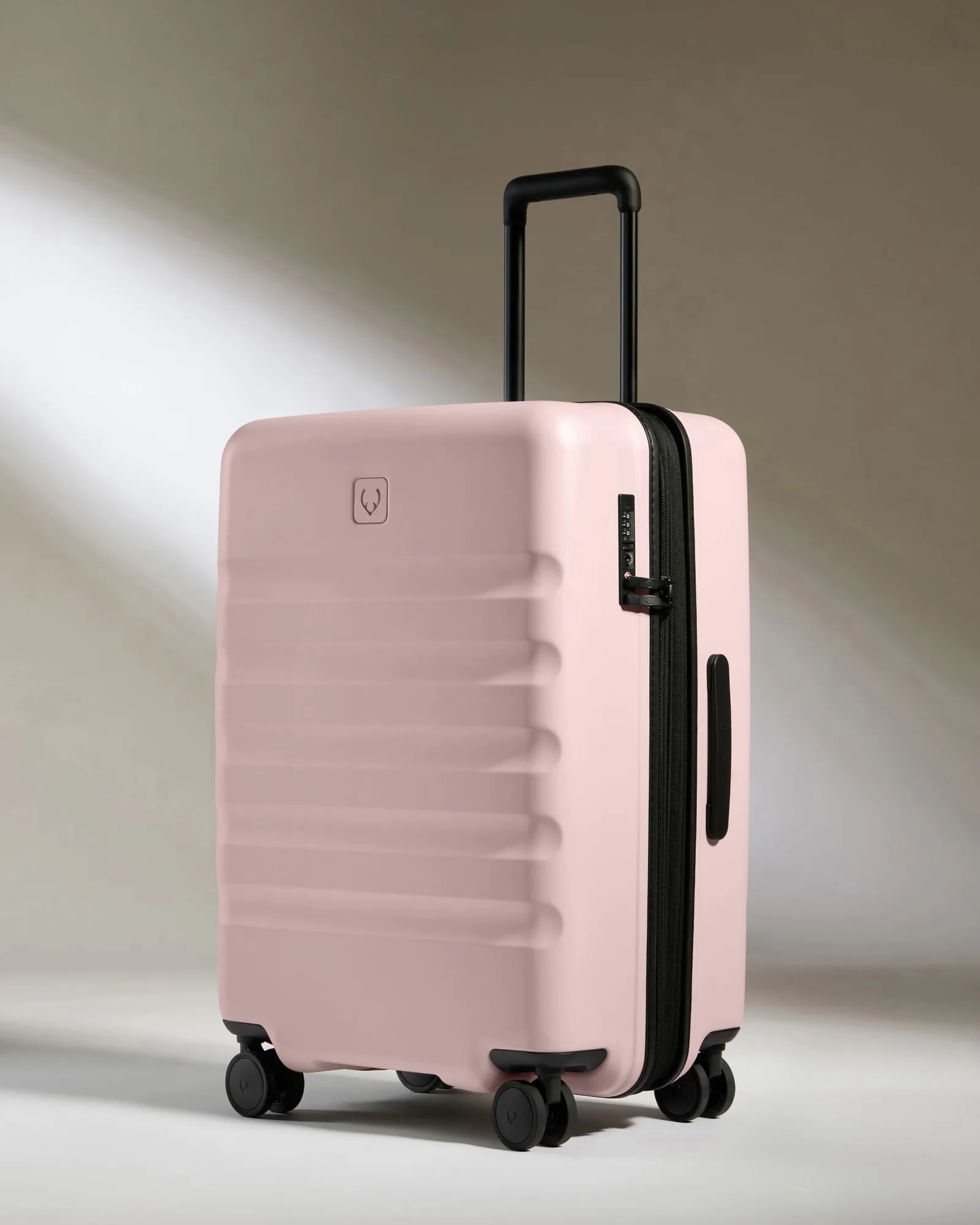
- Medium Luggage in Moorland Pink - Icon Stripe: Crafted from recycled polycarbonate with a hardwearing shell, sized for trips of roughly 2-7 days. A hard shell is exactly the surface a cover protects, and the 2-7 day size is the one most travelers check, so the cover earns its keep on the majority of trips.
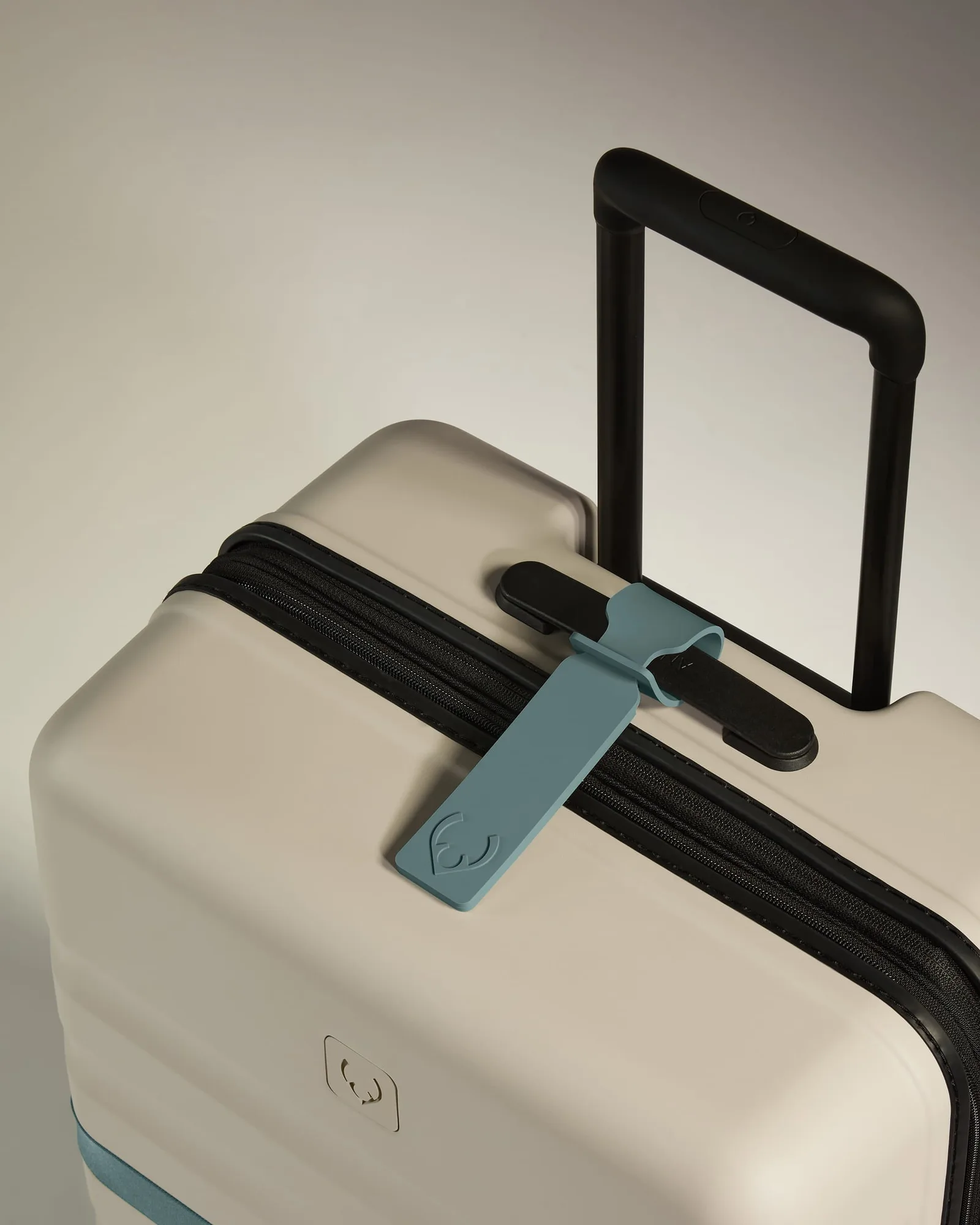
- Luggage Tag in Glade Blue: Made from strong, durable rubber and designed to complement Antler suitcases in a range of colors. A tag on the suitcase handle keeps your contact details with the bag even when the cover is removed for screening or cleaning.
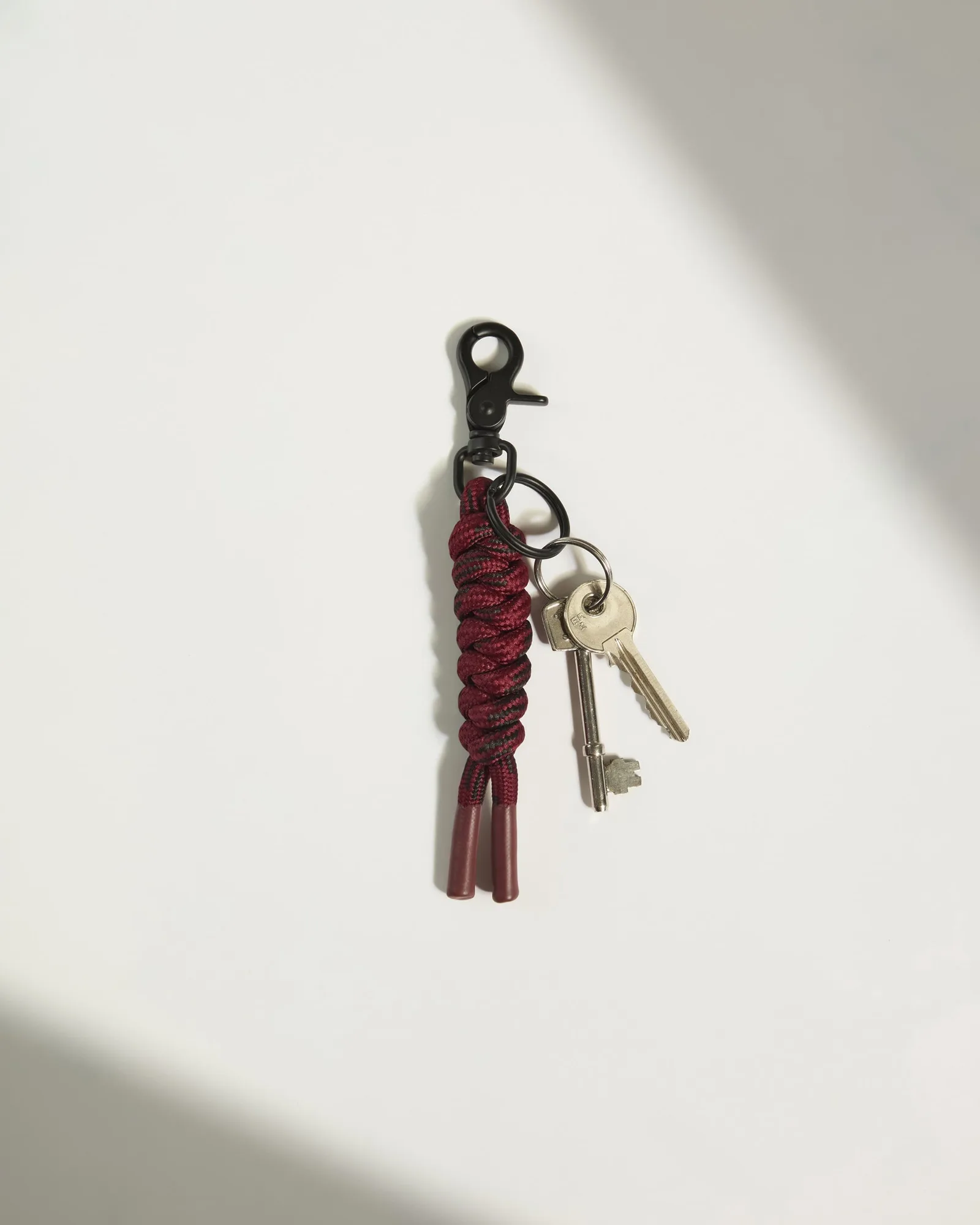
- Discovery Keyring in Cedar Red: Features a chunky cord design with rubber-dipped ends and an extra loop for attaching additional items. Clipping a keyring to an outer pocket or strap gives you a quick grab point and keeps small essentials reachable without opening the case.
A luggage cover only works when it fits, fastens, and stays put. Follow the seven steps above, keep your main tag on the suitcase itself, and clean the cover after every trip. Done consistently, that routine keeps a hard shell protected and looking newer for far longer.