Quick answer
To use a nebulizer compressor at home, assemble the tubing, medication cup, and mouthpiece or mask, add the prescribed liquid medication, and run the compressor until the mist stops. Clean all parts after each use to prevent infection.
Why a powerful compressor matters for thick medications
Standard nebulizer compressors may struggle to aerosolize thick or viscous respiratory medications, leading to longer treatment times and incomplete dosing. A high-pressure unit like the Heavy Duty 50 PSI Nebulizer Compressor delivers consistent output that handles both humidifying and nebulizing thick medications efficiently. This is especially important for patients using mucolytics or antibiotics that are more viscous than typical bronchodilators.
Common mistakes that reduce treatment effectiveness
Many users skip the cleaning step or leave medication residue in the cup, which can clog the nebulizer and reduce mist output. Others use the wrong compressor pressure or fail to replace worn tubing. Always check that the compressor is on a flat, stable surface and that the air filter is clean before each session.
Step-by-step guide to using a nebulizer compressor
- 1. Set up the equipment: Place the compressor on a hard, flat surface near an electrical outlet. Connect one end of the air tubing to the compressor outlet and the other end to the bottom of the medication cup. Attach the mouthpiece or mask to the top of the cup. Common mistake: Using a bent or kinked tube reduces airflow. Always inspect the tubing for damage before connecting.
- 2. Add the medication: Open the medication cup and pour in the exact amount of liquid medication prescribed by your doctor. Do not overfill. Close the cup securely. Checkpoint: If your medication comes in a single-dose vial, use the entire contents. Never mix different medications unless instructed by your healthcare provider.
- 3. Turn on the compressor: Plug the compressor into the outlet and press the power switch. You should see a fine mist coming from the mouthpiece or mask within a few seconds. Sit upright in a comfortable chair and breathe normally through the mouthpiece or mask. Common mistake: Leaning back or talking during treatment can cause medication to escape. Keep the mouthpiece in your mouth or the mask sealed over your nose and mouth.
- 4. Continue until the mist sputters: Keep breathing the mist until the cup is nearly empty and the mist becomes irregular or stops. This usually takes 10–15 minutes depending on the compressor and medication volume. Checkpoint: If the mist stops but liquid remains, gently tap the cup to dislodge any droplets. Do not add more medication.
- 5. Clean all parts after each use: Disconnect the tubing and disassemble the medication cup, mouthpiece, and mask. Rinse them with warm water and mild soap, then air-dry on a clean towel. Wipe the compressor exterior with a damp cloth. Do not immerse the compressor in water. Common mistake: Leaving parts wet can breed bacteria. Ensure every piece is completely dry before reassembling for the next treatment.
- 6. Replace parts as needed: Replace the air filter every 6 months or sooner if it looks dirty. Change the tubing and medication cup every 3–6 months or according to the manufacturer's instructions. Checkpoint: A clogged filter or worn tubing reduces compressor efficiency. Mark your calendar for regular replacements.
Product spotlight
-
Heavy Duty 50 PSI Nebulizer Compressor: Drive Medical's Heavy Duty 50 PSI Nebulizer Compressor features upgraded vibration mounts, clamps, lock washers, and wire harnesses for durable, high-pressure output. This means it can reliably nebulize thick medications that lower-pressure compressors struggle with, reducing treatment time and ensuring consistent dosing.
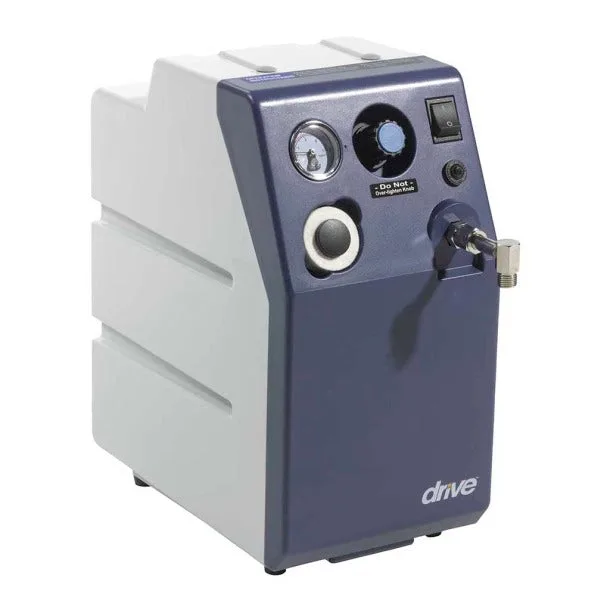
Heavy Duty 50 PSI Nebulizer Compressor