Quick answer
To use a net breeding box for fry, hang or float it inside your main tank, secure it so water flows through freely, and transfer the pregnant female or eggs before they hatch.
Why a net box beats a separate tank
A net breeding box keeps fry in the same water system as the main aquarium, so you don't need a separate filter or heater. The mesh walls allow constant water exchange, which maintains stable temperature and water quality. The trade-off is that fry are still exposed to any diseases or toxins in the main tank, so the parent tank must be healthy.
Choosing the right size and mesh
Pick a box large enough for the mother to turn around but fine enough mesh to prevent fry from escaping. The Hobby Nido 3.1 Net Breeding Box, for example, has a double floor that lets newborn fry drop through to safety below the mother. If the mesh is too coarse, fry can slip out; too fine, water flow may be restricted.
Step-by-step setup for fry survival
- Prepare the breeding box: Rinse the box in dechlorinated water. Attach the suction cups or hang hooks to the rim of your aquarium so the box sits about an inch below the water surface. Make sure the box is fully submerged so water flows through the mesh; a half-dry box traps fry in stale water.
- Transfer the pregnant female or eggs: Gently net the gravid female or carefully move eggs into the box. For livebearers, place the female in the box and watch for birth. For egg-layers, position eggs on the mesh or in the double floor area. Do not keep the female in the box for more than 24 hours after birth—she may eat the fry or stress them.
- Monitor water flow and feeding: Ensure the box is positioned where filter outflow or a gentle air stone creates water movement through the mesh. Feed fry powdered or liquid food in tiny amounts twice daily. Overfeeding fouls the small water volume inside the box; remove uneaten food after 5 minutes.
- Release fry at the right size: Keep fry in the box until they are too large to fit through the mesh and can outswim adult tankmates. For most species, this takes 2–4 weeks. Release fry during a water change when adults are less aggressive, and dim the lights to reduce stress.
Recommended product
-
Hobby Nido 3.1 Net Breeding Box: The Hobby Nido 3.1 has a double floor that allows fry to find refuge directly after birth and a removable partition in the middle. This design keeps newborn fry separated from the mother immediately, reducing the chance they get eaten while still sharing the same tank water.
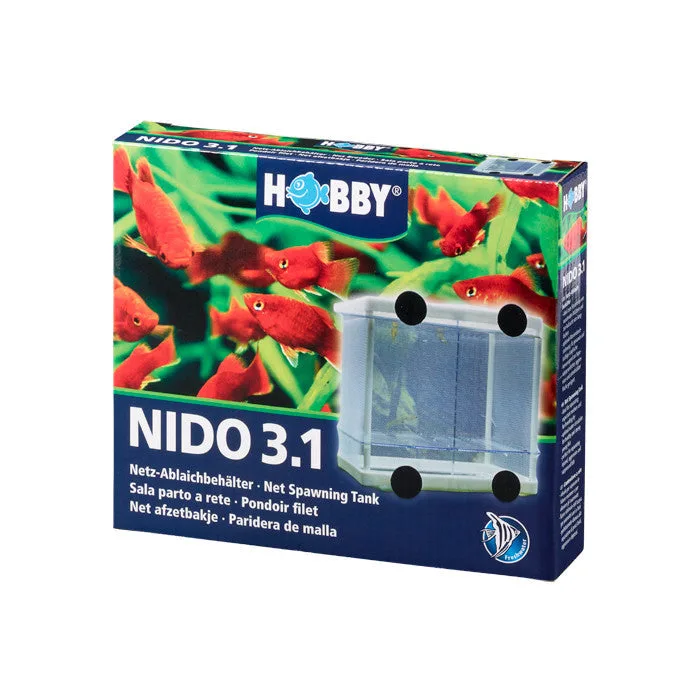
Hobby Nido 3.1 Net Breeding Box