Quick answer
Hold the paring knife with a pinch grip near the blade for control, and use short, precise strokes for peeling, trimming, and detail cuts. This method reduces slips and gives you clean results on small produce.
Why a paring knife works best for small tasks
A paring knife is designed for detail work. Its short, narrow blade lets you maneuver around curves and tight spots that a chef’s knife can’t reach. You get more control when peeling an apple or trimming a strawberry, and the blade tip makes precise cuts like removing eyes from a potato or deveining a shrimp.
The trade-off is reach. A paring knife can’t chop large vegetables or slice through a squash. For those jobs you need a larger blade. Stick with the paring knife for handheld tasks and small-batch prep.
Choosing the right grip
The standard grip is the pinch grip: pinch the blade just above the handle between your thumb and index finger, and wrap your other three fingers around the handle. This gives you fine motor control and keeps the blade from twisting in your hand.
For peeling, you can also use the handle grip (all fingers on the handle) if you prefer more wrist motion. Either way, keep your fingertips curled under the hand holding the food to avoid cutting yourself.
Step-by-step guide: Using a paring knife for small prep
- Step 1: Secure your grip: Hold the paring knife with a pinch grip near the blade. Keep your wrist straight and relaxed. Common mistake: gripping too far back on the handle reduces control. Keep your pinch close to the blade.
- Step 2: Position the food safely: Hold the item in your non-knife hand with fingertips curled inward. For round items like apples or potatoes, cut a small flat spot first so it sits steady. Checkpoint: if the food rolls or wobbles, stop and flatten one side before continuing.
- Step 3: Use short, controlled strokes: For peeling, draw the blade toward you in short strokes, letting the knife do the work. For trimming or hulling, use the tip to make small cuts away from your body. Common mistake: sawing back and forth can tear the skin. Use one smooth motion per stroke.
- Step 4: Clean as you go: Rinse the blade under warm water after sticky or acidic tasks to prevent residue buildup and maintain edge sharpness. Checkpoint: never leave a wet paring knife loose in a sink — dry it and put it away to prevent accidents.
Product spotlight
-
3.5" Paring Knife (ACUTO440: Our smallest prep knife for peeling, trimming, and precision cuts. Perfect for handheld tasks like hulling strawberries or slicing a peach. The 3.5-inch blade is nimble enough for one-handed work, and the pointed tip lets you start cuts exactly where you want them.
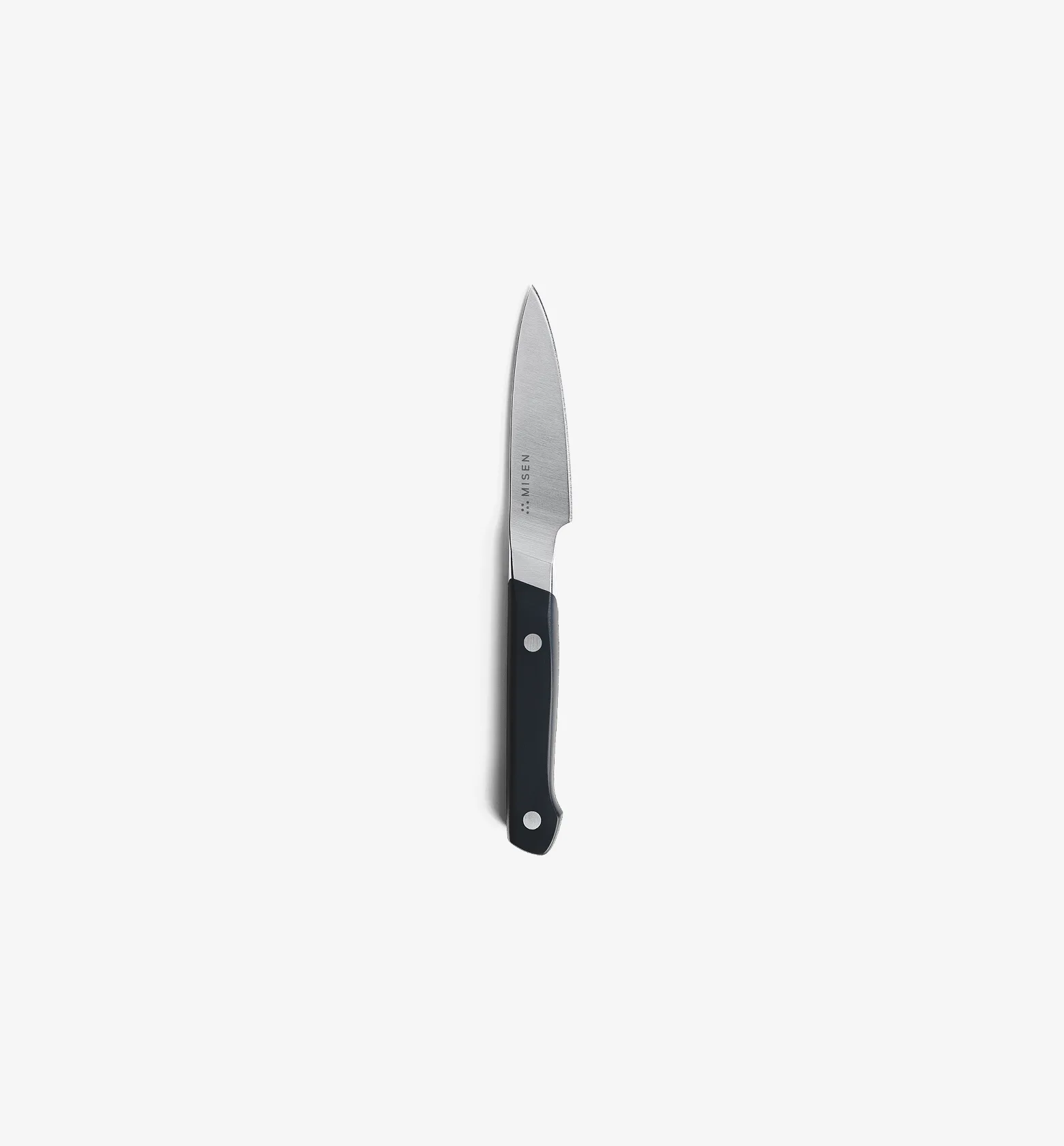
3.5" Paring Knife (ACUTO440