Quick answer
A receiving blanket is your most versatile newborn essential: use it for safe swaddling, as a burp cloth, changing pad, nursing cover, or tummy time mat. The key is learning the right folding technique for a snug, secure swaddle.
Why a receiving blanket works for swaddling
Receiving blankets are made from lightweight, breathable cotton muslin, which helps prevent overheating while still providing the snugness newborns need. Their square shape and generous size (27" x 27") make them ideal for folding into a secure swaddle wrap. Unlike larger swaddle blankets, this size is easier to manage for beginners.
Beyond swaddling: everyday uses
A receiving blanket isn't just for swaddling. Keep one in your diaper bag as a burp cloth or changing pad. Use it as a lightweight nursing cover, a clean surface for tummy time, or a soft security blanket. Having a 3-pack means you always have a clean one ready.
How to swaddle with a receiving blanket in 5 steps
- 1. Lay the blanket flat in a diamond shape: Spread the receiving blanket on a flat surface with one corner pointing up. Fold the top corner down about 6 inches to create a straight edge. Common mistake: folding too little or too much — aim for a fold that reaches just below your baby's shoulders.
- 2. Place your baby on the blanket: Lay your baby on their back with their neck resting on the folded edge. Their head should be above the fold, not covered by fabric. Safety checkpoint: always keep the blanket below the shoulders to avoid covering the face.
- 3. Wrap the left side across the body: Take the left corner of the blanket and pull it across your baby's chest, tucking it snugly under their right arm and behind their back. Check that the arm is straight at the side, not bent or trapped in an uncomfortable position.
- 4. Bring the bottom corner up: Fold the bottom corner of the blanket up over your baby's feet and tuck it loosely under the first fold. Leave enough room for hip movement. Common mistake: wrapping too tightly around the hips can increase the risk of hip dysplasia — keep legs slightly bent and able to move.
- 5. Wrap the right side across and secure: Take the remaining right corner and pull it across your baby's chest, tucking it under their left side. Ensure the blanket is snug but not tight. Final check: you should be able to slip two fingers between the blanket and your baby's chest. If not, it's too tight.
Product spotlight
-
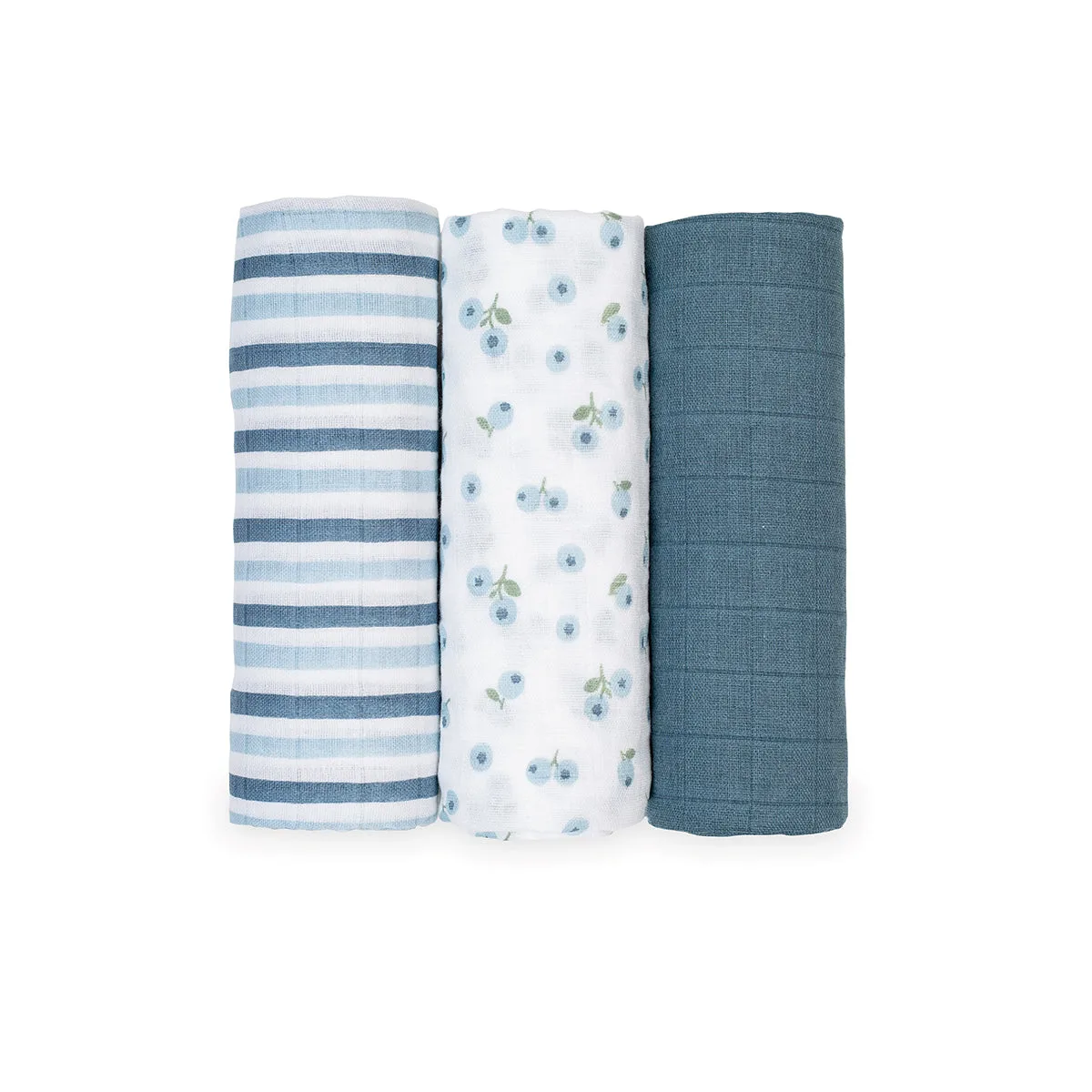
Receiving Blanket- 3 Pack: Set of 3 muslin receiving blankets, each 27" x 27", made from soft, breathable cotton muslin. The breathable fabric reduces overheating risk during swaddling, and the 3-pack gives you backups for burp cloths, changing pads, or nursery decor.
Receiving Blanket- 3 Pack