Quick answer
Use the Stripology Quilting Case to keep your rotary cutter, rulers, and project pieces organized and protected while traveling. Its hard shell and thoughtful interior make it ideal for quilting on the go.
Why a dedicated quilting case matters for travel
Tossing quilting tools into a regular bag can lead to bent rulers, dull blades, and lost pieces. The Stripology Quilting Case is a hard shell case designed by quilters, so it holds your essentials securely and keeps them accessible wherever you go.
What fits best inside the case
The case is built to accommodate Stripology rulers, a rotary cutter, small scissors, marking tools, and a few fat quarters or pre-cut strips. Its interior layout prevents items from shifting during transit, which is a common frustration with soft-sided bags.
Step-by-step guide to packing your Stripology Quilting Case for travel
- 1. Gather your travel quilting essentials: Collect the items you'll actually use during your trip: your Stripology ruler, rotary cutter with a fresh blade, a small cutting mat, scissors, seam ripper, needles, thread, and the fabric pieces you plan to work on. Avoid overpacking — the case is designed to keep essentials at your fingertips, not to hold your entire stash. Common mistake: packing too much fabric or too many tools, which makes the case heavy and harder to close properly.
- 2. Place heavy and flat items at the bottom: Lay your cutting mat (if it fits) and larger rulers flat in the main compartment first. The hard shell protects them from bending, but placing them at the bottom keeps the weight balanced and prevents smaller items from pressing against the rulers during travel. Checkpoint: ensure rulers are fully inside the case and not poking out — the zipper should close smoothly without force.
- 3. Organize tools in the interior pockets and straps: Use the built-in straps and pockets to secure your rotary cutter, scissors, and marking tools. Keep the blade guard on your cutter and store it with the blade pointing down or in a dedicated slot. This prevents accidental cuts when you reach inside. Common mistake: leaving the blade guard off or tossing loose tools into the main compartment where they can shift and damage fabric or other items.
- 4. Add fabric and small notions in the top layer: Fold your fabric pieces neatly and place them on top of the tools, along with thread spools, needles, and a small project bag. Keep the weight light on top so the case remains easy to carry and the zipper doesn't strain. Checkpoint: if the case bulges when zipped, remove one or two items — the hard shell should close without distortion.
- 5. Secure everything and test the carry: Close the zipper fully and check that nothing is pinched. Lift the case by the handle and give it a gentle shake. If you hear items rattling, open it and adjust the straps or reposition items until everything stays quiet and snug. Common mistake: skipping the shake test leads to surprises at your destination — loose items can shift and get damaged or lost.
Product facts
-
Stripology Quilting Case - GE-2001: The Stripology Quilting Case is the first and only hard shell case uniquely designed by quilters, for quilters. It weighs 10 lbs (3.7 kg). The hard shell protects your rulers and tools from impact, and the weight tells you the case itself is sturdy but still portable for travel.
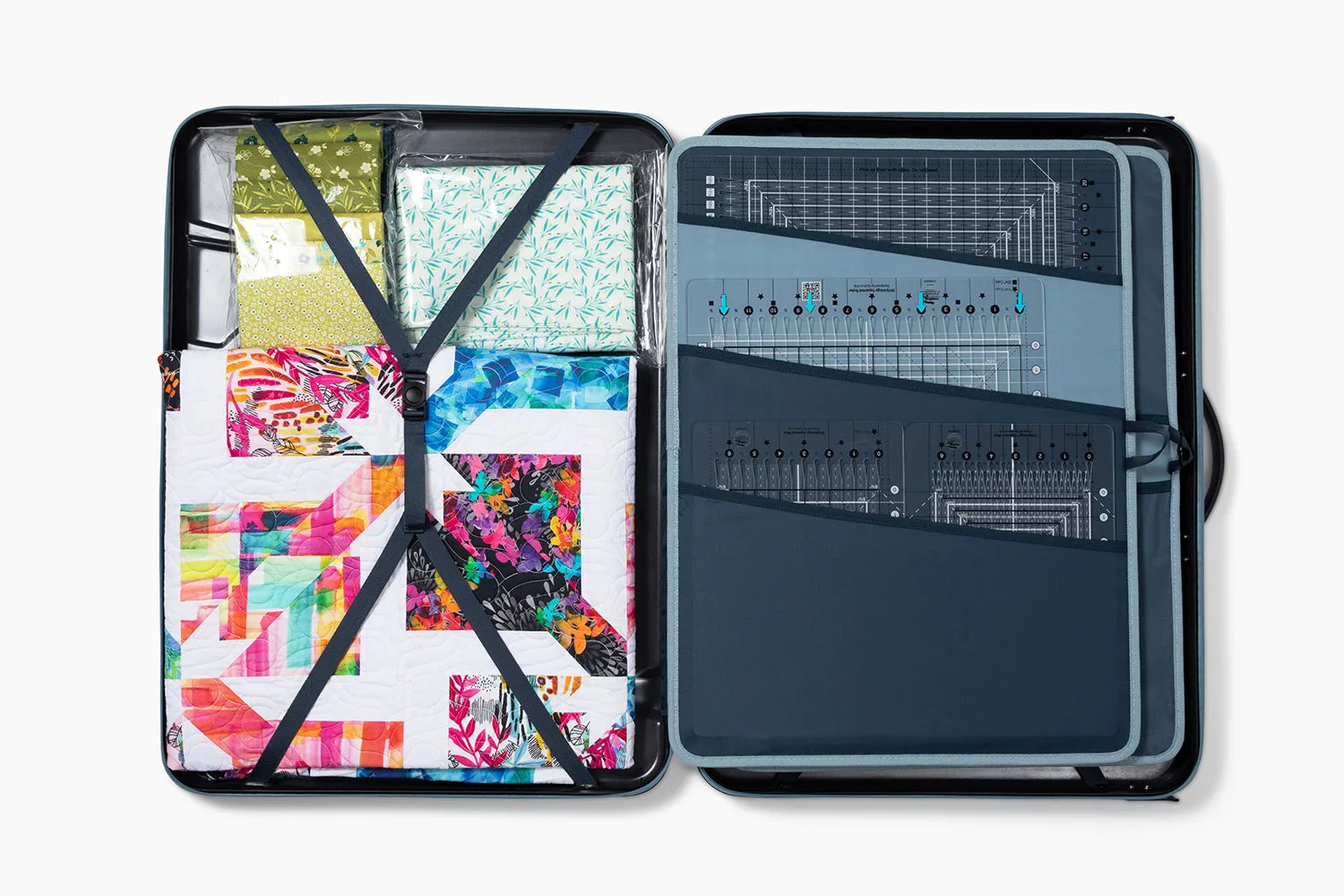
Stripology Quilting Case - GE-2001