Quick answer
Start feeding a stud balancer at the manufacturer's recommended rate for your horse's weight and workload, then adjust based on body condition and breeding stage. The key is consistent daily feeding, correct mixing with forage, and monitoring for coat quality and energy levels.
Why a Stud Balancer Differs from Standard Horse Feed
A stud balancer is a concentrated feed designed to provide targeted nutrition for breeding horses without the bulk of traditional mixes or cubes. It typically contains higher levels of protein, vitamins, and minerals to support fertility, gestation, lactation, and growth in youngstock. Because it's a balancer, you feed smaller amounts—usually 1-2 kg per day—and mix it with forage to create a complete diet. This makes it cost-effective and reduces the risk of overfeeding energy while still meeting specific breeding demands.
When to Start and Stop Feeding a Stud Balancer
Begin feeding a stud balancer about 8-12 weeks before the breeding season for stallions, and from the start of pregnancy for mares. For lactating mares and growing foals, continue until weaning or until the youngstock transitions to a growth feed. The exact timing depends on your horse's condition and your veterinarian's advice. A common mistake is starting too late—nutritional changes take several weeks to show benefits, so plan ahead.
Step-by-Step Guide to Feeding a Stud Balancer
- Step 1: Determine the correct daily ration: Weigh your horse and check the feed label for the recommended amount per 100 kg body weight. For a 500 kg horse, this is often around 1-1.5 kg per day. Use a scale or a marked scoop to measure accurately, not a guess. Common mistake: overfeeding because the balancer looks like a small amount. Stick to the weight-based guideline.
- Step 2: Mix with forage, not alone: Stud balancers are concentrates, not complete feeds. Always mix the daily ration with hay, haylage, or pasture. A typical ratio is 1 part balancer to 3-4 parts forage by weight. This ensures slow digestion and prevents digestive upset. Checkpoint: your horse should have access to forage before and after the balancer meal.
- Step 3: Feed at the same time each day: Split the daily ration into two equal meals, morning and evening, to maintain steady nutrient levels. Consistency helps breeding horses maintain condition and supports hormonal balance. Common mistake: feeding all at once can cause blood sugar spikes and reduce nutrient absorption.
- Step 4: Monitor body condition and coat quality: After 2-4 weeks, assess your horse's weight, topline, and coat shine. A stud balancer should improve coat gloss and muscle tone without excessive fat gain. Adjust the ration by 0.25 kg increments if needed. Checkpoint: if the horse loses condition, increase the balancer slightly; if it gains too much weight, reduce it.
- Step 5: Adjust for breeding stage and workload: Stallions in heavy breeding season may need a higher energy balancer or extra oil. Lactating mares require more protein and calcium. Youngstock need a balancer formulated for growth. Follow the product's specific guidelines for each life stage. Common mistake: using the same ration for a resting mare and a lactating mare. Adjust as the horse's needs change.
Product Spotlight
-
Baileys Stud Balancer 20kg: Baileys Stud Balancer 20kg is an extruded nugget that combines oils from soya and linseed with supporting nutrients, including important antioxidants, plus superfibres and Digest Plus prebiotic, to produce a high oil supplement which can be fed to promote weight gain or stamina or simply outstanding coat shine. The combination of high oil from soya and linseed, along with antioxidants and prebiotics, helps breeding horses maintain condition, support digestive health, and achieve the glossy coat that indicates good overall nutrition.
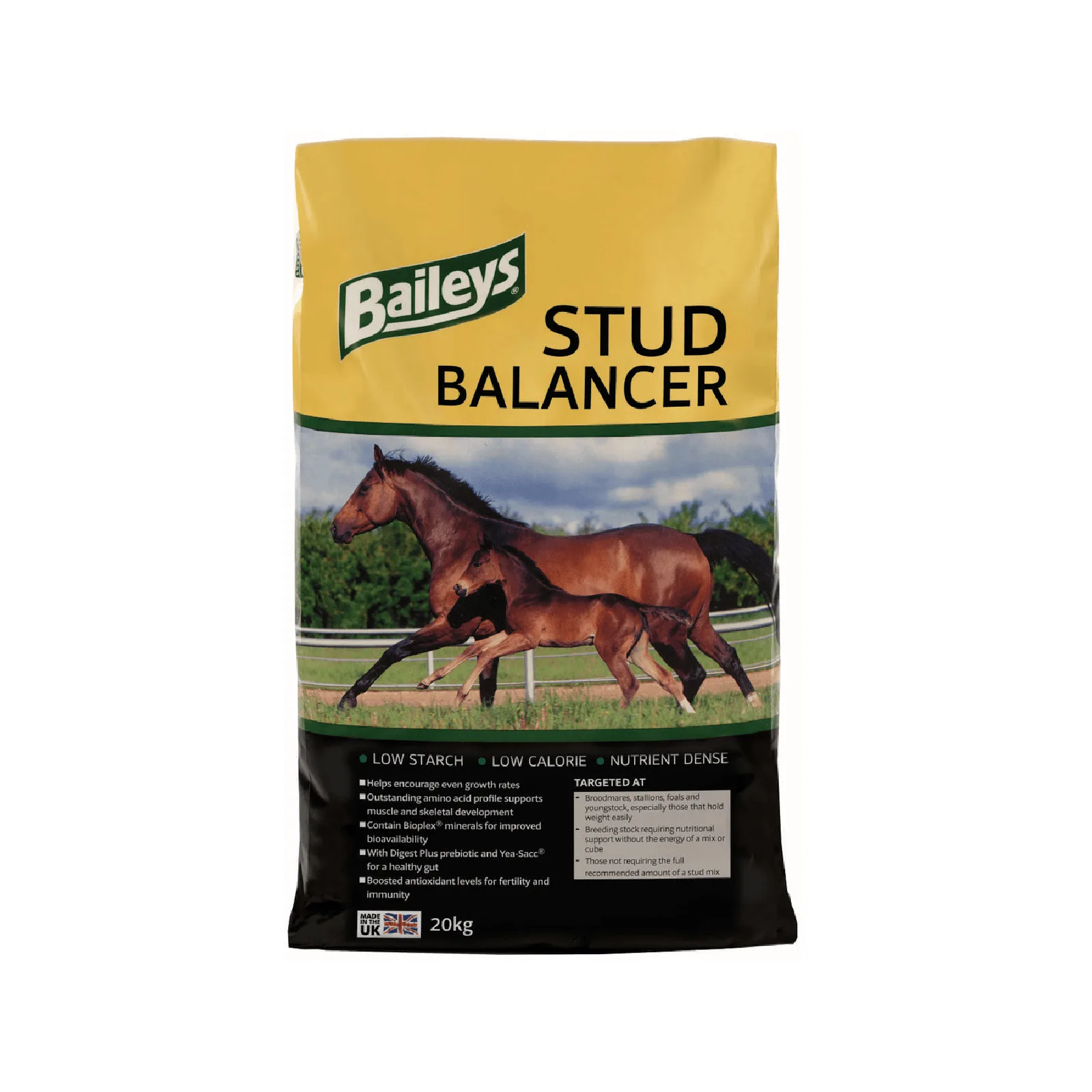
Baileys Stud Balancer 20kg