Quick Answer
A suspension harness distributes binocular weight across your shoulders and back instead of your neck. The key is adjusting the straps so the binoculars sit snugly against your chest, then using the slide system to bring them to your eyes without taking the harness off.
Why a Harness Beats a Standard Neck Strap
A standard neck strap hangs all the weight of your binoculars on your cervical spine. Over a long birding hike or a full night of stargazing, that pressure can cause fatigue and soreness. A suspension harness spreads the load across your shoulders and upper back, which is much more comfortable for extended use.
The trade-off is a slightly longer setup time. You need to adjust the harness to your body before heading out, and it may feel bulkier under a jacket. Once dialed in, however, the stability and comfort gains are significant.
Choosing the Right Harness for Your Activity
Most harnesses use a similar X-back or H-back design, but material and attachment systems vary. Look for padded shoulder straps if you carry heavy binoculars (e.g., 15×56 or larger). For lightweight compacts, a simple webbing harness is enough.
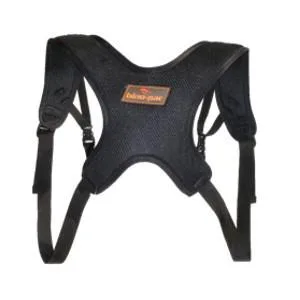
The Bino-Pac Suspension Harness, for example, uses an innovative slide and attachment system that lets the binoculars move independently on the harness. This is especially useful when you need to raise and lower the binoculars repeatedly without unbuckling anything.
How to Fit and Use Your Binocular Harness
- Step 1: Attach the Harness to Your Binoculars: Remove the factory neck strap and thread the harness's attachment clips or loops through the binocular's strap lugs. Make sure both sides are oriented the same way so the binoculars hang level. Common mistake: attaching the clips backward, which makes the binoculars sit crooked. Double-check the orientation before tightening.
- Step 2: Put on the Harness and Adjust the Shoulder Straps: Slip the harness over your head like a vest. Pull the shoulder straps so the harness sits snugly against your torso. The binoculars should rest at mid-chest height—not bouncing against your stomach or pressing into your collarbone. Checkpoint: If you can slide more than two fingers under a shoulder strap, it's too loose. Tighten until the harness moves with you, not against you.
- Step 3: Adjust the Chest or Sternum Strap (If Present): Fasten the sternum strap across your chest. This keeps the shoulder straps from slipping off your shoulders and stabilizes the load. Adjust so it's snug but not restrictive—you should be able to breathe and move freely. Common mistake: skipping the sternum strap. Without it, the harness can shift sideways when you bend or twist.
- Step 4: Test the Slide-and-Attach System: Grasp your binoculars and pull them up to your eyes. The harness should allow smooth, independent movement without resistance. Let go—they should return to the resting position on your chest automatically. Checkpoint: If the binoculars don't slide easily, the harness may be twisted or the attachment clips may be caught. Untwist the straps and try again.
- Step 5: Practice Removing and Replacing the Harness: To take off the harness, unbuckle the sternum strap and slide one shoulder strap off at a time. To put it back on, reverse the process—don't try to pull it over your head while the binoculars are attached, as that can strain the clips. Common mistake: leaving the harness loosely draped around your neck when not in use. This defeats the purpose and can still cause neck strain. Always wear it properly or stow it.
Product Facts
-
Bino-Pac Suspension Harness - Black - BPSH-BLK-2012: The Bino-Pac Suspension Harness is proudly manufactured in the USA and fits closely to your body so it stays in place once adjusted. A close fit prevents the harness from shifting during movement, so your binoculars stay centered on your chest and don't swing side to side when you walk.
Bino-Pac Suspension Harness - Black - BPSH-BLK-2012