Quick answer
To use a whisk effectively, hold the handle with a relaxed grip and move your wrist in a circular or zigzag motion, keeping the wires in contact with the mixture. For the Gallant Midi 29 cm, its mid-length handle offers comfortable control for tasks like whisking egg whites or mixing batter. Start slow to avoid splashes, then increase speed as the mixture thickens.
Why the Gallant Midi 29 cm works for everyday whisking
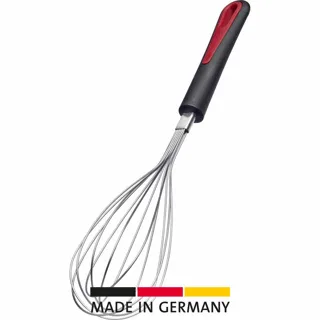
The Westmark Whisk »Gallant« in Midi size (29 cm) is designed for everyday mixing and whisking tasks. Its mid-length handle provides a comfortable grip, making it suitable for a variety of preparations. The classic whisk design allows for efficient blending and aeration, so you can incorporate air into egg whites or whip cream without needing an electric mixer. Because it is a hand whisk, you have precise control over the texture, which is helpful when you want soft peaks rather than stiff ones. The 29 cm length is a good middle ground: long enough for leverage in a mixing bowl, but short enough for nimble wrist action. If you often whisk small to medium batches, this size reduces fatigue compared to larger whisks. It is also easy to store and clean. For tasks like mixing pancake batter or beating eggs for an omelet, this whisk performs reliably. Keep in mind that it is not intended for heavy doughs; for those, you would need a sturdy spoon or a stand mixer. But for light to medium mixtures, the Gallant Midi is a practical choice.
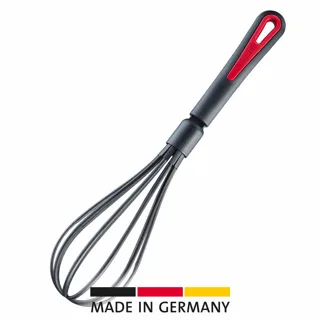
Whisk »Gallant«
Step-by-step whisking technique
Follow these steps to get the best results from your whisk. Each step includes a common mistake to watch for and a checkpoint to ensure you are on track.
- Step 1: Choose the right bowl. Select a bowl that is deep enough to contain the mixture without splashing, but not so wide that the whisk cannot reach the bottom. A stainless steel or glass mixing bowl works well. Common mistake: using a bowl that is too small, causing overflow. Checkpoint: the whisk should be able to move freely in a circular motion without hitting the sides excessively.
- Step 2: Add ingredients. Place your ingredients in the bowl. For whisking egg whites, ensure the bowl and whisk are completely clean and free of grease, or the whites will not whip properly. Common mistake: leaving traces of yolk in the whites, which prevents foaming. Checkpoint: egg whites should be free of any yellow streaks.
- Step 3: Hold the whisk correctly. Grip the handle near the top with your dominant hand, allowing your wrist to move freely. Rest the bowl on a stable surface or hold it with your other hand. Common mistake: gripping too tightly, which causes fatigue and reduces control. Checkpoint: you should be able to move the whisk in a smooth, circular motion without strain.
- Step 4: Start whisking slowly. Begin with a gentle circular or side-to-side motion to combine ingredients without splashing. As the mixture starts to come together, gradually increase your speed. Common mistake: starting too fast, leading to spills. Checkpoint: ingredients should be incorporated without lumps or dry pockets.
- Step 5: Use the right motion for the task. For whisking egg whites or cream, use a rapid, circular motion that incorporates air. For mixing batter, use a slower, folding motion to avoid overdeveloping gluten. Common mistake: using a fast motion for batter, which can make it tough. Checkpoint: egg whites should form soft peaks that hold their shape; batter should be smooth but not overmixed.
- Step 6: Check consistency frequently. Stop whisking periodically to check the texture. For egg whites, lift the whisk and see if a peak forms. For sauces, coat the back of a spoon. Common mistake: over-whisking, which can cause egg whites to become dry or sauces to break. Checkpoint: stop when you reach the desired consistency.
- Step 7: Clean promptly. After use, rinse the whisk under warm water and wash with a mild detergent. Dry thoroughly to prevent rust. Common mistake: letting food dry on the wires, making it harder to clean. Checkpoint: the whisk should be clean and ready for next use.
Step-by-step guide to using your whisk
- Prepare your workspace: Set out a clean bowl, your ingredients, and the whisk. Ensure the bowl is stable and the whisk is within reach. Common mistake: working on an unstable surface, which can cause spills. A organized workspace makes whisking safer and more efficient.
- Add ingredients to the bowl: Place ingredients in the bowl, leaving enough room for movement. For egg whites, use a grease-free bowl. Common mistake: overfilling the bowl, leading to splashes. Fill the bowl no more than halfway for best results.
- Grip the whisk properly: Hold the handle near the top with a relaxed grip. Use your wrist to create a circular motion. Common mistake: gripping too tightly, causing hand fatigue. A relaxed grip gives you better control and reduces tiredness.
- Whisk with the right motion: For aeration, use a fast circular motion. For mixing, use a slower folding motion. Common mistake: using the wrong motion for the task, resulting in poor texture. Match your motion to the goal: air for egg whites, gentle fold for batter.
- Check consistency: Pause to check the mixture. Lift the whisk to see if peaks form, or coat a spoon for sauces. Common mistake: over-whisking, which can ruin the texture. Stop as soon as you reach the desired consistency.
- Clean and store: Wash the whisk with warm soapy water, rinse, and dry immediately. Store in a drawer or utensil holder. Common mistake: leaving food residue to dry, which is harder to clean. Proper cleaning extends the life of your whisk.
Product facts
- Whisk »Gallant«, Midi, 29 cm: Midi size with a total length of 29 cm for versatile use. Classic whisk design for efficient blending and aeration. From the trusted Westmark brand, known for quality kitchen accessories. The 29 cm length offers a balance of reach and control, making it suitable for a range of tasks from whisking egg whites to mixing sauces. The classic design ensures effective aeration, and Westmark's reputation suggests durability.