Quick answer
Use the wooden doctor kit to act out check-ups step by step, letting your child take the lead while you model gentle, caring questions and actions.
Why pretend play doctor visits matter
Pretend play is more than fun—it helps children process new experiences. Acting out a doctor visit lets them explore what happens at a check-up in a safe, familiar setting, which can reduce anxiety before a real appointment.
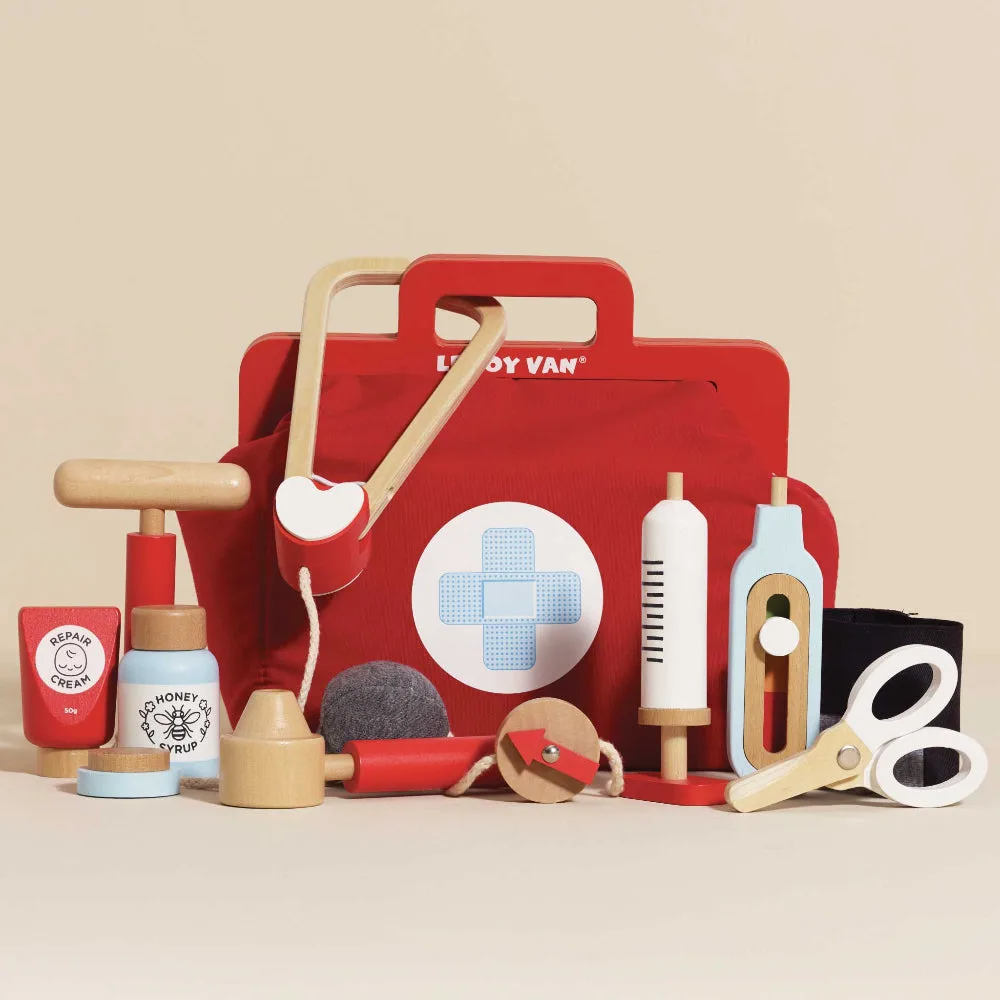
The vintage style of the Le Toy Van kit adds a tactile, nostalgic feel that invites open-ended play. The wooden pieces are sturdy and easy for small hands to grip, making them ideal for repeated use.
Trade-offs to keep in mind
Wooden toys are durable but not as flexible as plastic sets with sounds or moving parts. That's a benefit: it encourages imagination and conversation rather than passive button-pushing.
Because the kit has 9 accessories, some pieces are small. Always supervise young children to prevent choking hazards, and store the kit out of reach when not in use.
Steps for guided doctor pretend play
- Set the scene: Create a simple 'clinic' area with a chair or cushion for the patient and a flat surface for the kit. Let your child decide who is the doctor and who is the patient—don't force a role. Let your child choose their role to build confidence and ownership.
- Introduce each tool slowly: Show one accessory at a time and ask your child what they think it does. For example, hold up the stethoscope and say, 'This helps the doctor listen to your heart.' This builds vocabulary and understanding. Avoid overwhelming your child with all 9 tools at once.
- Model gentle, caring language: Use phrases like 'I'm going to check your heartbeat now' or 'You're being so brave.' This teaches empathy and helps your child know what to expect during a real check-up. Your tone matters more than the tools—stay calm and positive.
- Let your child lead the play: Once your child is comfortable, step back and let them direct the scenario. They might want to check a stuffed animal or give you a 'shot.' Follow their lead and ask open-ended questions like 'What happens next?' Resist the urge to correct their play—imagination is the goal.
- Wrap up with a positive ending: End the session with a 'healthy' verdict and a high-five or hug. This reinforces the idea that doctor visits end well and helps your child feel proud of their caring role. A positive ending makes the next play session more inviting.
Product facts
-
Le Toy Van | Vintage Doctor Wooden Kit: The Le Toy Van Vintage Doctor Wooden Kit includes 9 solid wood accessories in a red fabric bag. The variety of tools lets your child act out a full check-up, and the fabric bag makes cleanup and storage simple.
Le Toy Van | Vintage Doctor Wooden Kit