Quick answer
Set up an AirFort on a flat indoor floor near a standard box fan, leave the fan intake and vents clear, and let kids play inside with soft toys and cushions. It takes seconds to inflate, works in most living rooms, and gives rainy days a screen-free anchor activity.
Rainy days push kids indoors, and the usual fallbacks—screens, couch forts, and sibling squabbles—run out of steam fast. An AirFort gives you a different option: a full-size play space that inflates in seconds and packs away when the weather clears.
This guide walks through the setup step by step, from choosing the right spot to keeping play safe and interesting. It works for apartments, playrooms, and living rooms, and it uses gear you likely already own.
Pick a spot that can handle the footprint
An AirFort needs a flat, clear floor area and a nearby wall outlet for the box fan. Measure your available space before setup; a living room rug or a cleared playroom corner usually works, but crowded furniture zones will make the fort feel cramped and tip-prone. Keep the fan intake and the fort's vents unobstructed so air can circulate.
Avoid placing the fort on thick carpet with loose edges or near stairs, heaters, and sharp furniture corners. A smooth, level surface keeps the structure stable while kids climb in and out. If your room is small, move lightweight furniture aside rather than squeezing the fort into a tight gap.
- Check that the fan cord reaches an outlet without stretching across a walkway.
- Leave at least a small buffer around the fort so kids can enter and exit easily.
Set up the fort and fan correctly
Attach the AirFort to a standard box fan according to the instructions, then turn the fan on and let the fort inflate. It should hold its shape within seconds. If it sags, check that the fan is seated properly and that nothing is blocking airflow. A box fan is required and is not included with the fort.
Once inflated, do a quick walk-around: confirm the entry opening faces open floor space, the fabric is not twisted, and the fan is stable on the floor. Keep the fan on low or medium for calmer play, and higher for active games. Never cover the fan or place it where it can be knocked over.
- Common mistake: using a fan that is too small or partially blocked, which causes the fort to deflate.
- Checkpoint: the fort should stand upright on its own before kids go inside.
Make the inside worth staying in
A fort is only as fun as what happens inside it. Bring in soft pillows, a few books, and a basket of toys that won't poke or tear the fabric. Themed props extend play: a beach towel and sunglasses for a beach party, or a toy toolbox for a construction site. Rotate props every 20–30 minutes to reset attention.
For quieter rainy days, set up a reading corner or a puzzle station inside. For active kids, try a stuffed-animal rescue game or a pretend camping trip. The goal is to give kids a reason to stay in the fort rather than treating it as a one-minute novelty.
- Keep hard or sharp toys outside the fort to protect the fabric.
- Use a small basket so cleanup is part of the routine, not a battle.
Keep play safe and supervise younger kids
AirFort products are child safety tested and approved, but supervision still matters, especially for toddlers. Set ground rules before play: no jumping on the fabric, no pulling the fan, and no roughhousing that could topple the structure. For younger children, keep the fan on a stable surface and check on them regularly.
If you have multiple kids, stagger entry or assign roles so the fort doesn't get crowded. When play winds down, turn off the fan and let the fort deflate before folding it. Store it dry and away from sharp objects so it's ready for the next rainy day.
- Common mistake: letting kids climb on the outside of the fort, which can tear seams.
- Checkpoint: the fan stays upright and uncovered for the entire play session.
Rainy-day AirFort setup in 6 steps
- Clear and measure the floor space: Move furniture aside and confirm there is enough flat floor for the fort plus a small entry buffer. Checkpoint: the fan cord reaches an outlet without crossing a walkway.
- Position the box fan on a stable surface: Place a standard box fan on the floor near the fort opening, with nothing blocking the intake or blades. Common mistake: setting the fan on a rug edge where it can tip.
- Attach the fort to the fan and inflate: Follow the included instructions to connect the fort, then turn the fan on and let it fill. Checkpoint: the fort stands upright on its own within seconds.
- Do a safety walk-around: Check that the fabric is not twisted, vents are clear, and the entry faces open floor space. Common mistake: leaving the fan covered or partially blocked, which deflates the fort.
- Add soft props and a theme: Bring in pillows, books, and soft toys. Match the theme to the fort, like beach towels for a beach party or a toy toolbox for a construction site. Rotate props every 20–30 minutes to keep play fresh.
- Supervise, then deflate and store: Set ground rules, keep an eye on younger kids, and turn off the fan when play ends. Let the fort deflate fully before folding it away dry. Checkpoint: the fort is stored dry and away from sharp objects.
AirFort options that fit rainy-day play
- The Original AirFort - Tiki Hut: Build in seconds, play for hours. Durable and breathable construction. Works with any standard box fan (box fan not included). The tropical theme gives rainy days a stay-cation feel, and the breathable fabric keeps air moving during longer play sessions.
- The Original AirFort - Beach Ball Blue: Bright beach ball coloring for a summer feel any time of year. All the fun of the beach without the sand. Box fan not included. A beach theme works well with towels and sunglasses already in the house, so you can set up a rainy-day beach party without buying extra props.
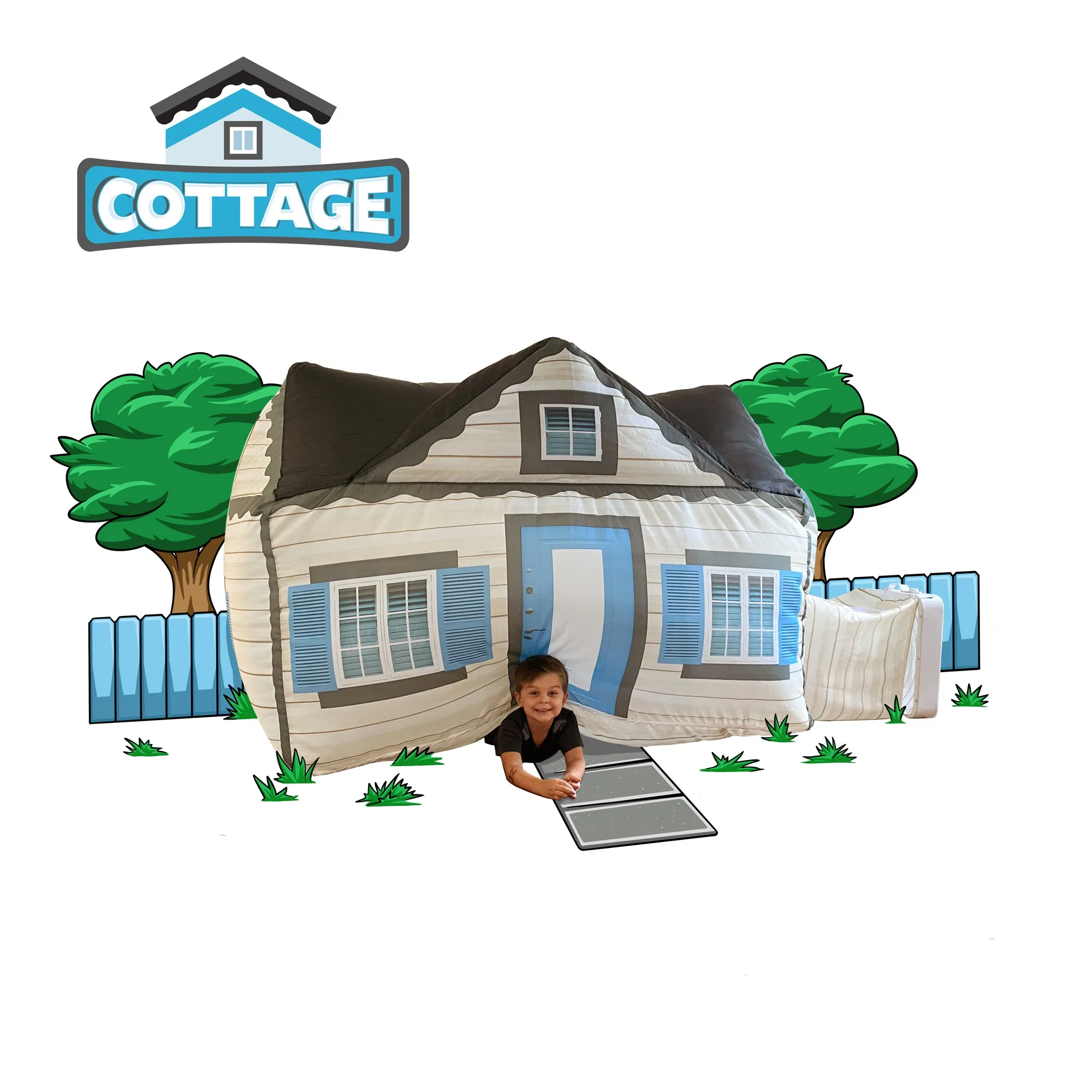
- The Original AirFort - Cottage: Transforms the classic game of house into a cottage-owner experience. Home away from home. Box fan not included. The cottage setup suits pretend-play and quiet reading, giving kids a defined space that feels like their own house.
A rainy day doesn't have to mean screens and boredom. With a clear floor spot, a standard box fan, and a few soft props, an AirFort turns any room into a play space that kids can return to all afternoon—and that packs away when the sun comes back.