Quick answer
Use an undercoat rake by working in small sections, following the direction of hair growth, and applying gentle pressure to remove loose undercoat without irritating the skin.
Why an undercoat rake works better than a regular brush
A regular brush only skims the topcoat, leaving the dense undercoat matted and shedding everywhere. An undercoat rake has long, spaced teeth that reach deep into the coat to lift loose fur before it falls on your furniture. This makes it a true deshedding tool for double-coated breeds like Huskies, Golden Retrievers, and German Shepherds.
The spring mechanism in tools like the Jeffers Magic Spring Undercoat Rake allows the teeth to flex and rotate, following your dog's body contour. This reduces the chance of snagging or pulling, making the experience more comfortable for your pet.
When not to use an undercoat rake
Avoid using an undercoat rake on dogs with thin or single coats (e.g., Poodles, Bichons) because the teeth are designed to penetrate thick fur and can irritate their skin. Also skip it if your dog has sensitive skin, hot spots, or recent wounds. For those cases, a soft slicker brush is a safer choice.
Step-by-step: Using an undercoat rake
- Step 1: Choose the right time and place: Groom your dog when they are calm, such as after a walk or play session. Lay a towel or grooming mat on a non-slip surface to catch loose fur and keep your dog steady. Grooming when your dog is relaxed prevents stress and makes the process easier for both of you.
- Step 2: Brush the topcoat first: Use a slicker brush or pin brush to remove tangles and debris from the topcoat. This prevents the undercoat rake from snagging on mats and makes the deep brushing more effective. Skipping this step can cause the rake to pull on knots, which may hurt your dog.
- Step 3: Rake in small sections: Part the fur and insert the rake near the skin, then gently pull upward in the direction of hair growth. Work in 2–3 inch sections, focusing on one area at a time. Use light, even pressure—let the teeth do the work. Common mistake: pressing too hard can scratch the skin. If you see redness, ease up.
- Step 4: Follow the body contour: Pay extra attention to areas where the undercoat is thickest: the back, hips, and neck. The floating teeth on a spring undercoat rake will adjust to curves, but you still need to move the tool slowly over bony spots like the spine and hips. Avoid raking over the same spot repeatedly—it can cause irritation.
- Step 5: Finish with a final brush and reward: After raking, use a bristle brush to smooth the topcoat and distribute natural oils. Give your dog a treat and praise to create a positive association with grooming sessions. Regular grooming (once a week for most double-coated breeds) keeps shedding manageable and strengthens your bond.
Product spotlight
-
Jeffers Magic Spring Undercoat Rake for Pet Grooming: The Jeffers Magic Spring Undercoat Rake features floating spring-controlled teeth that retract and rotate, yielding to your pet's body contour. This means the rake adjusts to your dog's shape, reducing discomfort while effectively removing loose undercoat from hard-to-reach areas like the back legs and belly.
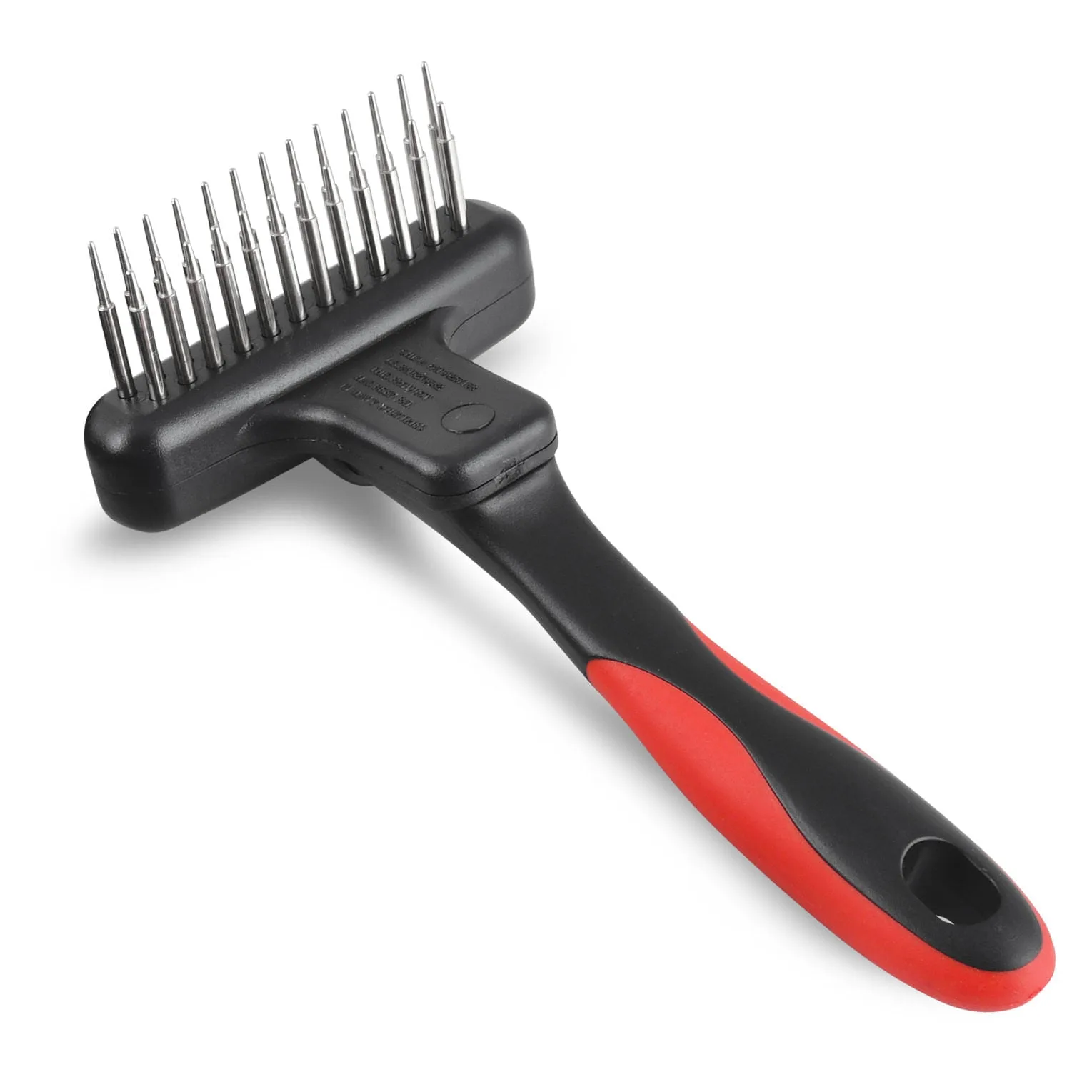
Jeffers Magic Spring Undercoat Rake for Pet Grooming