Quick Answer
Set up your behavior magnetic wall chart by placing it at your child's eye level, choosing 3-5 simple chores or routines, and using the reward-based star magnet system to encourage consistency.
Why a magnetic wall chart works for toddlers and preschoolers
Young children thrive on visual cues and immediate feedback. A magnetic wall chart turns abstract concepts like 'be responsible' into concrete, see-and-touch tasks. The bright colors and illustrated magnets keep kids engaged without feeling like a lecture.
The reward-based system—using star magnets for completed tasks—teaches cause and effect. Kids learn that finishing a small job leads to a positive outcome, which builds motivation over time.
Choosing the right chart for your child's age
For toddlers (ages 2-3), focus on basic self-care tasks like brushing teeth or putting away toys. For preschoolers (ages 4-5), you can add simple chores like making the bed or feeding a pet. The Quokka Chart to Finish Behavior Magnetic Wall Chart Poster comes with 48 illustrated chore and behavior magnets, so you can pick the ones that match your child's abilities.
The chart's size (12 x 16 x 0.04 inches) fits on most walls or doors without overwhelming a small room. Its magnetic surface lets you rearrange tasks daily, which keeps the routine fresh and adaptable.
How to Set Up and Use Your Behavior Magnetic Wall Chart
- 1. Choose a visible, child-height location: Mount the chart on a wall or door where your child can see and reach it easily—like the kitchen or hallway. Avoid bedrooms where it might be ignored. Common mistake: Placing it too high or in a cluttered area, making it easy to forget.
- 2. Pick 3-5 tasks for the first week: Select illustrated magnets that match your child's current abilities, such as 'brush teeth', 'put on pajamas', or 'tidy up toys'. Attach them to the chart in a logical order (morning, afternoon, evening). Checkpoint: If your child struggles with more than 3 tasks, reduce to 2 until they master them.
- 3. Explain the reward system clearly: Show your child that completing a task earns a star magnet to place on the chart. Decide together on a small reward after earning a set number of stars (e.g., 5 stars = extra story time). Common mistake: Making rewards too big or too far away—stick to daily or every-other-day goals for young kids.
- 4. Review the chart together each evening: At the end of the day, sit with your child and talk about what they did well. Let them place the star magnets themselves. This reinforces the connection between action and reward. Checkpoint: If your child loses interest, swap out one or two magnets for new tasks or rotate the star color to keep it fresh.
- 5. Gradually increase task complexity: After two weeks of consistent use, add one new task or replace a simple chore with a slightly harder one (e.g., 'make bed' instead of 'put away shoes'). The dry erase marker is great for writing custom tasks that don't have a magnet. Common mistake: Adding too many tasks too fast, which overwhelms the child and breaks the routine.
Product Details
-
Chart to Finish Behavior Magnetic Wall Chart Poster: Includes 49 star magnets and 48 illustrated chore and behavior magnets, plus a dry erase marker. You have enough magnets to customize daily routines without running out, and the dry erase marker lets you add one-off tasks or notes.
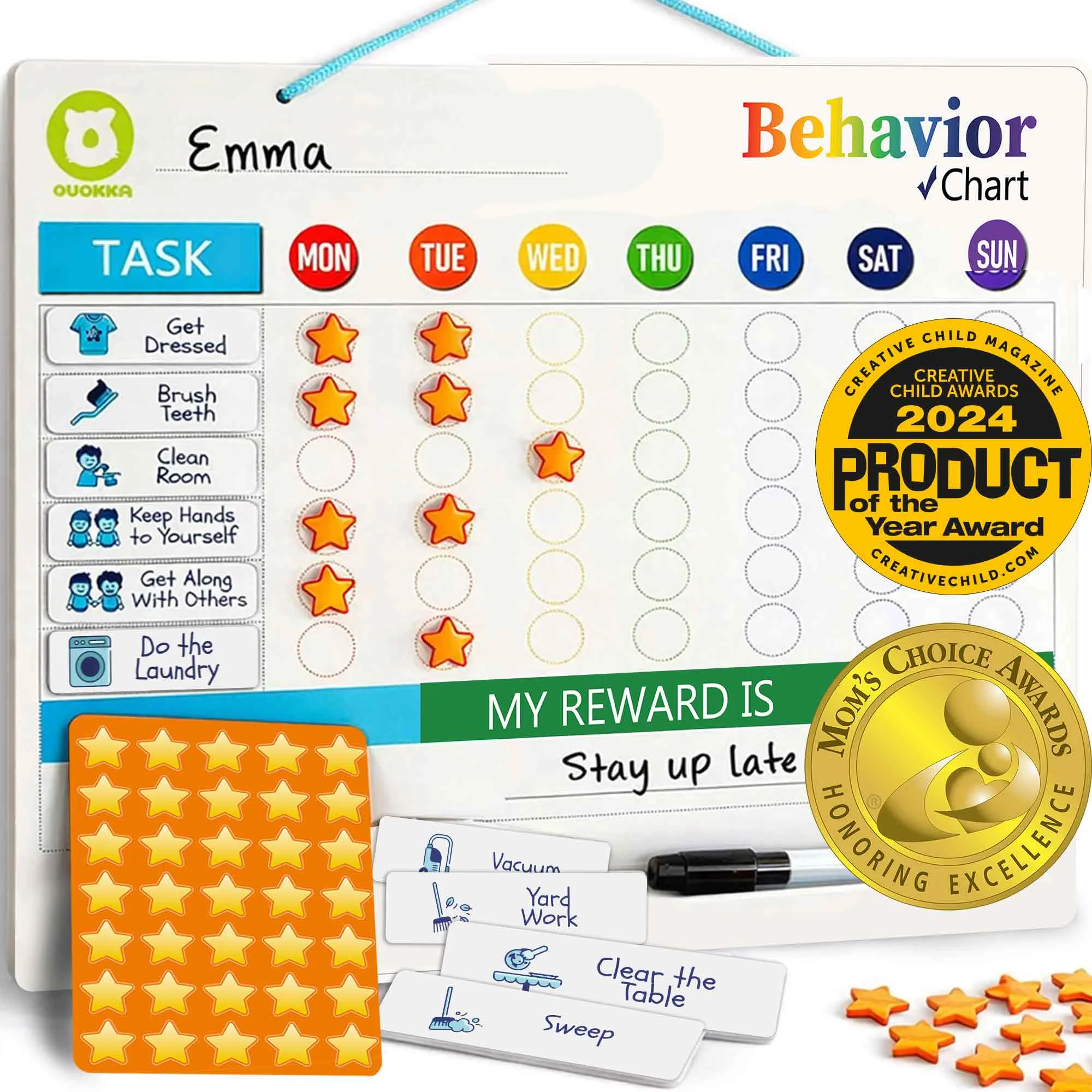
Chart to Finish Behavior Magnetic Wall Chart Poster