Quick answer
Keep Christmas wooden toys in your regular toy rotation instead of packing them away with the decorations. Store them at child height, pair them with everyday play themes, and treat the festive details as a bonus rather than the main event. Toys like the Countdown to Christmas Blocks and NEW Sea Life Numbers Puzzle in a box work just as well in March as they do in December when you give them a clear learning job.
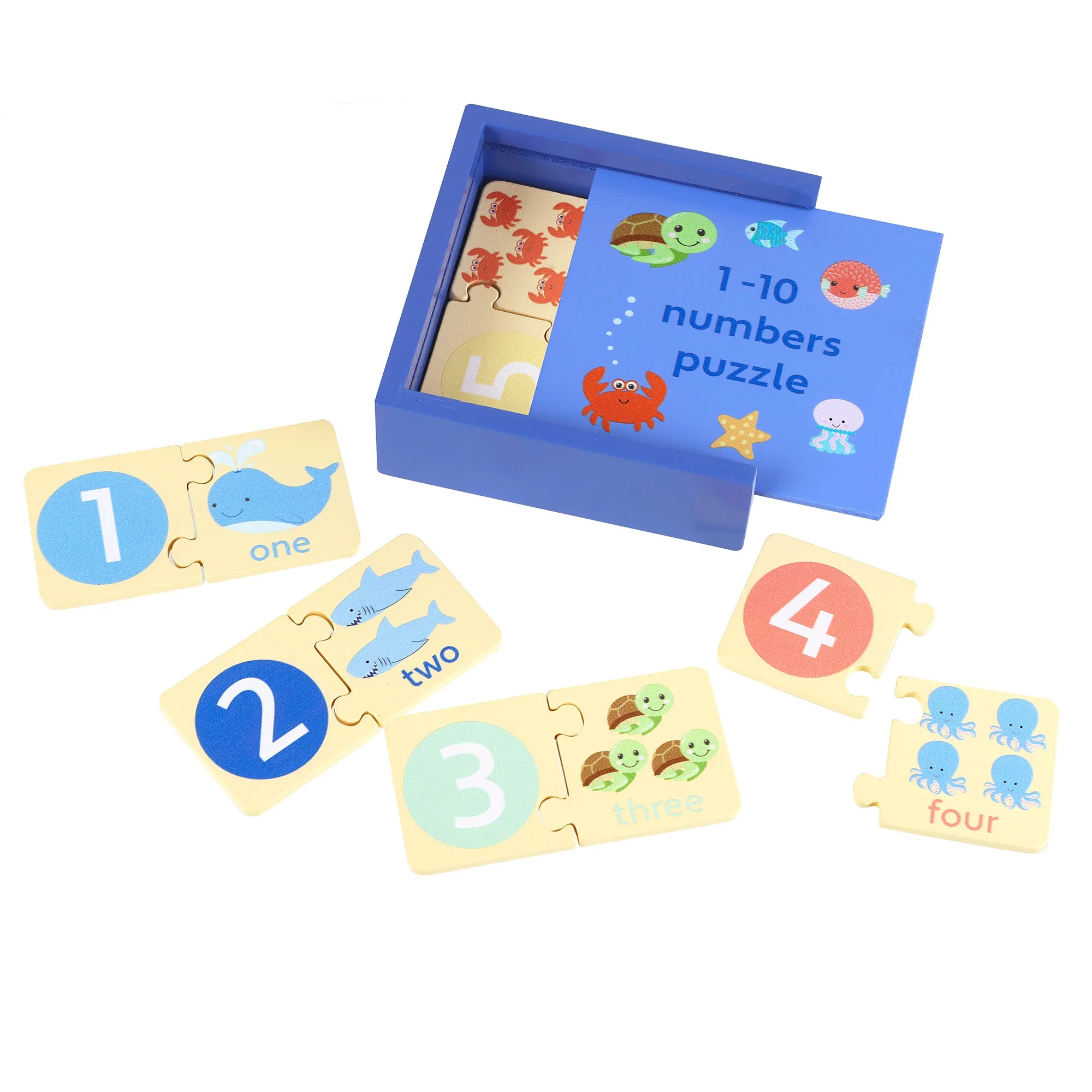
NEW Sea Life Numbers Puzzle in a box
Most Christmas toys get boxed up on December 26 and forgotten until the next year. That's a waste of good learning material. Wooden toys with festive themes often carry the same developmental features as their everyday cousins: chunky pieces for small hands, matching and counting challenges, and open-ended play potential.
The trick is to stop thinking of them as seasonal decorations and start thinking of them as tools. This guide walks through a simple process for folding Christmas wooden toys into your year-round routine without forcing the holiday angle.
Start by checking what each toy actually teaches
Before you decide how to use a festive toy in July, look at what it does. A stacking toy teaches size sequencing and fine motor control. A puzzle teaches matching and observation. A push toy teaches balance and coordination. The Christmas paint job is irrelevant to those skills.
Take five minutes with each toy and write down one or two skills it supports. If you can't name a skill, it's probably a display piece rather than a learning toy, and that's fine. Put it on the shelf and focus your rotation on the ones with a clear job.
- Checkpoint: if the toy only works when a child already understands Christmas, it's a seasonal decoration, not a learning tool.
Set up a year-round storage spot at child height
Toys that live in a sealed box in the loft don't get used. Give Christmas wooden toys a permanent home on a low shelf or in a basket your child can reach. Rotate three or four at a time and swap them out every couple of weeks.
Keep the storage simple. A shallow basket or open bin works better than a lidded box because children can see the pieces and help themselves. If you have several festive toys, group them by skill rather than by holiday.
- Common mistake: storing festive toys with the Christmas decorations. Out of sight really does mean out of mind.
Rename the activity, not the toy
You don't need to pretend the toy isn't Christmas-themed. You just need to give the activity a name that makes sense in June. Instead of 'Christmas counting,' call it 'present stacking' or 'number hunt.' The toy stays the same; the framing changes.
This matters because young children take their cues from you. If you present the blocks as a counting game, they'll treat them as a counting game. If you present them as Christmas decorations, they'll lose interest once the tree comes down.
- Try this: pair a festive toy with a non-festive one from the same category, like a wooden puzzle or a push toy, so the Christmas item feels like part of the normal collection.
Build simple christmas puzzle activities into quiet time
Puzzles are the easiest festive toys to use year-round because the learning is built into the format. A number puzzle with sea creatures, for example, asks a child to match a numeral to a quantity. That's a math activity, not a holiday activity.
Set a puzzle out during quiet time with no instruction. Let your child approach it on their own. If they get stuck, point to the picture rather than the number and let them count the creatures aloud. The goal is observation and matching, not speed.
- Checkpoint: if your child finishes a puzzle in under a minute, it's too easy for independent play. Use it as a warm-up instead.
Use festive toys to teach time and sequence
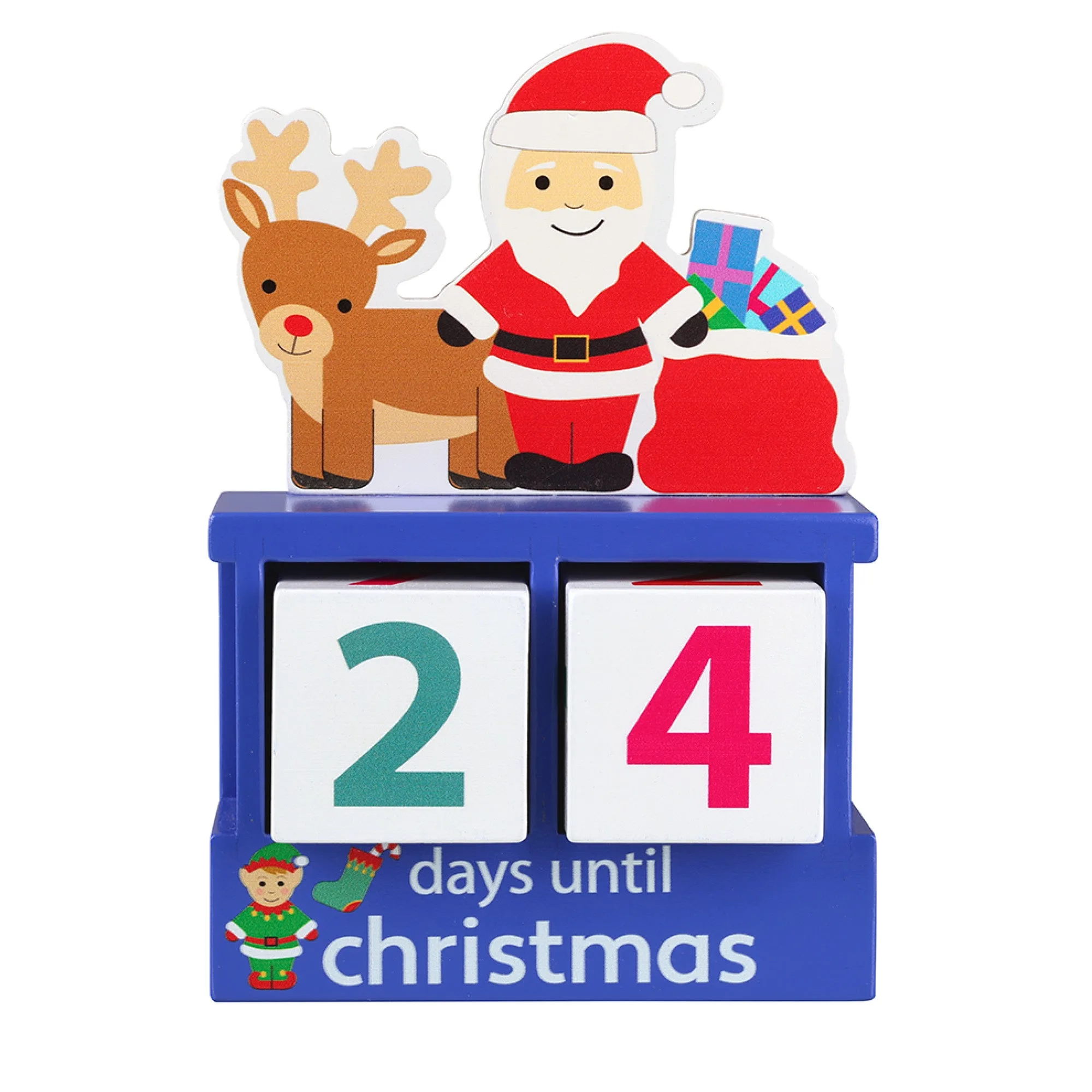
Toys that count down to an event are surprisingly good for teaching sequence and time concepts outside of December. A countdown block set can be used to track days to a birthday, a trip, or the first day of a new season.
The key is to keep the physical action the same: change the number, talk about what comes next, and let your child move the blocks. The Christmas imagery on the blocks becomes background detail rather than the point of the activity.
- Common mistake: only using countdown toys in December. The concept of counting down works all year if you swap the event.
Rotate festive toys with everyday toys by skill
A simple rotation system keeps Christmas wooden toys in play without overwhelming your child. Sort your toys into rough skill groups: stacking and sorting, matching and puzzles, push and pull, and pretend play. Pull one or two from each group each week.
When a festive toy comes out alongside a plain wooden toy, children stop seeing it as a special occasion item. It just becomes another thing to play with, which is exactly what you want.
- Try this: keep a small basket by the door with one push toy and one small puzzle for quick play before or after outings.
Your year-round Christmas toy routine in five steps
- Audit each toy for one clear skill: Pick up each Christmas wooden toy and name the single skill it supports: stacking, matching, counting, pushing, or pretend play. If you can't name one, set it aside as a display piece. Checkpoint: a toy with no clear skill will sit unused no matter where you store it.
- Give every toy a reachable home: Move festive toys out of the Christmas box and onto a low shelf or into an open basket. Rotate three or four at a time so the collection stays fresh without becoming clutter. Common mistake: keeping toys in lidded bins. If your child can't see it, they won't ask for it.
- Rename the activity for the season you're in: Call the same activity by a neutral name: number hunt, present stacking, or color match. The toy stays the same, but the framing works in any month. Try this: pair a festive toy with a plain wooden toy from the same skill group so the Christmas item feels normal.
- Set up one quiet-time puzzle activity per week: Choose a festive puzzle and leave it out during quiet time with no instructions. Let your child match and count on their own, and step in only if they ask for help. Checkpoint: if a puzzle is finished in under a minute, use it as a warm-up rather than independent play.
- Rotate by skill, not by holiday: Sort toys into stacking, matching, push and pull, and pretend play groups. Pull one or two from each group each week so festive and everyday toys mix naturally. Next step: after four weeks, note which festive toys actually got played with and adjust your rotation.
Festive wooden toys that work beyond December
- Countdown to Christmas Blocks: These chunky blocks are topped with Father Christmas and Rudolph and are designed to help little ones grasp the concept of time while counting the days. They are made from FSC-certified wood and come in fully recyclable packaging. The time-and-sequence learning here isn't tied to December. You can use the same blocks to count down to a birthday, a holiday, or a family visit, which keeps the toy in active use all year.
- NEW Sea Life Numbers Puzzle in a box: This wooden puzzle set features colorful sea creatures and is designed to help little ones develop number recognition and simple counting skills. Each number matches a picture of the same number of sea creatures, and the set comes in a wooden storage box. The matching and counting work is the same in any month. The sea life theme has no seasonal tie, so this puzzle can sit in your regular rotation without any reframing at all.
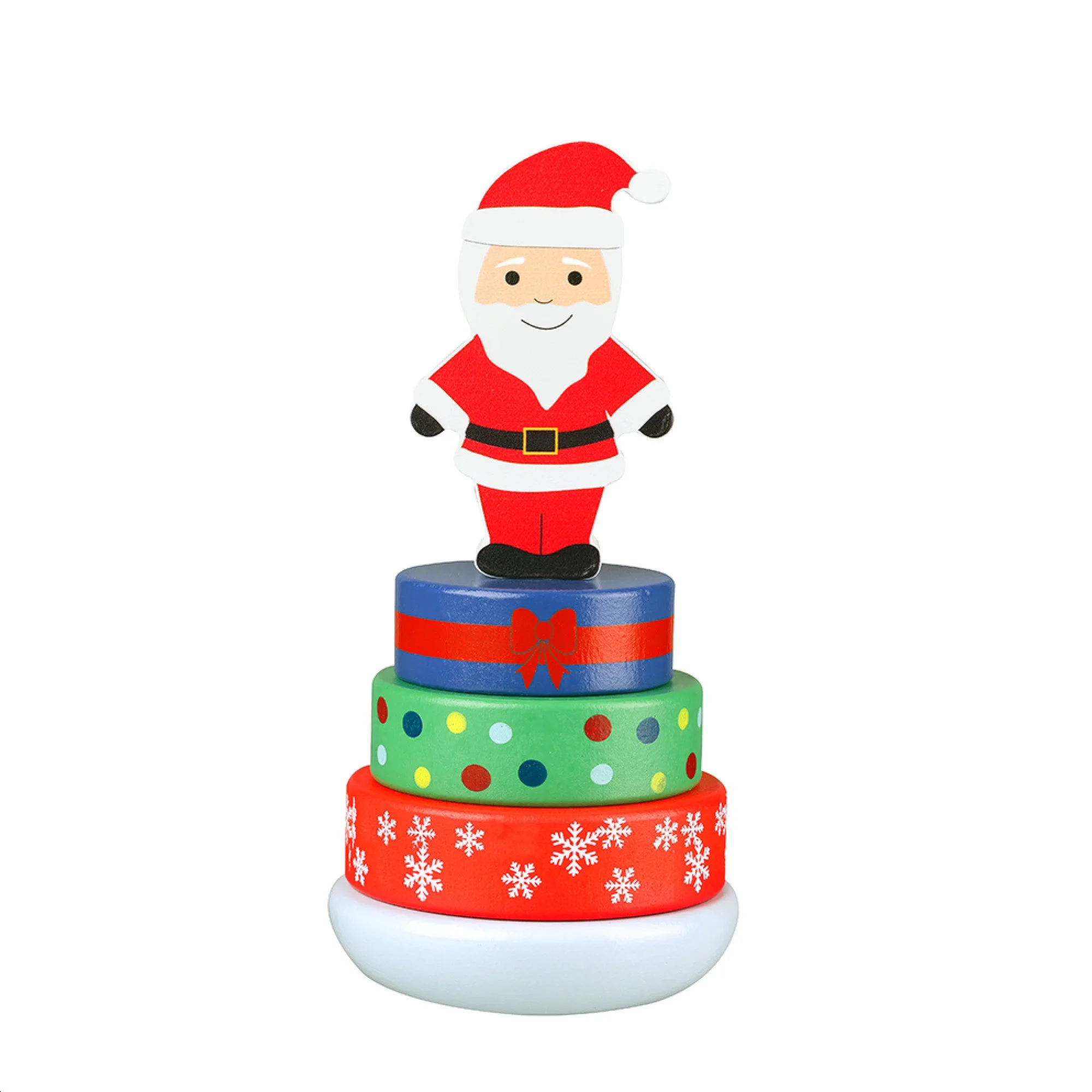
- Father Christmas Stacking Ring: This stacking ring builds into a Father Christmas figure with a colorful stack of presents. Each piece is painted in bright colors and sized for little hands, and the set is made from FSC-certified wood with fully recyclable packaging. Stacking toys teach size sequencing and fine motor control regardless of the figure on top. The festive design makes it a good gift, and the skill practice makes it worth keeping out year-round.
Christmas wooden toys don't have to disappear in January. With a clear skill focus, a reachable storage spot, and a rotation that mixes festive and everyday items, you can get months of learning out of toys that would otherwise sit in a box. Start with one toy this week and see how your child responds.