Quick Answer
To use a dimming thermostat for your reptile habitat, connect it between the power source and your heat source, set the desired temperature, and place the sensor probe in the warm zone. Then monitor and adjust as needed.
Why Choose a Dimming Thermostat?
A dimming thermostat is a smart choice for reptile habitats because it gradually adjusts the power to your heat source rather than turning it on and off abruptly. This mimics natural temperature fluctuations and helps maintain a stable environment, which is crucial for your reptile's health.
Unlike a simple on/off thermostat, a dimming thermostat prevents sudden temperature swings that can stress reptiles. It also extends the life of your heating equipment by reducing wear from frequent cycling.
Understanding the Komodo Dimming Thermostat
The Komodo Dimming Thermostat offers precise temperature control and is compatible with any type of heater, making it a versatile option for various reptile setups. It provides natural heat and light control, which is essential for species that require a distinct day-night temperature gradient.
When using this thermostat, you can connect it to ceramic heat emitters, heat mats, or basking bulbs, and it will adjust the output to maintain your set temperature. This flexibility means you can use it in a variety of enclosure types, from glass terrariums to wooden vivariums.
Step-by-Step Setup and Use
- Position the sensor probe: Place the thermostat's sensor probe in the warm basking spot where your reptile spends most of its time. Ensure it is not directly under the heat source or in a spot where your reptile might move it. Check the probe placement after a few hours to ensure it hasn't been displaced.
- Connect the heat source: Plug your heat source (e.g., basking bulb, ceramic heat emitter, or heat mat) into the thermostat's output socket, then plug the thermostat into the mains. This allows the thermostat to control the power to the heater. Double-check that the wattage of your heater does not exceed the thermostat's maximum rating.
- Set the desired temperature: Adjust the thermostat's dial or digital controls to your reptile's required basking temperature. Refer to species-specific care guides for the correct range. Start with a mid-range temperature and observe your reptile's behavior, then fine-tune as needed.
- Monitor and adjust: After a few hours, check the actual temperature with a separate thermometer. If it's too high or low, adjust the thermostat accordingly. Repeat until the temperature is stable. Re-check the temperature at different times of day to ensure consistency.
- Regular maintenance: Clean the sensor probe periodically and ensure it remains in the correct position. Also, inspect the thermostat and connections for any signs of wear or damage. Replace the thermostat if you notice any malfunction to avoid temperature spikes.
Product Spotlight
-
Komodo Dimming Thermostat: Precise Temperature Natural Heat & Light Control Suitable For Use With Any Type Of Heater This means you can rely on it to maintain a stable basking temperature whether you use a bulb, mat, or ceramic emitter, giving you flexibility in your habitat setup.
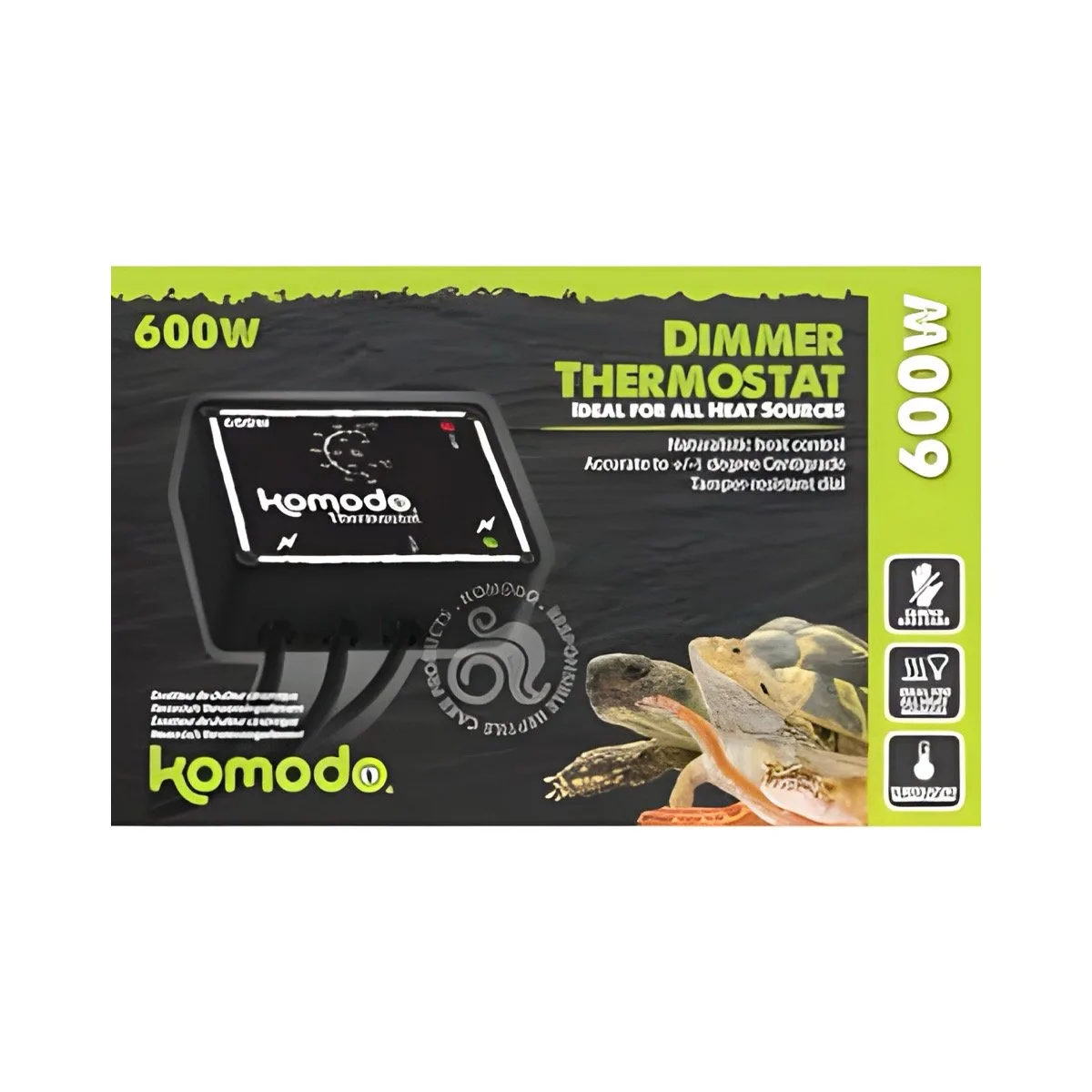
Komodo Dimming Thermostat