Quick answer
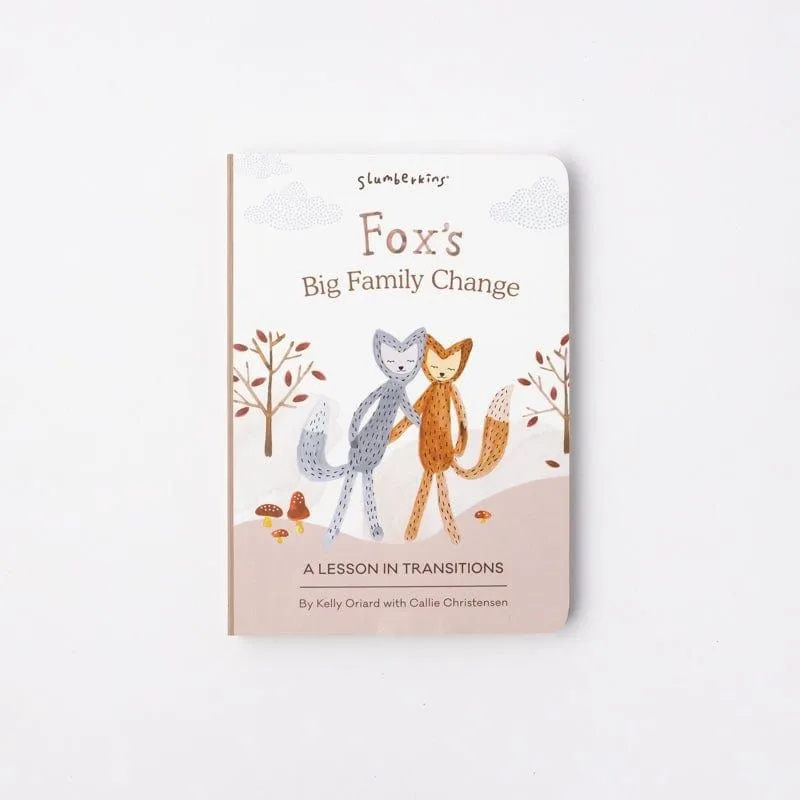
Read Fox's Big Family Change Board Book with your child before a transition, not during the most chaotic week. Use the story to name the change, reassure your child that it is not their fault, and repeat the connection message often. Pair the book with a Fox Kin if your child likes to hold something while you talk.
Fox Kin
Why the Fox book works for family transitions
Fox's Big Family Change Board Book is built around one steady message: families change, but connection remains, and the change is not the child's fault. That combination matters because young children often fill gaps in adult explanations with self-blame. The board book format also keeps the story short enough for a toddler or preschooler to follow when they are tired, worried, or distracted.
The book is a practical tool, not a one-time read. Its value comes from repetition. Hearing the same words across several weeks gives a child a script they can reuse when they feel unsure, and it gives you a low-pressure way to reopen a hard conversation without starting from scratch.
When to introduce the book
Aim to read it once before the change becomes visible, then again as details become concrete. If your child is moving between homes, meeting a new partner, or preparing for a new sibling, the first read can happen a week or two ahead. The goal is not to preview every detail, but to make the topic familiar so the first real conversation is not also the first time they hear the words.
Skip the book if your child is already overwhelmed in the moment. A dysregulated child cannot take in a story. Wait for a calm, routine time such as after bath or before bed, when attention is naturally lower and cuddling is already part of the plan.
How to read it together
Read at your child's pace and pause on the pages that seem to land. You do not need to explain every line. Instead, use simple reflections: 'Fox feels worried here. Sometimes you feel worried too.' Let your child point, turn back, or ask the same question twice. Repetition is how the message becomes theirs.
Keep your tone warm and matter-of-fact. If you become emotional, that is okay, but name it briefly and return to the story. Children take their cue from your steadiness more than from perfect wording.
What to say when your child asks hard questions
Answer the question they actually asked, then stop. If they ask why someone moved out, give a short, honest answer that removes blame: 'The grown-ups decided to live in different homes. It is not because of anything you did.' Avoid promising outcomes you cannot control, such as saying everything will go back to the way it was.
If you do not know an answer, say so and offer to find out together. That honesty builds more security than a polished explanation.
Pairing Fox with a Kin or Snuggler
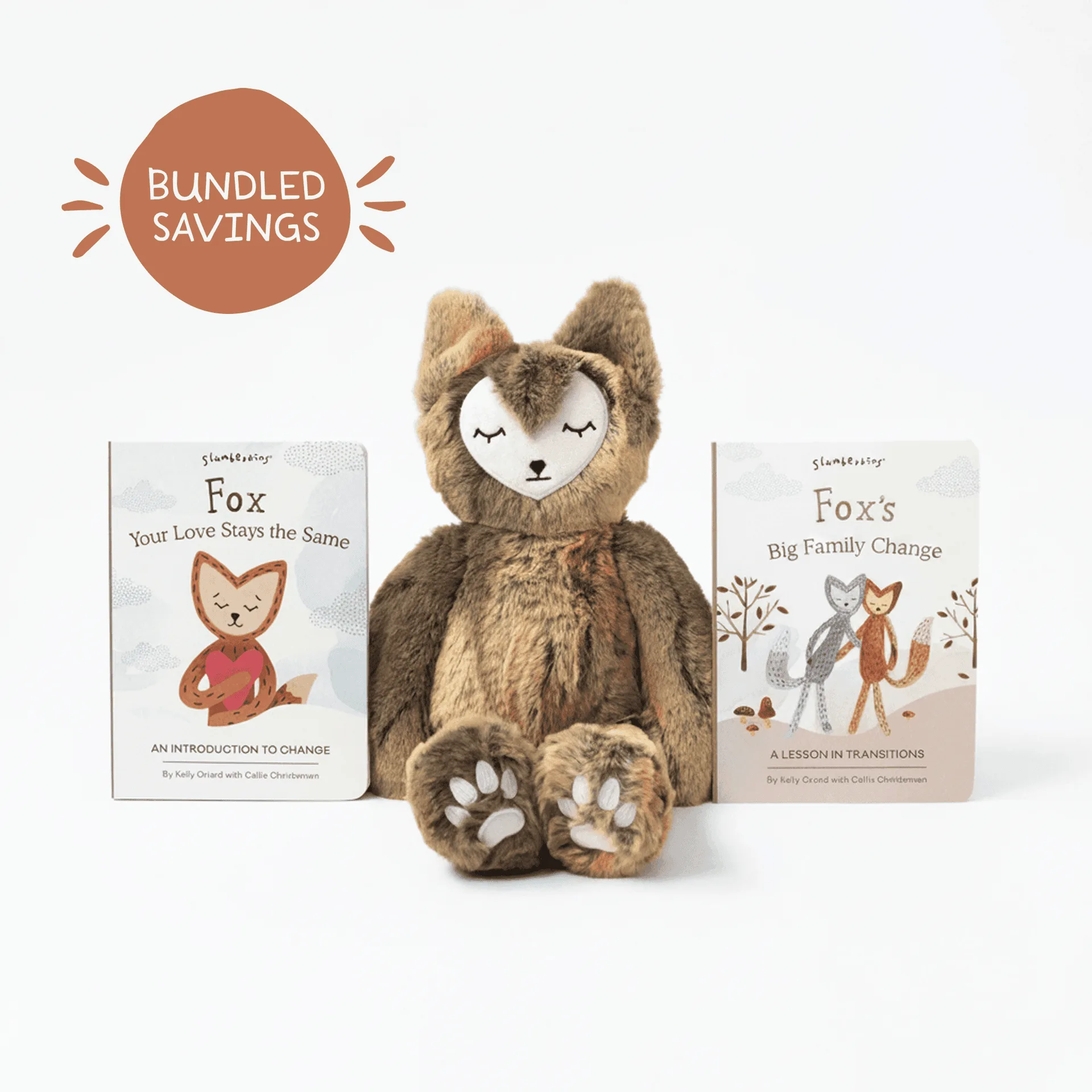
A slumberkins fox kin pairing gives your child a physical anchor for the book's message. After reading, they can hold Fox while you repeat the line about staying connected. The toy does not replace the conversation, but it can make the conversation easier to return to on a hard day.
If your child already has a favorite comfort object, use that instead. The point is the pairing, not the specific plush.
Steps for using Fox's Big Family Change Board Book
- Prepare before the change: Read the book once during a calm routine, a week or two before the transition if possible. Keep the first read short and do not attach it to a serious sit-down talk. Checkpoint: your child has heard the story once without pressure to discuss it.
- Name the change in simple words: Use the book's pages to introduce the specific change, such as a new home, a new baby, or a parent living elsewhere. Stick to one or two sentences and avoid adult details. Common mistake: over-explaining. If your child looks away or changes the subject, follow their lead and stop.
- Repeat the not-your-fault message: Say clearly that the change is not their fault, even if they do not ask. Children often carry silent blame, and the book's message gives you a natural opening. Checkpoint: you have said it out loud at least once, not just implied it.
- Revisit the book on hard days: Keep the book where your child can reach it. When behavior shifts or questions return, read it again rather than waiting for a perfect moment. Common mistake: treating one reading as enough. Repetition is what makes the message stick.
- Pair Fox with a comfort object: Offer a Fox Kin or your child's existing comfort item during and after reading. Let them hold it while you repeat the connection message. Checkpoint: your child has a physical anchor they can use when you are not available to talk.
Product facts
- Fox's Big Family Change Board Book: Supports: Change. When big changes come along, like a new family dynamic or new family members, big feelings can come up that are difficult to navigate, especially in the emotional minds of little ones. Fox reminds little ones that we are connected even though families change and that it's not their fault. This picture book about change provides guidance and serves as a practical tool for both parent and child. The story gives you language for reassurance and a repeatable routine, which is more useful during a transition than a single explanatory talk.