What a Gridded Plastic Template Does for Quilting
A gridded plastic template helps you draft precise shapes for appliqué, patchwork, or quilt blocks directly on the plastic. The grid lines act as a built-in ruler, so you can draw accurate template outlines without needing a separate ruler or graph paper. This is especially useful when you need to repeat a shape multiple times across a project.
Product Facts: Dritz Gridded Plastic Template
-
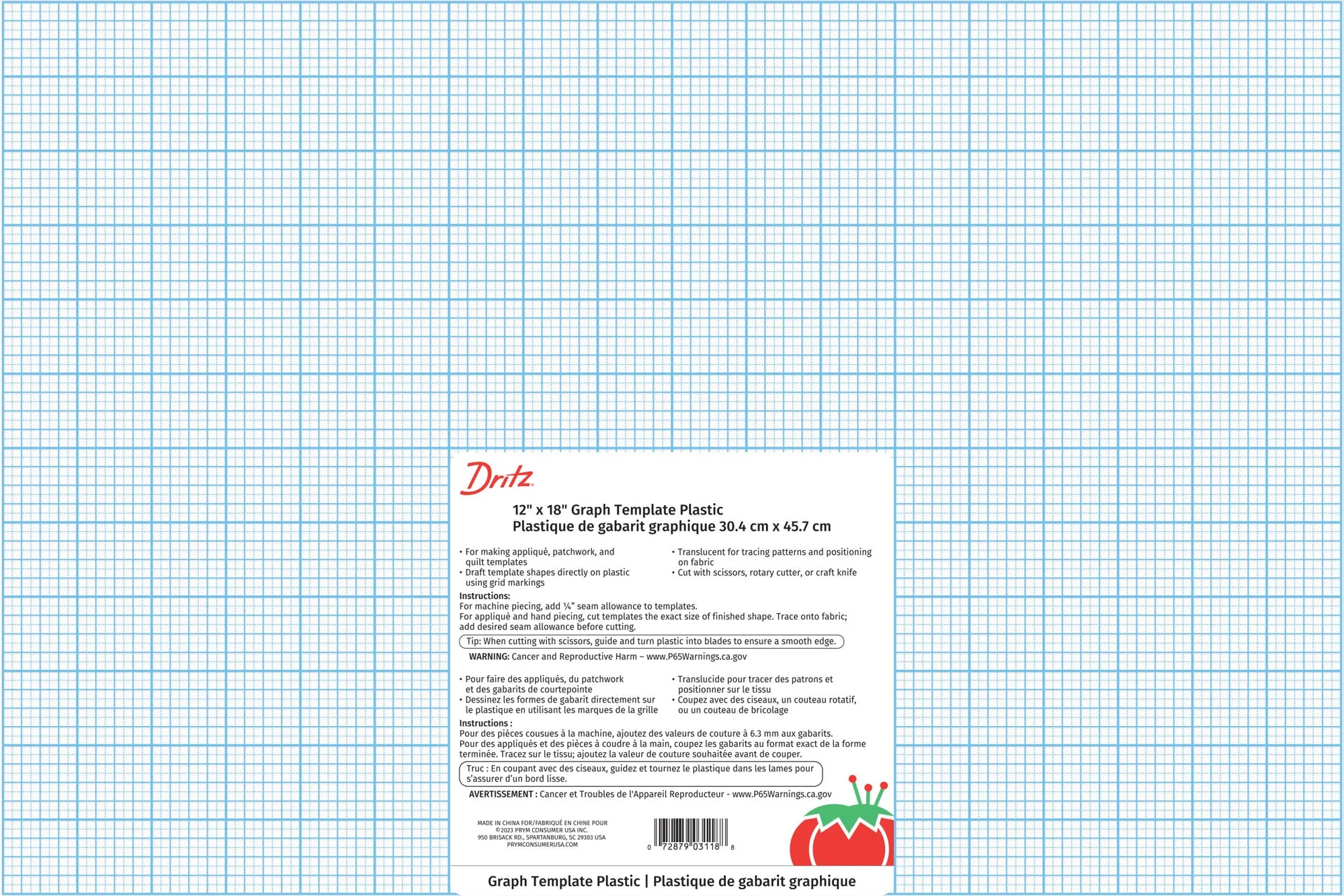
Gridded Plastic Template: This pack includes one 12 x 18-inch Gridded Plastic Template. It is translucent for positioning templates on fabric. The large 12 x 18-inch size gives you room to draft full-size quilt blocks or multiple smaller templates. The translucency lets you see fabric patterns through the plastic for accurate placement.
Gridded Plastic Template
-
Gridded Plastic Template: Draft template shapes directly on plastic using grid markings. Cut with scissors, rotary cutter or craft knife. You can draw your shape on the plastic, then cut it out with common quilting tools. The grid markings ensure straight lines and right angles without extra measuring.
Step-by-Step: Using the Gridded Plastic Template
Follow these steps to create a reusable template for your quilt project.
- 1. Plan your template shape: Decide the shape and size you need for your appliqué or patchwork piece. Common shapes include squares, triangles, hexagons, or curved appliqué motifs.
- 2. Draw the shape on the plastic: Place the Dritz Gridded Plastic Template on a flat surface. Use a fine-tip permanent marker to trace your shape directly onto the plastic, following the grid lines for straight edges and accurate angles.
- 3. Cut out the template: Cut along your drawn lines using scissors, a rotary cutter, or a craft knife. If using a rotary cutter, place the plastic on a self-healing cutting mat to protect your work surface.
- 4. Position the template on fabric: Because the plastic is translucent, you can place it over your fabric to see the pattern or grain line through it. Align the template as needed before marking or cutting around it.
- 5. Mark and cut your fabric: Trace around the plastic template onto your fabric with a fabric marking pen or chalk. Remove the template and cut the fabric along the marked lines. The template can be reused as many times as needed.
Tips for Best Results
Use a fine-tip permanent marker so your lines stay visible but don't smudge. If you need to reuse the template for different projects, you can wipe the markings off with rubbing alcohol. Store the template flat to prevent bending, which could distort your drawn shapes.