Quick answer
Use square and hexagon patchwork templates by aligning them on folded fabric, cutting around the edges with a rotary cutter, and repeating for consistent blocks. Choose the right template set for your project size.
Why Use Patchwork Templates?
Patchwork templates save time and improve accuracy when cutting multiple identical shapes. Instead of measuring and marking each piece, you simply trace or cut around a durable template. This is especially helpful for hexagons, where angles can be tricky to measure by hand.
Both the Hexagon Patchwork Template Sets and Square Patchwork Template Sets offer multiple sizes in one package, so you can switch between block dimensions without buying separate tools.
Choosing the Right Template Set
The Hexagon Patchwork Templates come in a 3-piece set of large hexagons or a 5-piece set of smaller hexagons. The Square Patchwork Templates offer a similar choice: a 3-piece set of large squares or a 5-piece set of smaller squares. Consider the scale of your project—larger blocks work well for quick quilts, while smaller blocks allow more intricate designs.
If you are unsure, start with a set that includes multiple sizes so you can experiment. Both template types are designed to maximize speed and accuracy when cutting many pieces.
Step-by-Step Guide to Using Patchwork Templates
- Prepare your fabric: Wash and iron your fabric, then fold it with right sides together so you can cut multiple layers at once. Place it on a self-healing cutting mat. Make sure the fabric is flat and wrinkle-free; wrinkles can shift the template and ruin accuracy.
- Position the template: Place the patchwork template on the fabric, aligning it with the grain line if desired. For hexagons, note that the straight grain should run parallel to one side for stability. Hold the template firmly in place with a quilting ruler or your non-dominant hand. Do not let the template slide while cutting—use a non-slip ruler or template grip dots if needed.
- Cut around the template: Using a rotary cutter with a sharp blade, cut along the edges of the template. Apply even pressure and keep the cutter perpendicular to the mat. For hexagons, cut each side individually, lifting the cutter at corners. A dull blade can snag fabric and shift the template; replace blades frequently for clean cuts.
- Repeat for all pieces: Continue repositioning the template and cutting until you have enough pieces for your quilt. To save time, cut multiple layers of fabric at once, but limit the stack to 2-4 layers to maintain accuracy. Cutting too many layers at once can cause the bottom layers to shift, resulting in uneven shapes.
- Assemble your blocks: Remove the template and arrange your cut pieces. For hexagons, sew them together using a 1/4-inch seam allowance, matching corners carefully. For squares, chain piecing speeds up assembly. Press seams open or to one side as your pattern directs; consistent pressing prevents bulk at intersections.
Products mentioned in this guide
-
Hexagon Patchwork Template Sets - Two Set Choices Available: Available in a 3pc set of large hexagons or a 5pc set of smaller hexagons. You can pick the set that matches your project scale without buying individual templates.
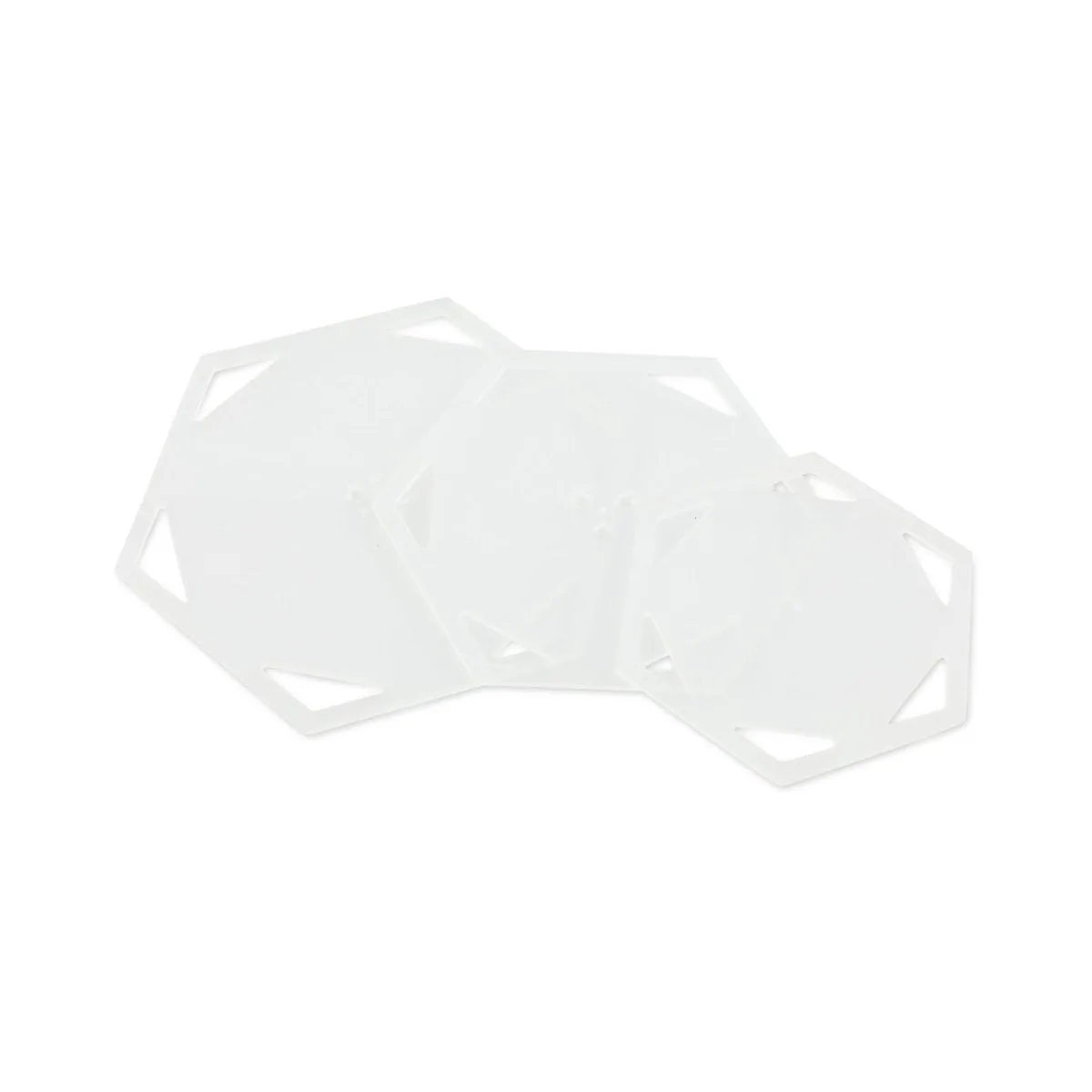
Hexagon Patchwork Template Sets - Two Set Choices Available
-
Square Patchwork Template Sets - Two Set Choices Available: Available in a 3pc set of large squares or a 5pc set of smaller squares. Having multiple sizes in one set lets you switch block dimensions easily for different quilt designs.
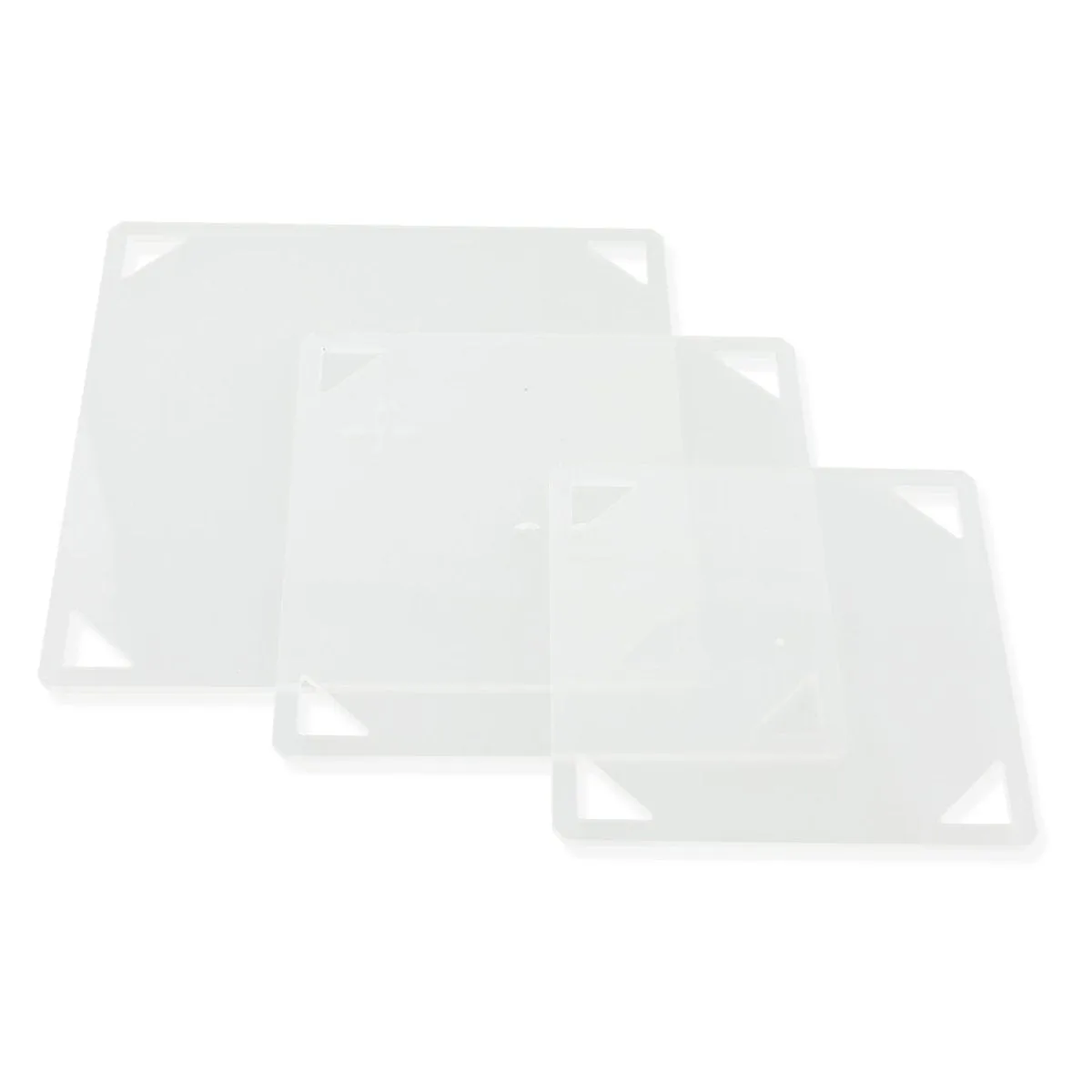
Square Patchwork Template Sets - Two Set Choices Available