Quick Answer
Use a grooming rake on a double-coated dog by working in small sections, following the coat's natural direction, and applying gentle pressure to remove loose undercoat without damaging the topcoat.
Why Raking Matters for Double-Coated Breeds
Double-coated breeds like Huskies, Golden Retrievers, and German Shepherds have a dense undercoat that sheds heavily, especially during seasonal changes. A grooming rake reaches deeper than a standard brush, pulling out loose fur before it mats or spreads around your home.
Raking regularly not only reduces shedding but also keeps the undercoat ventilated, which helps your dog stay cooler in summer and traps warmth in winter. It also lets you check for skin issues, fleas, or irritations while you groom.
Rake vs. Slicker Brush: Know the Difference
A slicker brush works well for removing surface tangles and finishing the coat, but it doesn't penetrate the dense undercoat effectively. A rake's long, spaced teeth are designed to lift dead fur from deep within, making it the better tool for heavy shedders.
For very thick coats, you might use both: rake first to remove undercoat, then slicker to smooth the topcoat. This combo gives the best results without overworking the skin.
Step-by-Step Raking Technique
- Prepare the Coat: Start with a dry, brushed coat. Remove any surface tangles with a slicker brush so the rake glides smoothly. Mist lightly with water or a detangling spray if the coat is very dry, but avoid soaking. Grooming a damp coat can cause matting, so always work on dry fur.
- Section the Fur: Part the coat into small sections using clips or your fingers. Work on one section at a time, lifting the topcoat to expose the undercoat. This ensures the rake reaches deep without missing spots. Skipping sections leads to uneven shedding and hidden mats.
- Rake in the Direction of Hair Growth: Hold the rake at a slight angle and gently pull it through the undercoat in the direction the hair grows. Use short, even strokes. Do not press hard; let the rake's teeth do the work. Applying too much pressure can scratch the skin and cause discomfort.
- Work in Layers: After raking one section, move to the next, overlapping slightly. For very thick coats, repeat the process in the same area from different angles to catch all loose fur. One pass is rarely enough; multiple passes ensure thorough deshedding.
- Finish with a Brush: Once you've raked the entire body, use a slicker brush to smooth the topcoat and remove any remaining loose hairs. This also distributes natural oils for a healthy shine. Finish with a gentle wipe with a damp cloth to collect stray hairs.
Tools That Help
-
Ancol Ergo Dog Grooming Undercoat Rake: The Ancol Ergo Undercoat Rake is extra-wide, so it covers large areas of the coat quickly, and is especially useful for removing loose hair during moulting. This means you can finish grooming sessions faster, which is a big plus for wriggly dogs or when you're short on time.
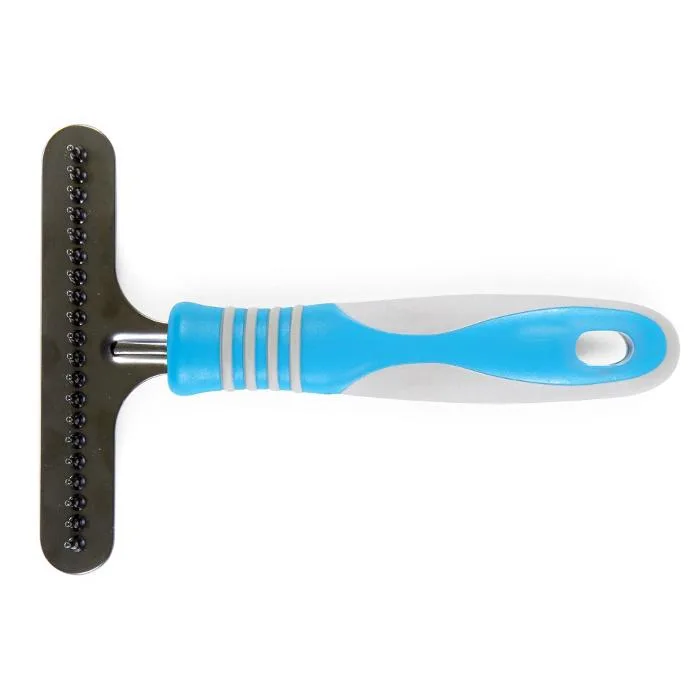
Ancol Ergo Dog Grooming Undercoat Rake