Quick Answer
Use a small, no-toxic hand syringe like the Four Paws Easy Feeder to gently deliver liquid formula or medication to puppies and kittens, always feeding slowly and at a slight angle to prevent aspiration.
When to Use a Hand Syringe for Feeding
Hand syringe feeding is essential for newborn puppies and kittens that cannot nurse from their mother due to weakness, rejection, or illness. It is also the safest method for administering liquid medications to small animals because you control the flow and volume precisely.
A syringe designed for small animals, such as the Four Paws Easy Feeder Hand Syringe, has a maximum capacity of 1/2 oz, which is appropriate for tiny mouths and stomachs. Using a larger syringe can easily overwhelm a newborn and cause choking or aspiration pneumonia.
Trade-offs and Safety Considerations
Hand syringe feeding requires patience and a steady hand. Unlike bottle feeding, the syringe does not mimic a natural nipple, so some animals may resist at first. Always warm the formula to body temperature (around 100°F) and test a drop on your wrist before feeding.
Never force the plunger. If the animal coughs, chokes, or formula comes out of its nose, stop immediately and consult a veterinarian. Aspiration is the most serious risk of syringe feeding.
Step-by-Step Hand Syringe Feeding Guide
- Prepare the Syringe and Formula: Draw the appropriate amount of warmed formula or medication into the syringe. Tap the syringe to remove air bubbles and gently push the plunger until a drop appears at the tip. Air bubbles can cause gas or discomfort; always expel them before feeding.
- Position the Animal Safely: Hold the puppy or kitten in a natural upright or slightly inclined position, never on its back. Support the head gently but firmly to prevent sudden movement. Feeding an animal on its back greatly increases the risk of liquid entering the lungs.
- Insert the Syringe Tip at the Side of the Mouth: Place the tip of the syringe into the side of the animal's mouth, between the cheek and gums. Aim toward the back of the throat but do not go too deep. Inserting the tip straight into the front can trigger the gag reflex and cause choking.
- Deliver Formula Slowly and in Small Amounts: Gently depress the plunger to release a small amount of liquid. Allow the animal to swallow before giving more. If the animal coughs or drools excessively, pause and reposition. Rushing the feeding is the most common mistake; each swallow should be a separate, gentle squeeze.
- Burp and Clean the Animal After Feeding: Gently pat the animal's back to help release any swallowed air. Wipe away any formula from the chin and nose with a soft, damp cloth. Leftover formula on the skin can cause irritation or bacterial growth; always clean thoroughly.
Product Fact
-
Four Paws Easy Feeder Hand Syringe For Small Animals: Safe and no-toxic syringe dispenser that is excellent for administering liquid medications to puppies & kittens. Max capacity 1/2 oz. The small 1/2 oz capacity helps you control portion size and reduces the risk of overfeeding or aspiration in newborn animals.
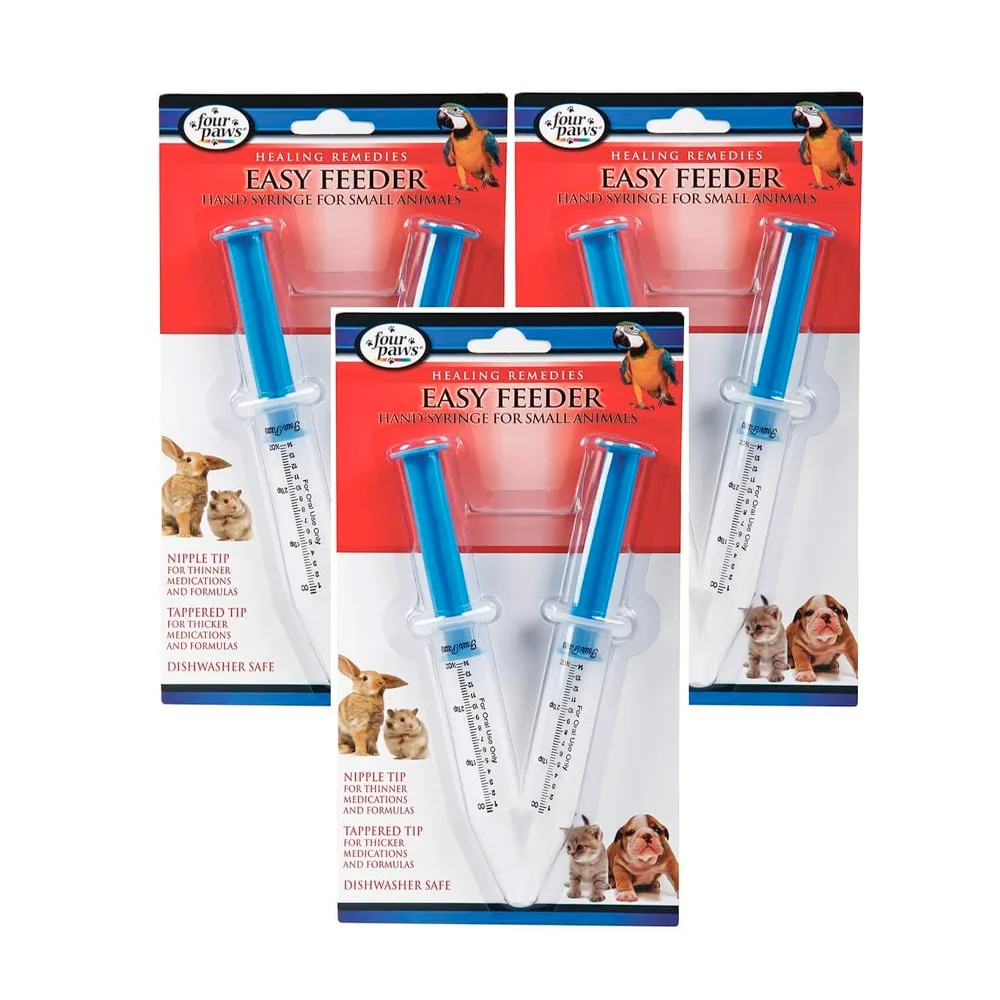
Four Paws Easy Feeder Hand Syringe For Small Animals