Quick answer
Keep loose hay as the main meal and use hay cubes or forage rounds as a small daily add-on. For most rabbits and guinea pigs, offer one or two small hay cubes or one forage ring per day, placed away from the main hay pile so your pet has to move and work for it. Always provide fresh water and watch that your pet is still eating plenty of loose hay.
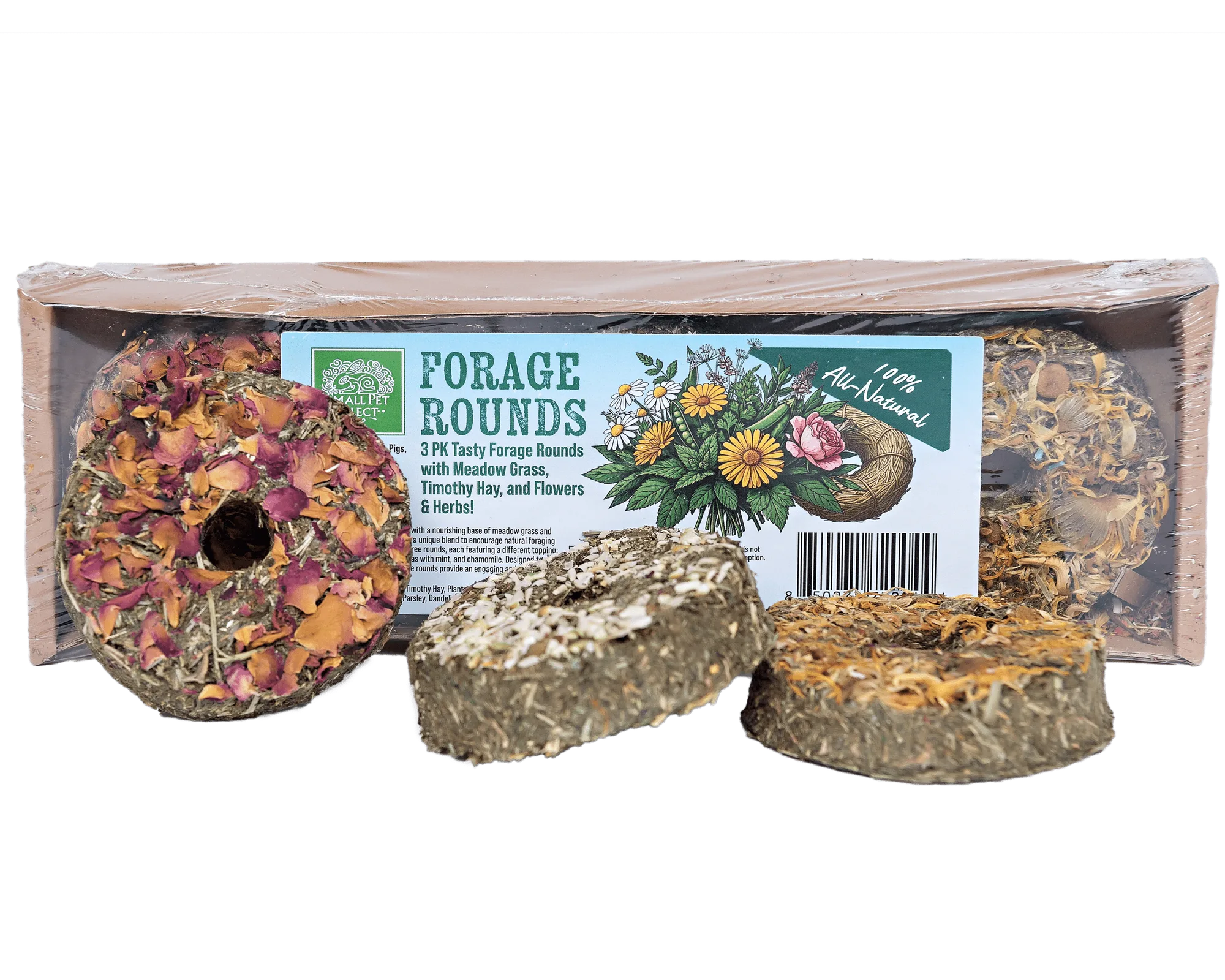
forage rounds
Why hay cubes and forage rounds belong in the daily routine
Loose hay should still make up the bulk of what a rabbit or guinea pig eats each day. Hay cubes and forage rounds add variety, encourage natural chewing, and give bored pets something to do between meals. They also help wear down teeth, which is important because small pet teeth grow continuously. The mistake to avoid is treating these items as a full hay replacement. They are enrichment and a supplemental chew, not the main course.
Choosing the right size and material
Size matters more than most owners expect. A cube that is too large can be hard for a small mouth to grip, while a ring that is too small can be swallowed or fought over in a multi-pet cage. Look for cubes sized for small mouths and rings made from a single natural grass. If a product page does not list a dimension or a full ingredient list, treat that as a decision limitation and ask the seller before buying.
Daily timing and placement
Offer the cube or ring at a consistent time, such as right after you refresh the loose hay. Place it in a different spot from the hay manger, or tuck it into a corner where your pet has to reach for it. Rotating the location keeps the enrichment from becoming routine. Remove any leftover pieces after 24 hours so they do not get soiled or damp.
Portion sizes by pet
A rabbit or guinea pig generally does well with one to two small cubes or one ring per day alongside unlimited loose hay. Chinchillas, gerbils, hamsters, and mice need much less because they are smaller. Start with a single small piece, watch how quickly it disappears, and adjust. If your pet ignores loose hay in favor of the cube, cut back the cube for a few days.
Safety checks and what to watch for
Check your pet's mouth and droppings for a few days after introducing anything new. Drooling, dropping food, or a sudden drop in loose hay intake can signal a dental problem that needs a vet. Also check that the cube or ring is not splintering into sharp pieces. If it crumbles into dust, that is normal, but large hard shards are a sign to remove it.
Daily feeding steps
- Step 1: Refresh loose hay first: Top up the main hay pile before you add any cube or ring. This keeps loose hay as the primary food and prevents your pet from filling up on the treat item. Checkpoint: your pet should still have a full pile of loose hay available after you add the cube.
- Step 2: Pick the right size for your pet: Choose a cube or ring that matches your pet's mouth size. A rabbit or guinea pig can handle a small cube or a full ring, while a hamster or mouse needs only a fragment. Mistake to avoid: offering a piece so large your pet cannot grip it, which leads to waste and frustration.
- Step 3: Place it away from the hay manger: Put the cube or ring in a different corner or on a ledge so your pet has to move, stretch, or forage for it. Rotate the spot each day to keep the challenge fresh. Checkpoint: your pet should investigate and chew within the first few minutes.
- Step 4: Limit the daily amount: Offer one to two small cubes or one ring per day for a rabbit or guinea pig. Smaller pets get a single small piece. Adjust down if loose hay intake drops. Mistake to avoid: refilling the cube bowl whenever it is empty, which turns enrichment into a main meal.
- Step 5: Remove leftovers and inspect: After 24 hours, throw away any remaining pieces. Look for sharp splinters or soggy sections, and check your pet's droppings and hay appetite. Next step: if your pet stops eating loose hay or shows mouth discomfort, pause the cubes and contact your vet.
Products that fit this routine
- Hay Cubes - Timothy: Timothy hay cubes sized smaller than many on the market, made for the little mouths of rabbits, guinea pigs, chinchillas, gerbils, hamsters, and mice. The smaller size makes it easier for small pets to grip and chew, so you can offer a cube without breaking it up first.
- Rye Ring: A rye ring toy crafted from 100% all-natural rye grass for chewing and entertainment. A single-ingredient grass ring gives you a forage round option that doubles as a chew toy for rabbits and guinea pigs.